Taming the AI Chaos in Drug Discovery
•March 6, 2026
0
Key Takeaways
- •Dozens of specialized AI tools overwhelm traditional lab workflows.
- •Fragmented data adds hidden costs and slows discovery.
- •AI Lab Notebooks embed tools within experimental records.
- •Seamless integration preserves context, provenance, and governance.
- •Continuity, not tool count, drives future productivity.
Summary
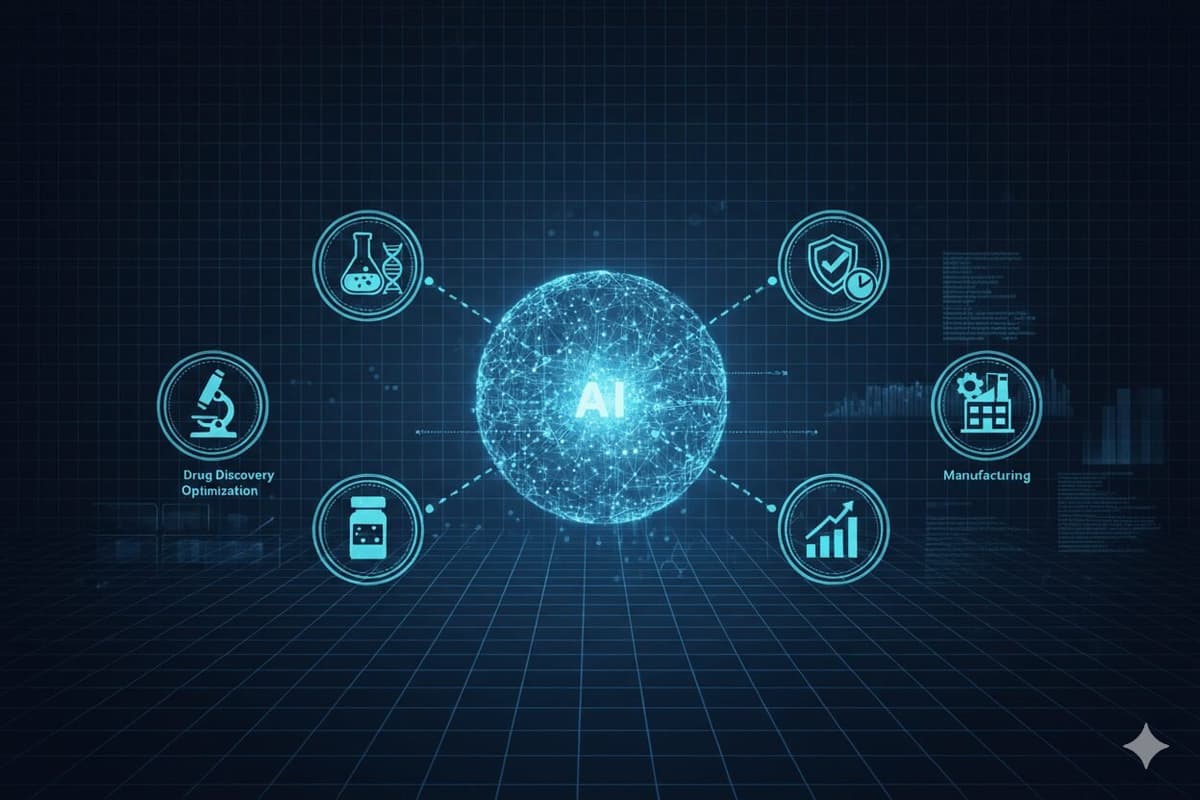
Biopharma R&D is witnessing a rapid influx of specialized AI models for tasks such as structure prediction, retrosynthesis, and image analysis. While each tool delivers measurable benefits, their isolated deployment creates fragmented data streams, hidden costs, and increased cognitive load for scientists. Third‑generation AI Lab Notebooks (AILNs) address this structural gap by embedding trusted AI engines directly within the experimental record, preserving context, provenance, and regulatory compliance. The shift from a static ELN to an AI‑centric workflow promises to convert AI acceleration into sustained productivity gains.
Pulse Analysis
The surge of AI models in early‑stage drug discovery has transformed how scientists generate hypotheses, design experiments, and interpret results. Yet the rapid adoption of dozens of niche tools—each excelling at a single task—has outpaced the capacity of legacy electronic lab notebooks (ELNs) and LIMS to keep data coherent. Researchers spend valuable hours shuttling between platforms, reformatting outputs, and reconstructing experimental narratives, turning what should be a productivity boost into an administrative bottleneck.
Enter the third‑generation AI Lab Notebook, a platform that places intelligence at the heart of the scientific workflow rather than as an after‑thought add‑on. By integrating model APIs, knowledge bases, and predictive analytics directly into the notebook’s record‑keeping engine, AILNs capture results, parameters, and rationale at the moment of insight. This seamless coupling preserves provenance, satisfies regulatory traceability, and eliminates context‑switching, allowing scientists to focus on hypothesis testing instead of data wrangling. The architecture also supports natural‑language interactions, enabling rapid tool selection without leaving the experimental canvas.
For biopharma organizations, the strategic implication is clear: productivity will be dictated not by the sheer number of AI tools but by the continuity of the scientific story they help build. Companies that adopt AI Lab Notebooks can accelerate lead identification, reduce cycle times, and lower compliance risk, gaining a competitive edge in an increasingly data‑driven market. As AI models become more specialized, the need for integrated, context‑aware lab software will only intensify, making AILNs a foundational component of next‑generation drug discovery ecosystems.
Comments
Want to join the conversation?