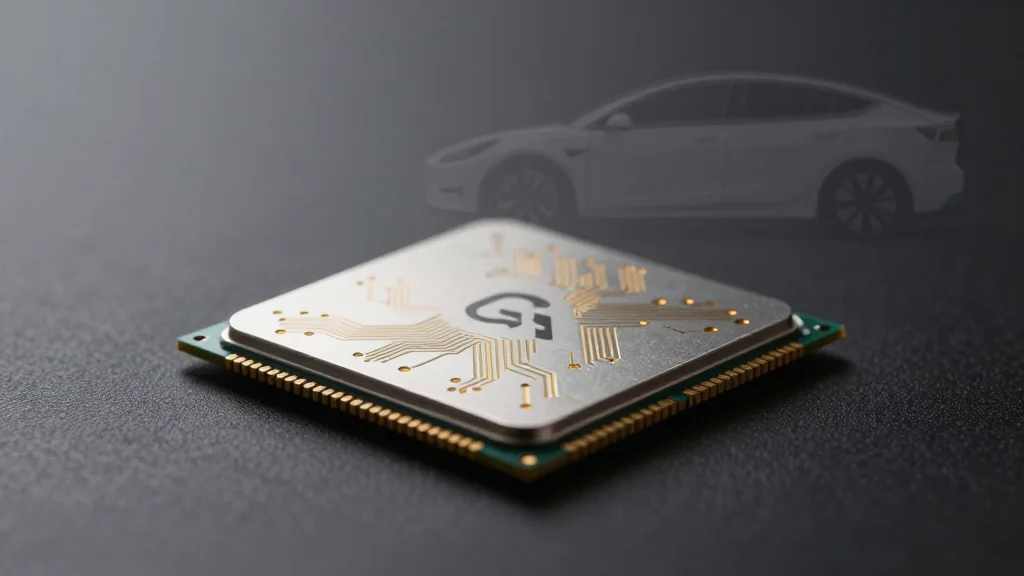
Tesla to Acquire Undisclosed AI Hardware Company for Up to $2 B
Participants
Why It Matters
The deal deepens Tesla’s control over the hardware stack that powers its autonomous‑driving and robotics ambitions, potentially lowering costs and accelerating product rollouts. It signals a decisive shift from low‑margin vehicle sales to higher‑margin AI‑driven software and services.
Key Takeaways
- •Tesla agreed to acquire an AI hardware firm for up to $2 billion
- •Acquisition details omitted, likely to protect competitive advantage
- •Deal aligns with Tesla’s $25 billion AI‑focused capex plan
- •Hardware purchase supports self‑driving, robotaxi, and Optimus projects
- •Moves Tesla toward higher‑margin software and robotics revenue
Pulse Analysis
Tesla’s latest 10‑Q quietly disclosed a $2 billion agreement to acquire an unnamed AI‑hardware company, marking one of the most opaque deals in its recent history. The one‑sentence filing provides no clue about the target’s name, product line, or valuation methodology, suggesting a strategic desire to keep the acquisition under wraps until integration milestones are met. In an industry where chip design and custom compute are increasingly viewed as competitive moats, the move signals Tesla’s intent to own more of the stack that powers its autonomous‑driving and robotics ambitions. The deal also underscores Tesla’s ambition to rival traditional chip makers.
The acquisition dovetails with Tesla’s announced $25 billion capital‑expenditure budget for 2026, a sizable portion of which is earmarked for AI‑related infrastructure. By internalizing hardware production, Tesla hopes to reduce reliance on external suppliers, lower unit costs, and accelerate the rollout of its Full Self‑Driving (FSD) software and the upcoming Optimus robot. Analysts view the shift as a bid to improve margins, moving the company away from low‑margin vehicle sales toward higher‑margin software, data, and services revenue streams.
Investors have responded cautiously; Tesla’s stock slipped modestly after the earnings release, reflecting uncertainty around the undisclosed target and the execution risk of such a large hardware integration. Competitors like Nvidia and Alphabet are also racing to secure custom AI chips, raising the stakes for Tesla to deliver differentiated performance. If the acquired technology accelerates FSD validation or enables cost‑effective production of Optimus, it could unlock new revenue channels and cement Tesla’s position as a leader in automotive AI.
Deal Summary
Tesla disclosed in its Q1 2026 10‑Q filing that it entered into an agreement in April to acquire an undisclosed AI hardware company for up to $2 billion in Tesla common stock and equity awards, with about $1.8 billion contingent on performance milestones. The acquisition aligns with Tesla’s plan to spend $25 billion on AI‑related infrastructure this year, supporting its self‑driving, robotaxi and robotics initiatives.
Comments
Want to join the conversation?
Loading comments...