Companies Mentioned


Why It Matters
A potential bubble could stall China’s AI‑driven growth agenda and trigger tighter financing and regulatory scrutiny for the robotics industry.
Key Takeaways
- •Over 150 humanoid robot firms in China.
- •Majority are startups or cross‑industry entrants.
- •Investment outpaces proven commercial applications.
- •Risk of homogeneous models and funding crunch.
- •Government warns balancing growth with bubble risk.
Pulse Analysis
China’s push for embodied intelligence has turned humanoid robotics into a flagship of its next‑generation manufacturing strategy. By designating the technology as a national priority, Beijing hopes to leapfrog competitors in automation and AI integration. Yet the NDRC’s recent warning underscores a paradox: policy enthusiasm is outstripping market reality, with dozens of firms racing to prototype human‑like machines that lack clear revenue streams. This mismatch mirrors earlier AI hype cycles, where speculative capital surged ahead of viable products, inflating valuations and prompting later corrections.
The sector’s rapid expansion is evident in the sheer number of players—over 150 companies are now active, many emerging from unrelated industries seeking a foothold in robotics. Venture capital and state‑backed funds have flooded the space, attracted by headlines of humanoid assistants and the promise of future consumer demand. However, without demonstrable use cases—such as logistics, healthcare, or service automation—the market risks becoming saturated with near‑identical prototypes. Investors are increasingly wary of over‑capacity, as funding pipelines could dry up if commercial traction remains elusive, echoing the broader AI bubble concerns voiced by regulators.
For stakeholders, the warning signals a need for disciplined investment and clearer pathways to monetization. Companies should prioritize differentiated capabilities, robust testing, and partnerships with end‑users to validate demand. Policymakers may introduce stricter funding criteria or incentives tied to measurable outcomes, aiming to curb speculative excess while still nurturing genuine innovation. Globally, the development of a sustainable humanoid robot ecosystem could reshape supply chains and labor dynamics, but only if growth is balanced against realistic market adoption.
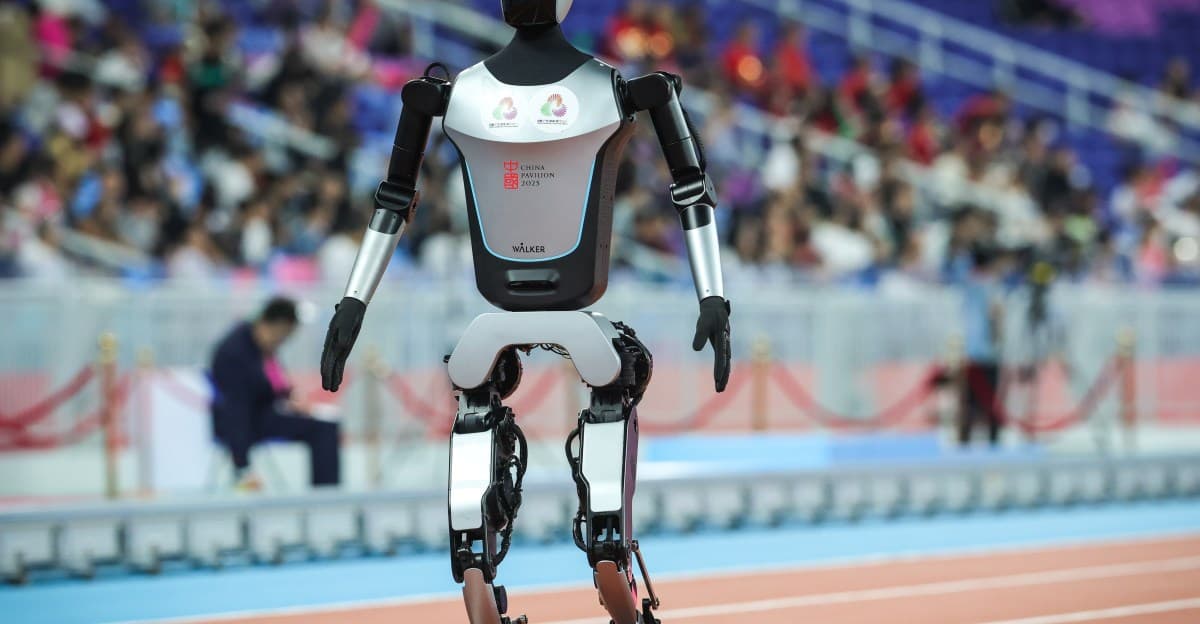
A humanoid robot-shaped bubble is forming, China warns
0
Comments
Want to join the conversation?
Loading comments...