A Zelda Puzzle Proves AI Models Can Crack Gaming Riddles that Require Thinking Six Moves Ahead
•December 24, 2025
0
Companies Mentioned


Why It Matters
The breakthrough shows AI can perform deep, forward‑looking reasoning on visual tasks, foreshadowing automation of game strategy guides and broader software documentation.
Key Takeaways
- •Gemini 3 Pro solves puzzle after up to 42 pages of reasoning
- •GPT‑5.2‑Thinking solves consistently, fast, no external data
- •Claude Opus 4.5 required image clarification before solving
- •AI planning six moves ahead mirrors human strategic thinking
- •Potential to replace human‑written game walkthroughs
Pulse Analysis
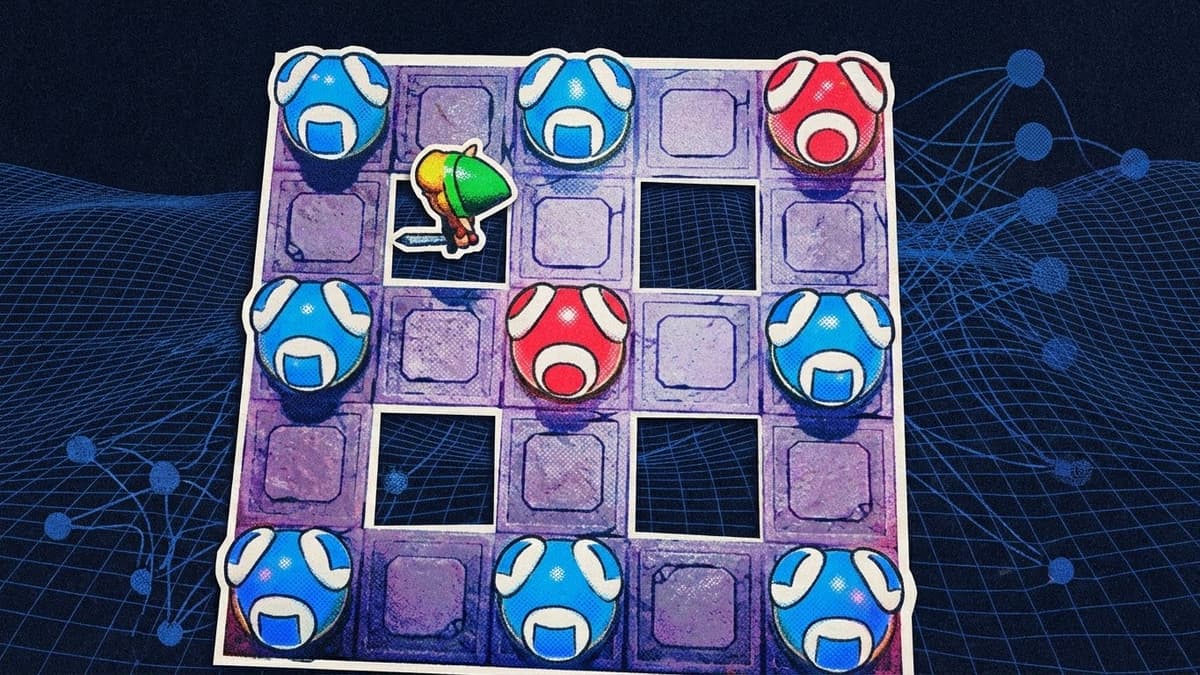
The Zelda shrine puzzle serves as a real‑world litmus test for the next generation of reasoning AI. Unlike traditional text‑only benchmarks, this visual task demands spatial awareness, state tracking, and multi‑step planning—capabilities that were once exclusive to specialized game‑playing agents. By feeding a single screenshot to Gemini 3, GPT‑5.2‑Thinking, and Claude Opus 4.5, researchers observed that modern language models can internally simulate the puzzle’s dynamics, generating click sequences that transform every orb to blue. This marks a shift from pattern‑matching toward genuine problem‑solving, aligning AI performance with human‑level foresight.
Performance differences among the models reveal the nuances of current AI reasoning architectures. GPT‑5.2‑Thinking’s deterministic output suggests a tightly integrated chain‑of‑thought module that can translate visual input into logical steps without exhaustive search. Gemini 3 Pro, while ultimately correct, relied on extensive trial‑and‑error, producing lengthy PDFs that document each intermediate state—a sign that its reasoning engine still leans on brute‑force exploration. Claude Opus 4.5’s initial failure underscores the importance of precise prompt engineering for visual interpretation, yet its eventual success via a mathematical formulation demonstrates flexibility in reasoning strategies. These observations help developers gauge trade‑offs between speed, reliability, and interpretability when deploying AI for complex tasks.
The broader implication for the gaming and software industries is profound. As AI agents like Nvidia’s NitroGen learn to navigate games, capture screenshots, and synthesize walkthroughs, the traditional market for human‑written guides could shrink dramatically. Automated documentation not only accelerates content creation but also ensures up‑to‑date accuracy for patches and expansions. Moreover, the ability to solve puzzles that require forward planning opens doors for AI‑assisted debugging, level design validation, and even player‑assist tools that adapt in real time. Companies that integrate such reasoning models stand to gain a competitive edge in delivering smarter, more responsive user experiences.
A Zelda puzzle proves AI models can crack gaming riddles that require thinking six moves ahead
0
Comments
Want to join the conversation?
Loading comments...