Amazon's 'Titus' Project Reveals Nvidia's Real Power
Companies Mentioned
Why It Matters
Nvidia’s hardware dictates the next generation of AI workloads, forcing cloud providers like AWS to align their infrastructure investments, which impacts cost structures and competitive dynamics in the AI services market.
Key Takeaways
- •Titus redesigns power, cooling, layout for Nvidia GB200 GPUs.
- •AWS still relies on Nvidia hardware for next-gen AI workloads.
- •Amazon's Trainium chip serves as hedge, not full replacement.
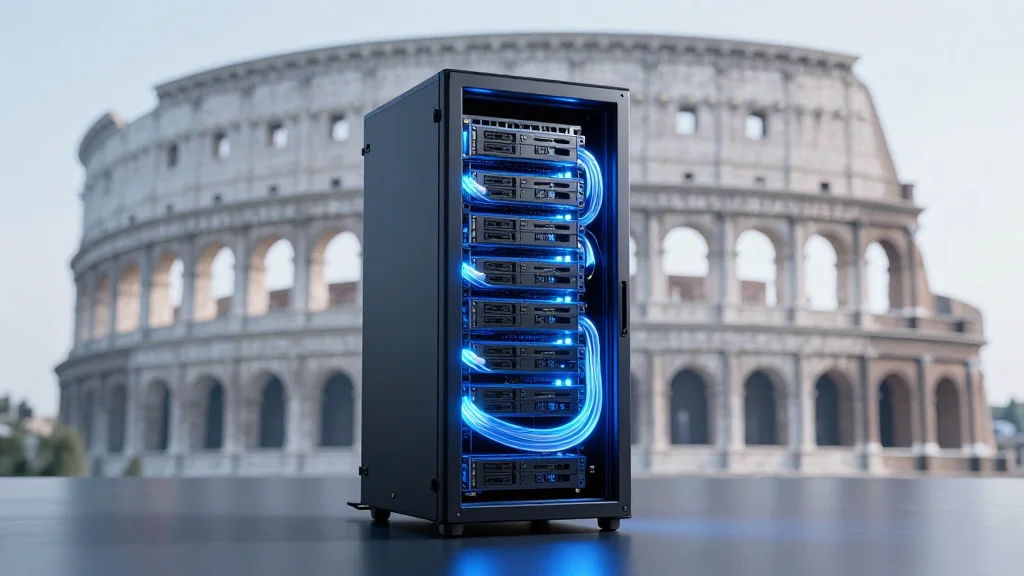
- •Project mirrors Roman modular architecture for scalable data centers.
- •Nvidia's roadmap shapes cloud AI infrastructure investments.
Pulse Analysis
The "Titus" project signals Amazon’s pragmatic shift toward a hardware‑first strategy in the AI era. By re‑engineering power distribution, liquid‑cooling loops, and server density, AWS is preparing its data centers for Nvidia’s next‑generation GPU modules, such as the GB200 rack. The initiative borrows the Roman Colosseum’s modular, self‑supporting design, promising faster build cycles and the ability to scale AI compute capacity on demand. This architectural overhaul reflects a broader industry trend where cloud operators must anticipate the physical demands of ever‑larger AI accelerators.
Nvidia’s dominance in high‑performance GPUs remains a decisive factor for cloud providers, despite Amazon’s public push for its Trainium and Inferentia chips. Internal documents reveal that, at the infrastructure layer, AWS still leans heavily on Nvidia’s roadmap, acknowledging that the performance and efficiency gains from Nvidia’s custom silicon outweigh the benefits of a fully independent stack. Trainium therefore functions more as a strategic hedge—offering cost‑effective inference for specific workloads—rather than a wholesale replacement for Nvidia’s ecosystem. This dual‑track approach helps Amazon mitigate supply‑chain risk while preserving access to the cutting‑edge performance that Nvidia delivers.
For the broader market, Titus underscores how tightly intertwined AI software, hardware, and data‑center design have become. Competitors such as Microsoft Azure and Google Cloud will watch AWS’s modular rollout closely, as the ability to quickly provision massive GPU farms could become a key differentiator for AI‑as‑a‑service offerings. Meanwhile, Nvidia’s influence extends beyond chip sales; it now shapes capital‑expenditure decisions and architectural standards across the cloud landscape. As AI workloads continue to balloon, the balance between in‑house chip development and reliance on external GPU leaders will define the next wave of cloud competition.
Amazon's 'Titus' project reveals Nvidia's real power
Comments
Want to join the conversation?
Loading comments...