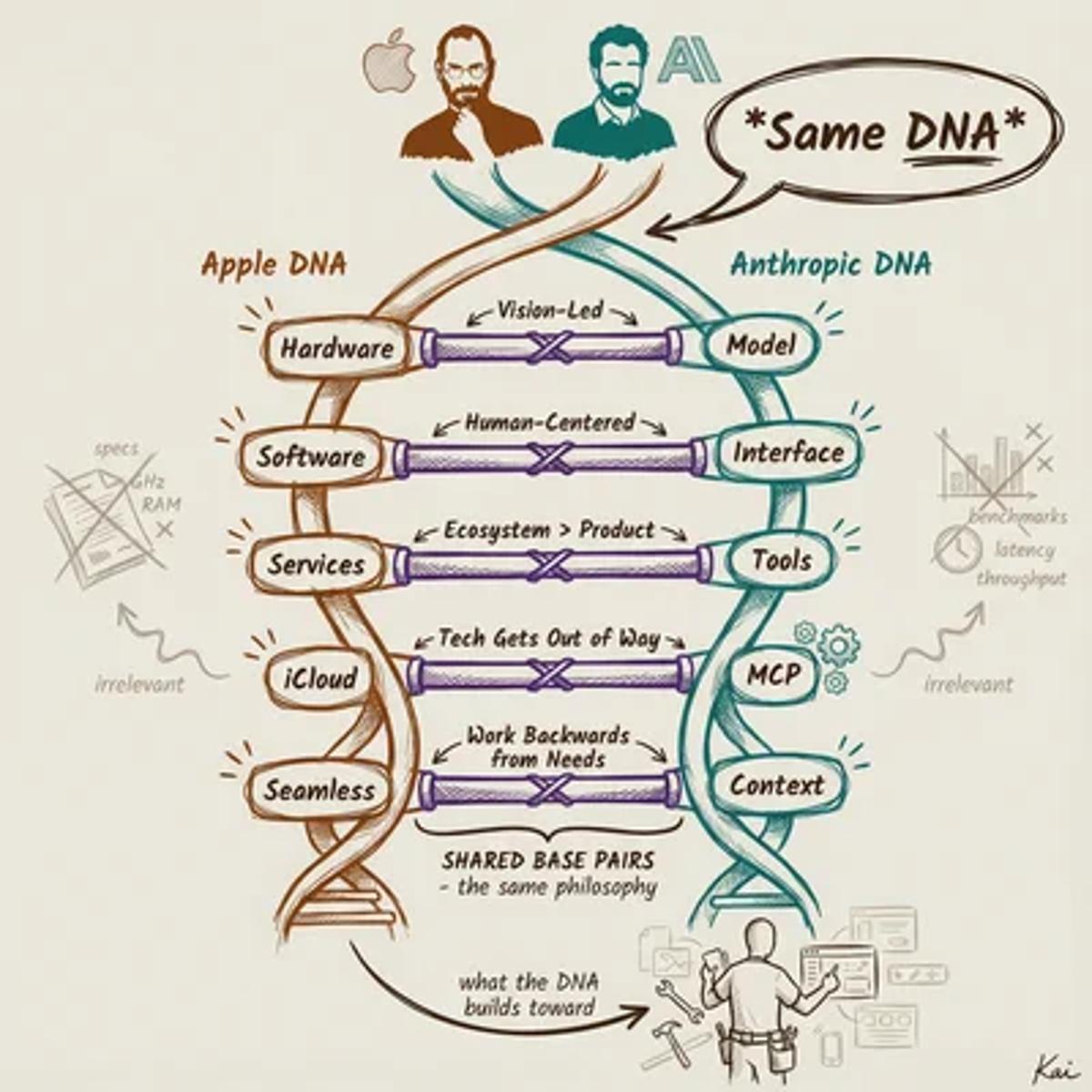
Anthropic's Vision Advantage Is a Lot Like Apple's From the 2010s
•December 11, 2025
0
Companies Mentioned


Why It Matters
Anthropic’s ecosystem‑first strategy could reshape AI market dynamics, forcing rivals to prioritize integration, trust, and user‑centric design over pure model horsepower.
Key Takeaways
- •Anthropic focuses on ecosystem, not just model size
- •Claude Code offers superior user empathy and context handling
- •Opus 4.5 positioned as AI equivalent of iPhone
- •Trust and alignment drive Anthropic’s market differentiation
- •Competitors risk overlooking ecosystem advantage
Pulse Analysis
Anthropic’s recent positioning mirrors Apple’s 2010s strategy, where the value lay not in a single device but in a tightly integrated ecosystem. By treating Opus 4.5 as the “iPhone” of its portfolio, the company signals a shift from pure model performance to a holistic user experience. This approach emphasizes seamless interaction across tools, consistent design language, and a trust framework that reassures users—much like Apple’s emphasis on privacy and reliability. The analogy underscores that competitive advantage now stems from how AI services interlock, rather than raw compute alone.
At the heart of this ecosystem is Claude Code, a conversational layer that prioritizes user empathy, context retention, and goal‑oriented assistance. Unlike generic large‑language models, Claude Code learns the specific workflows of developers and enterprises, feeding that insight back into Opus 4.5’s inference pipeline. This vision‑led feedback loop creates a “software‑defined hardware” experience, where the AI adapts to real‑world tasks instead of forcing users to fit their problems into the model. The result is a more intuitive, trustworthy interface that feels native to the user’s daily workflow.
The strategic implications are clear: firms that chase headline‑grabbing model sizes risk neglecting the ecosystem glue that drives adoption and revenue. OpenAI and Google, while leading in raw capability, must now consider how to embed their models within cohesive platforms that manage trust, context, and user intent. Anthropic’s model‑first but ecosystem‑second playbook could force a market recalibration, prompting rivals to invest in developer tools, integration layers, and brand trust to stay competitive.
Anthropic's Vision Advantage is a Lot Like Apple's from the 2010s
0
Comments
Want to join the conversation?
Loading comments...