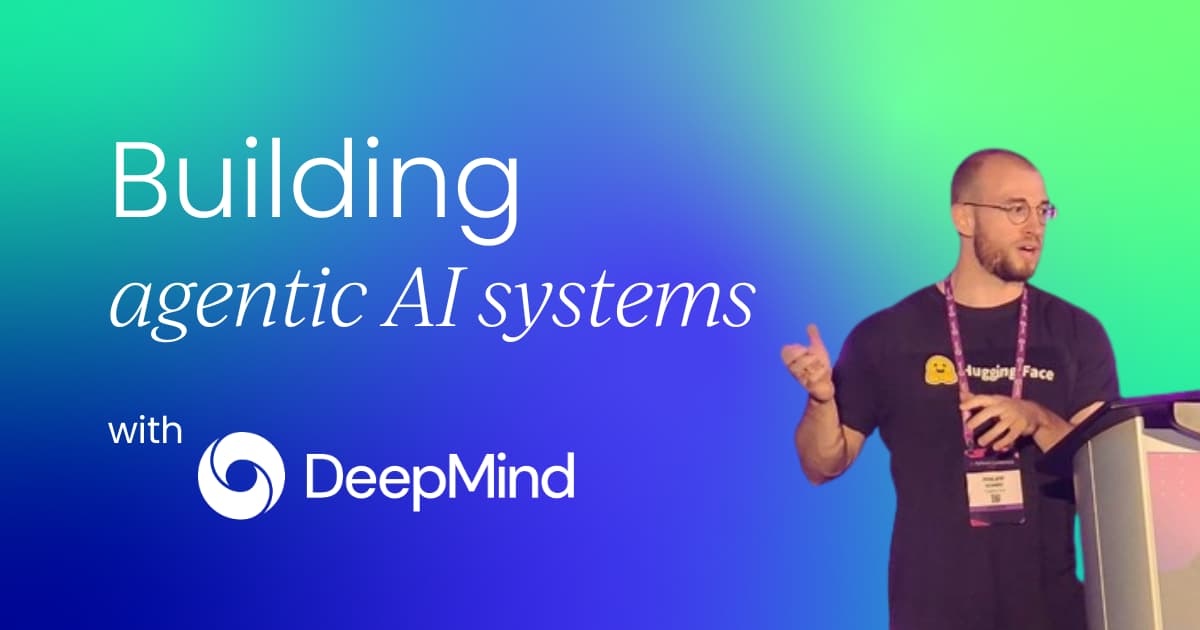
Beyond Chatbots: How to Build Agentic AI Systems
•December 19, 2025
0
Companies Mentioned


Why It Matters
Agentic AI transforms AI from a query‑answering layer into a productivity engine, unlocking new automation opportunities across enterprises.
Key Takeaways
- •Agents execute tasks without continuous human prompting
- •Function calling enables models to interact with external APIs
- •WebGPT pioneered browsing capabilities for large language models
- •Toolformer taught LLMs to self‑select appropriate tools
- •Agentic AI shifts focus from answers to actions
Pulse Analysis
The journey from simple text completion to autonomous agents reflects a broader maturation of large language models. Early LLMs were impressive autocomplete engines, but their business value was limited to generating static content. Instruction‑following added purpose, while function‑calling bridged the gap between language and external systems, allowing models to retrieve data, trigger workflows, or invoke calculators. This technical progression laid the groundwork for true agentic behavior, where AI can interpret a high‑level objective and orchestrate a sequence of actions to achieve it.
Agentic AI distinguishes itself by granting models agency: they assess goals, select appropriate tools, and iterate until completion. Pioneering projects such as OpenAI’s WebGPT demonstrated that LLMs could navigate the web, perform searches, and extract information autonomously. Meta’s Toolformer further refined this capability by training models to recognize when external knowledge sources or calculators were needed, effectively teaching them self‑service. For developers, these advances mean that building applications no longer revolves around crafting prompt‑response loops; instead, they design ecosystems where AI agents act as proactive collaborators, integrating APIs, databases, and SaaS platforms on the fly.
From a business perspective, the rise of agentic AI promises measurable efficiency gains. Enterprises can automate end‑to‑end processes—such as customer onboarding, report generation, or supply‑chain monitoring—without scripting each decision point. However, the autonomy also raises governance challenges, including tool misuse, hallucination mitigation, and compliance tracking. Companies that invest early in robust orchestration frameworks and monitoring will capture competitive advantage, while the broader market will see a surge in platforms that package agentic capabilities as plug‑and‑play services. The transition marks a pivotal moment where AI moves from answering questions to executing actions, reshaping productivity across industries.
Beyond chatbots: How to build agentic AI systems
0
Comments
Want to join the conversation?
Loading comments...