
The funding accelerates India’s ability to host AI workloads locally, addressing data‑sovereignty, latency and regulatory requirements while reshaping the competitive landscape for AI infrastructure providers.
India’s AI ambitions are increasingly constrained by a shortage of high‑performance compute, prompting policymakers to champion home‑grown infrastructure. With fewer than 60,000 GPUs deployed nationally, enterprises and government agencies face bottlenecks that affect model training, inference speed, and compliance with data‑localization rules. Emerging "neo‑cloud" providers like Neysa fill this gap by offering dedicated, GPU‑first platforms that can be tailored to sector‑specific latency and security demands, positioning them as strategic alternatives to the likes of AWS, Azure, and Google Cloud.
Blackstone’s $600 million equity injection, coupled with a matching debt facility, underscores private‑equity confidence in scaling India’s AI compute ecosystem. The capital will fund large‑scale GPU clusters, networking, and storage, while also bolstering Neysa’s orchestration and observability software. By targeting a fleet of over 20,000 GPUs, Neysa aims to triple its revenue next year and capture a growing slice of enterprise demand that prefers on‑premise or locally hosted AI workloads. This aggressive expansion mirrors Blackstone’s broader portfolio moves, which include stakes in QTS, AirTrunk, CoreWeave and Firmus, reflecting a global bet on specialized AI infrastructure.
The ripple effects extend beyond Neysa’s balance sheet. A robust domestic GPU supply chain can lower latency for Indian users, satisfy stringent data‑privacy regulations, and stimulate local talent development. As multinational AI labs seek to serve Indian customers more efficiently, they may partner with or compete against neo‑clouds, intensifying market dynamics. Moreover, the anticipated 30‑fold increase in GPU deployments signals a maturing ecosystem that could attract further foreign investment, accelerate innovation in AI applications, and ultimately position India as a pivotal hub in the global AI supply chain.
By Jagmeet Singh · June 23 2026 · Boston, MA
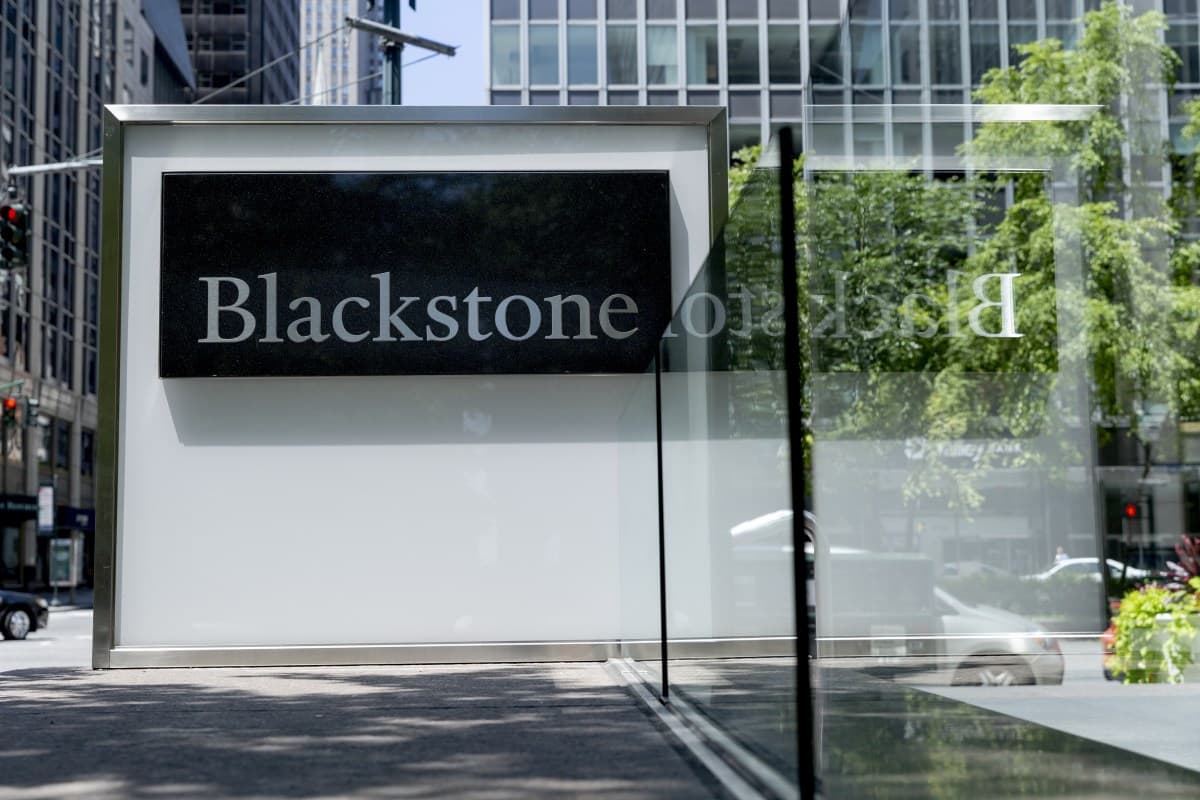
Neysa, an Indian AI infrastructure startup, has secured backing from U.S. private‑equity firm Blackstone as it scales domestic compute capacity amid India’s push to build home‑grown AI capabilities.
Blackstone and co‑investors—including Teachers’ Venture Growth, TVS Capital, 360 ONE Asset, and Nexus Venture Partners—have agreed to invest up to $600 million of primary equity in Neysa, giving Blackstone a majority stake, the companies told TechCrunch. The Mumbai‑headquartered startup also plans to raise an additional $600 million in debt financing as it expands GPU capacity, a sharp increase from the $50 million it had raised previously.
The deal comes as demand for AI computing surges globally, creating supply constraints for specialized chips and data‑center capacity needed to train and run large models. Newer AI‑focused infrastructure providers—often referred to as “neo‑clouds”—have emerged to bridge that gap by offering dedicated GPU capacity and faster deployment than traditional hyperscalers, particularly for enterprises and AI labs with specific regulatory, latency, or customization requirements.
Neysa operates in this emerging segment, positioning itself as a provider of customized, GPU‑first infrastructure for enterprises, government agencies, and AI developers in India, where demand for local compute is still at an early but rapidly expanding stage.
“A lot of customers want hand‑holding, and a lot of them want round‑the‑clock support with a 15‑minute response and a couple of our resolutions. And so those are the kinds of things that we provide that some of the hyperscalers don’t,” said Neysa co‑founder and CEO Sharad Sanghi.
Image: Sharad Sanghi, co‑founder and CEO of Neysa (photo credit: Neysa)
Ganesh Mani, senior managing director at Blackstone Private Equity, said his firm estimates that India currently has fewer than 60,000 GPUs deployed—and expects the figure to scale up nearly 30 times to more than two million in the coming years.
That expansion is being driven by a combination of government demand, enterprises in regulated sectors such as financial services and healthcare that need to keep data local, and AI developers building models within India, Mani told TechCrunch. Global AI labs, many of which count India among their largest user bases, are also increasingly looking to deploy computing capacity closer to users to reduce latency and meet data requirements.
The investment also builds on Blackstone’s broader push into data‑center and AI infrastructure globally. The firm has previously backed large‑scale data‑centre platforms such as QTS and AirTrunk, as well as specialized AI infrastructure providers including CoreWeave in the U.S. and Firmus in Australia.
Neysa develops and operates GPU‑based AI infrastructure that enables enterprises, researchers, and public‑sector clients to train, fine‑tune, and deploy AI models locally. The startup currently has about 1,200 GPUs live and plans to sharply scale that capacity, targeting deployments of more than 20,000 GPUs over time as customer demand accelerates.
“We are seeing a demand that we are going to more than triple our capacity next year,” Sanghi said. “Some of the conversations we are having are at a fairly advanced stage; if they go through, then we could see it sooner rather than later. We could see it in the next nine months.”
Sanghi told TechCrunch that the bulk of the new capital will be used to deploy large‑scale GPU clusters—including compute, networking, and storage—while a smaller portion will go toward research and development and building out Neysa’s software platforms for orchestration, observability, and security.
Neysa aims to more than triple its revenue next year as demand for AI workloads accelerates, with ambitions to expand beyond India over time, Sanghi said. Founded in 2023, the startup employs 110 people across offices in Mumbai, Bengaluru, and Chennai.
Jagmeet Singh covers startups, tech‑policy updates, and other major tech‑centric developments from India for TechCrunch. He previously worked as a principal correspondent at NDTV.
Contact: [email protected]
Comments
Want to join the conversation?
Loading comments...