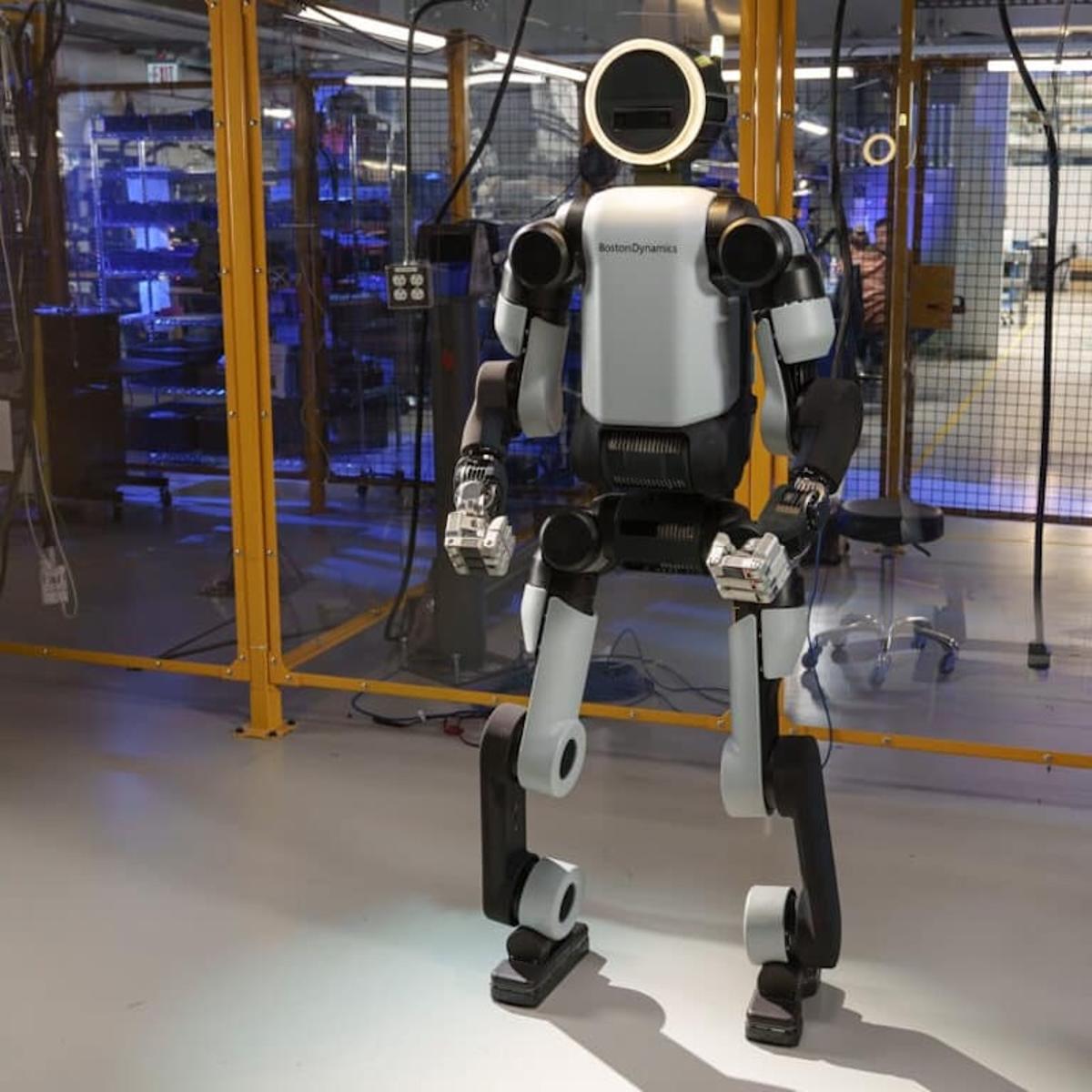
Boston Dynamics and Google DeepMind Announce AI Partnership Focused on Humanoid Robots
•January 25, 2026
0
Companies Mentioned


Why It Matters
By marrying world‑class robotics hardware with cutting‑edge AI foundation models, the alliance could accelerate the commercialization of humanoid robots and reshape factory automation across multiple sectors.
Key Takeaways
- •Gemini Robotics models integrated into Atlas humanoid platform
- •Joint research begins later 2026, focusing on manufacturing
- •Partnership targets visual‑language‑action capabilities for real‑world tasks
- •Boston Dynamics seeks to commercialize humanoids beyond 2024
- •DeepMind provides scalable, safe AI for diverse industrial applications
Pulse Analysis
The convergence of large‑scale AI foundation models and high‑performance robotics marks a turning point for the industry. DeepMind’s Gemini Robotics suite builds on multimodal Gemini architecture, delivering perception, reasoning, and tool‑use capabilities that were previously confined to lab‑scale prototypes. When these models are fused with Boston Dynamics’ Atlas—renowned for its agility and balance—the resulting system can interpret complex visual cues, understand natural language commands, and translate them into precise motor actions. This synergy addresses a longstanding bottleneck: enabling robots to adapt fluidly to unstructured, dynamic environments.
Manufacturing floors stand to benefit most immediately. Traditional automation relies on fixed, repeatable motions, but the Atlas‑Gemini combo promises flexible task execution, from assembling car chassis to handling irregular parts. By leveraging visual‑language‑action models, the robots can receive high‑level instructions—such as "install the left‑hand door panel"—and autonomously plan the necessary motions, reducing the need for extensive re‑programming. Early trials slated for later 2026 will focus on automotive lines, where speed, safety, and precision are paramount, offering a glimpse of how humanoid robots could supplement human workers in hazardous or ergonomically demanding roles.
Beyond factories, the partnership signals broader market dynamics. Competitors like Tesla and Amazon are also investing in embodied AI, but Boston Dynamics brings a proven mechanical platform, while DeepMind contributes research‑grade AI that scales across hardware. Successful deployment could lower entry barriers for midsize manufacturers, spurring a wave of robot‑as‑a‑service offerings. However, challenges remain in ensuring safety, reliability, and cost‑effectiveness at scale. If the collaboration navigates these hurdles, it may set a new benchmark for industrial robotics, accelerating the shift toward fully autonomous, adaptable production ecosystems.
Boston Dynamics and Google DeepMind announce AI partnership focused on humanoid robots
0
Comments
Want to join the conversation?
Loading comments...