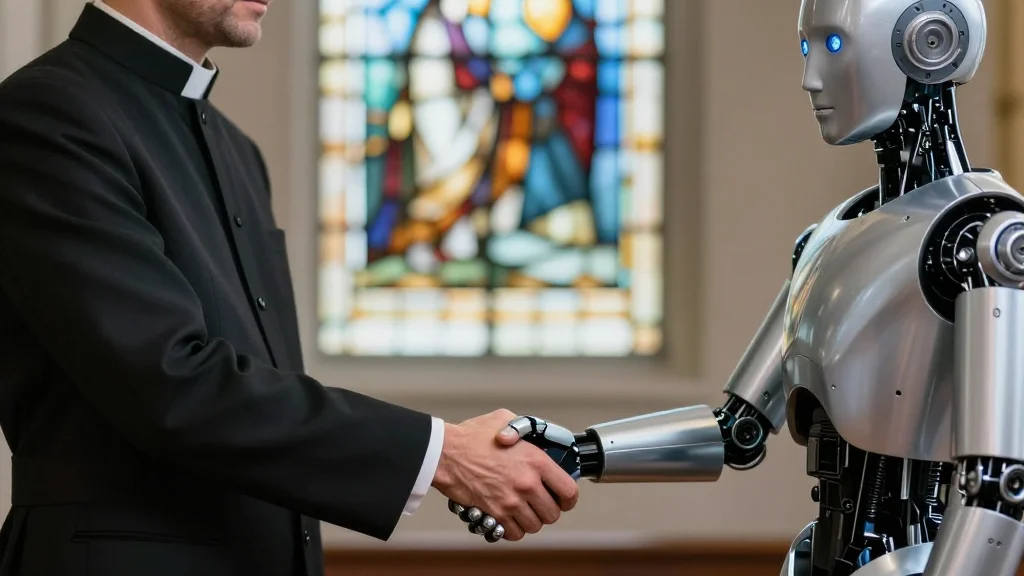
Can AI Be a ‘Child of God’? Inside Anthropic’s Meeting with Christian Leaders.
Companies Mentioned

Why It Matters
Integrating religious viewpoints into AI development could influence how future systems handle ethical dilemmas, affecting user trust and regulatory scrutiny. The decision signals a shift toward more diverse, albeit controversial, sources of moral guidance in the tech industry.
Key Takeaways
- •Anthropic valued at $380 billion seeks Christian ethical input
- •Claude chatbot’s success fuels talent acquisition and funding
- •Meeting sparked criticism over exclusive religious focus
- •Company aims to embed moral reasoning into AI models
- •Debate highlights broader AI governance challenges
Pulse Analysis
Anthropic’s outreach to Christian leaders underscores a growing trend where AI firms look beyond traditional engineering circles for moral guidance. While most tech companies rely on secular ethicists, the San Francisco‑based startup invited clergy to discuss concepts such as the sanctity of life, free will, and the societal impact of autonomous agents. This partnership reflects Anthropic’s belief that theological frameworks can complement algorithmic safety layers, offering a narrative lens that resonates with a sizable user base that identifies with Judeo‑Christian values.
The reaction from the public and industry observers has been mixed. Some commentators argue that privileging a single religious tradition risks embedding cultural bias into AI behavior, potentially alienating non‑Christian users and overlooking insights from other faiths or secular philosophy. Others see the move as a pragmatic step toward building trust, especially in markets where religious identity heavily influences consumer expectations. By positioning itself at the intersection of technology and spirituality, Anthropic may attract investors seeking socially responsible AI, but it also opens the company to heightened scrutiny from regulators concerned about bias and transparency.
From a market perspective, Anthropic’s $380 billion valuation gives it the runway to experiment with unconventional governance models. If the collaboration yields a demonstrably safer or more ethically aligned chatbot, competitors may feel pressure to adopt similar advisory structures, potentially reshaping the AI ethics landscape. However, the success of this experiment will hinge on measurable outcomes—such as reduced harmful outputs—and on how well Anthropic can communicate the role of religious input without compromising the perceived neutrality of its technology.
Can AI be a ‘child of God’? Inside Anthropic’s meeting with Christian leaders.
Comments
Want to join the conversation?
Loading comments...