Cerebras Targets $33B IPO as It Challenges Nvidia in AI Chips

Companies Mentioned


Why It Matters
Cerebras’s large‑scale chips promise faster, cheaper AI inference, potentially reshaping data‑center economics and diversifying the AI‑chip ecosystem beyond Nvidia’s dominance. The IPO also provides public investors exposure to a high‑growth segment of the AI hardware race.
Key Takeaways
- •Cerebras aims to raise $4.8 B at a $33 B valuation
- •Shares priced at $150‑$160, 20× oversubscribed demand
- •OpenAI contracts 750 MW of Cerebras inference compute through 2028
- •Single wafer‑scale chip reduces data movement, cutting inference latency
- •Nvidia’s $20 B Groq acquisition underscores fierce AI‑chip competition
Pulse Analysis
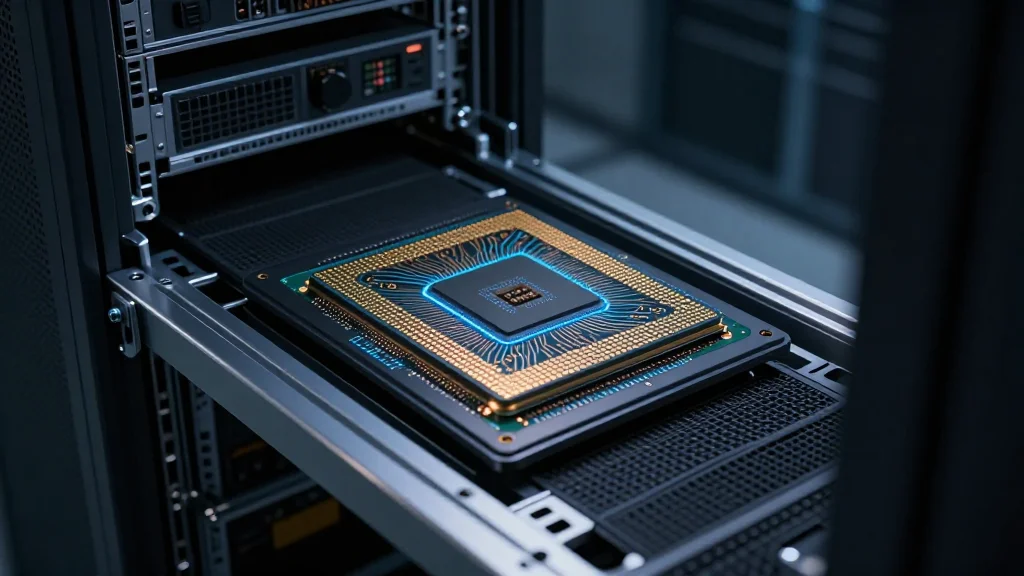
The AI‑chip landscape is entering a new phase as wafer‑scale processors challenge the traditional GPU model. Cerebras’s flagship chip, a single silicon die the size of a dinner plate, eliminates the need for dozens of smaller dies that must communicate across a board. By keeping data on‑chip, the architecture slashes latency and power consumption for inference workloads, a critical advantage as enterprises deploy ever‑larger language models. This technical edge has attracted marquee customers like OpenAI, which has committed more than $20 billion for sustained compute capacity, signaling confidence in the wafer‑scale approach.
Cerebras’s decision to go public underscores the market’s appetite for alternative AI‑hardware solutions. The company’s IPO, now targeting $4.8 billion at a $33 billion valuation, was met with demand twenty times the supply, reflecting investor enthusiasm for a player that can potentially undercut Nvidia’s pricing on inference tasks. The $150‑$160 share price range also suggests strong confidence in the firm’s growth trajectory, especially as data‑center operators scramble for compute amid global chip shortages. The OpenAI contract, guaranteeing 750 MW of power through 2028, provides a predictable revenue stream that bolsters the company’s financial outlook and validates its technology at scale.
Beyond the immediate financials, Cerebras’s rise could accelerate a broader shift in how AI services are delivered. Analysts differentiate between "answer inference," which demands ultra‑low latency for real‑time chat, and "agentic inference," which can tolerate higher latency but requires massive compute for autonomous tasks. Cerebras’s architecture is ideally suited for the former, positioning it to dominate the near‑term market while prompting competitors to innovate for the latter. As data‑center capacity expands—driven by investments from SoftBank in Europe and even orbital projects like Cowboy Space—the industry may see a diversification of hardware platforms, reducing reliance on Nvidia and fostering a more competitive, cost‑effective AI ecosystem.
Cerebras Targets $33B IPO as It Challenges Nvidia in AI Chips
Comments
Want to join the conversation?
Loading comments...