Chrome Gets Its Biggest Upgrade in Years — the New Gemini Side Panel Puts AI Agents, Multitasking, and Nano Banana Inside the Browser
•January 28, 2026
0
Companies Mentioned


Why It Matters
Embedding generative AI into the world’s leading browser reshapes productivity workflows and strengthens Google’s position against competing AI chat services. It also sets a new baseline for how browsers can automate routine web tasks.
Key Takeaways
- •Gemini side panel offers persistent AI assistance across tabs
- •Nano Banana enables in‑browser image generation and editing
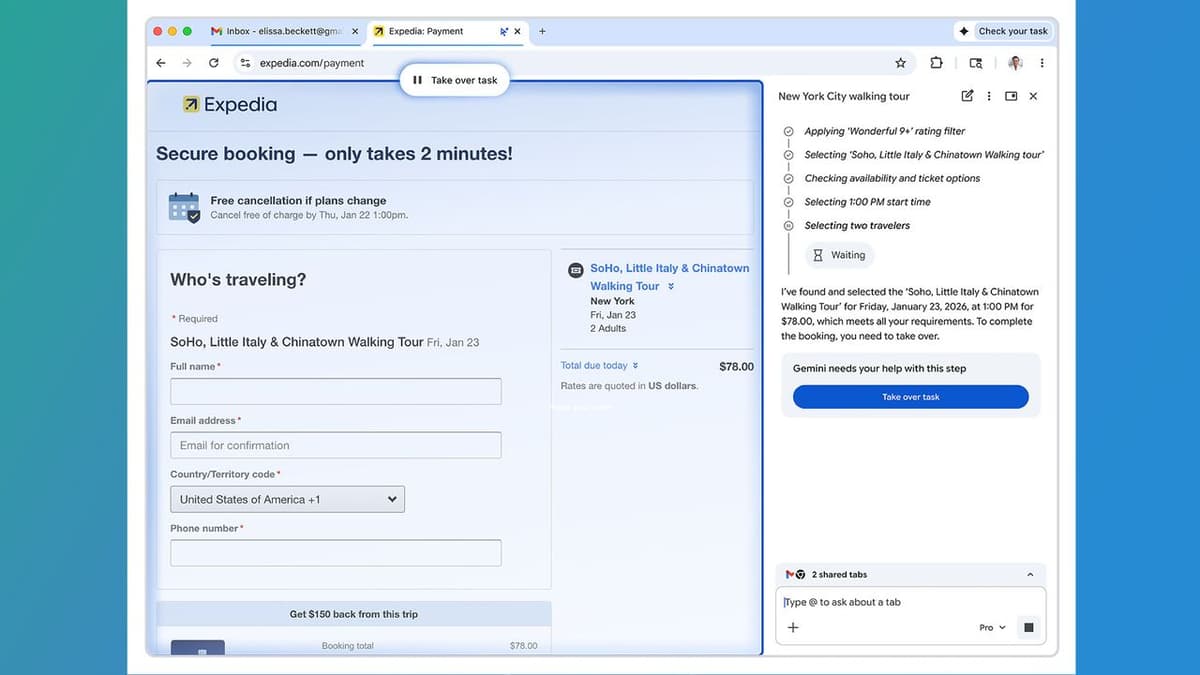
- •Auto Browse automates multi‑step web tasks with user approval
- •Personal Intelligence pulls data from Gmail, Calendar for context
- •Feature currently US‑only, preview for AI Pro/Ultra users
Pulse Analysis
Chrome’s transformation into an AI‑first browser reflects a broader industry push to embed generative models where users already spend time. With a market share that still dominates desktop browsing, Google can leverage its data ecosystem to deliver context‑aware assistance that rivals standalone chat platforms. By integrating Gemini directly into the UI, Chrome reduces friction, turning the browser into a continuous productivity hub rather than a passive window.
The Gemini side panel, Nano Banana image editor, and Auto Browse agent each target distinct user pain points. The side panel stays visible across tabs, allowing instant summarisation, comparison, and content generation without switching windows. Nano Banana brings on‑the‑fly image manipulation, turning a static design into a customizable visual with a single prompt. Auto Browse acts as an autonomous assistant, handling bookings, data gathering, and routine admin tasks while pausing for explicit user consent, thereby balancing efficiency with safety.
For enterprises and power users, these capabilities could streamline workflows, cut down on tab overload, and accelerate decision‑making. However, the rollout’s US‑only limitation and reliance on personal data raise privacy and adoption questions that Google must address through transparent controls. As competitors roll out their own browser‑based agents, Chrome’s AI integration may become a decisive factor in retaining user loyalty and shaping the next generation of web interaction.
Chrome gets its biggest upgrade in years — the new Gemini side panel puts AI agents, multitasking, and Nano Banana inside the browser
0
Comments
Want to join the conversation?
Loading comments...