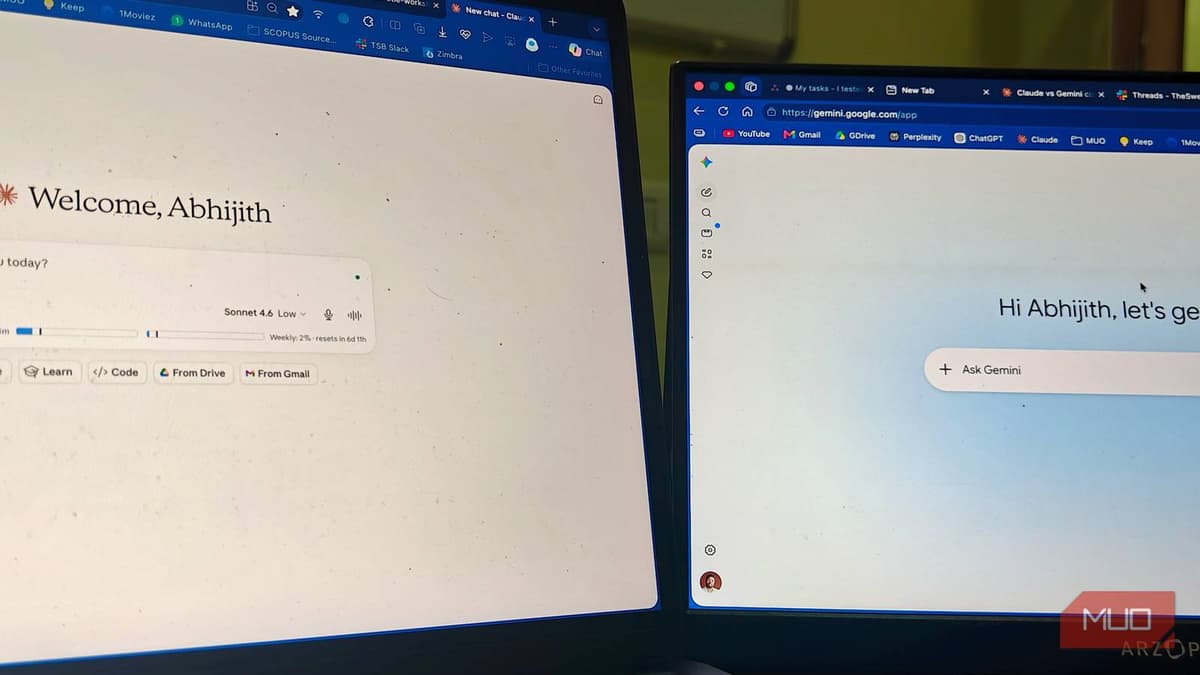
Claude Beat Gemini on a 150-Page Document Test, but Not for the Reason You'd Think
Companies Mentioned

Why It Matters
Enterprises relying on AI for deep document processing need reliable context retention, not just larger token limits. Claude’s consistent performance makes it a safer choice for detailed research tasks, while Gemini’s massive window benefits high‑level lookups.
Key Takeaways
- •Claude kept full context across intra‑text queries, Gemini missed items
- •Gemini offers up to 2 million token window, Claude up to 200 K
- •Larger token limits don’t guarantee consistent accuracy on long documents
- •Consistency, not token count, determines usefulness for detailed analysis
- •Claude’s constitutional AI yields more reliable synthesis on dense material
Pulse Analysis
Context windows are a defining feature of modern large language models, dictating how much text a model can ingest in a single prompt. While Google Gemini boasts a staggering 2 million‑token limit and Anthropic’s Claude caps at roughly 200 K tokens, the practical impact hinges on how well each model preserves relevance across that span. For businesses that feed lengthy contracts, research reports, or technical manuals into AI, the ability to maintain accurate intra‑document references can be the difference between actionable insight and missed nuance.
In a head‑to‑head test using a 150‑page master’s program syllabus, Claude demonstrated superior consistency. It accurately recalled course details across summary, retrieval, and synthesis queries, whereas Gemini dropped several entries despite staying within its token budget. This suggests that model architecture and training—Claude’s constitutional AI framework versus Gemini’s broader but shallower attention mechanisms—play a larger role than raw token capacity. Consistency, especially for tasks requiring precise cross‑referencing, emerges as the critical metric for enterprise adoption.
For decision‑makers, the takeaway is clear: choose AI tools based on proven reliability in handling dense, multi‑section documents rather than headline token counts. Claude’s stable performance makes it well‑suited for legal review, academic research, and complex data extraction, while Gemini’s expansive window can excel in quick overviews or when aggregating multiple large sources. As AI models continue to expand their context horizons, vendors will need to pair token growth with robust attention fidelity to meet the evolving demands of knowledge‑intensive industries.
Claude beat Gemini on a 150-page document test, but not for the reason you'd think
Comments
Want to join the conversation?
Loading comments...