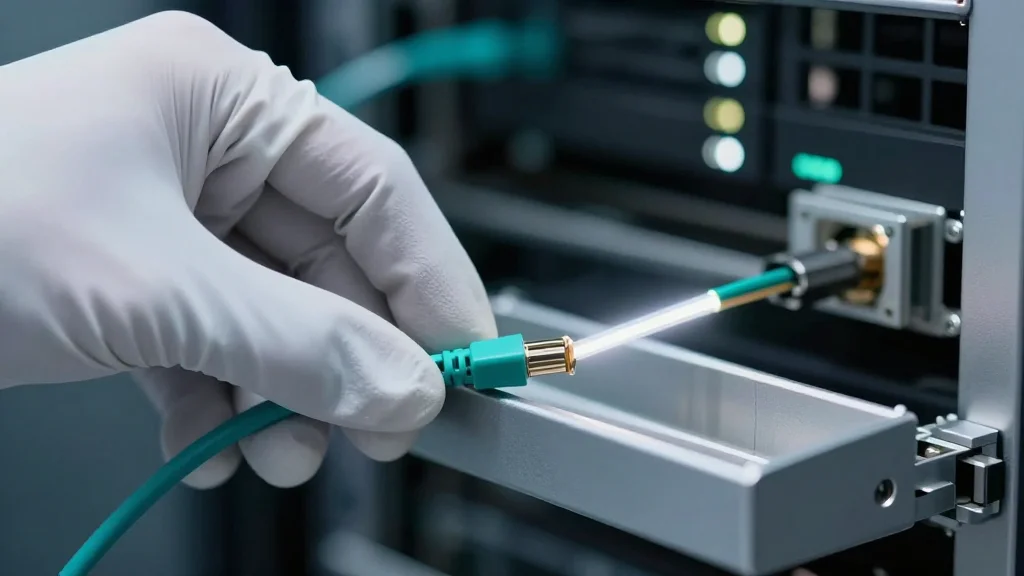
Data‑Center Fiber Tech Shortage Fuels Blue‑Collar AI Job Surge

Companies Mentioned

Why It Matters
The fiber‑tech shortage illustrates how the AI boom is extending beyond software and chips into the physical labor that underpins the cloud. By creating a new pipeline of skilled blue‑collar workers, companies can mitigate construction delays that would otherwise increase capital expenditures and postpone AI service rollouts. At the same time, the surge offers a pathway for displaced manufacturing workers to transition into high‑growth, well‑paid roles, addressing both talent scarcity and broader workforce displacement concerns. If the training initiatives succeed, they could set a template for industry‑wide collaborations that blend corporate funding with community‑college curricula, reshaping how the tech sector addresses skill gaps. Conversely, failure to close the gap may force data‑center developers to delay projects, inflating costs and slowing the deployment of next‑generation AI services that rely on massive compute capacity.
Key Takeaways
- •Meta launches a free, four‑week LevelUp Fiber Technician Pathway to train thousands for data‑center construction.
- •Industry report projects a need for nearly 200,000 additional fiber technicians to support AI infrastructure.
- •Cesar Ruiz describes low‑voltage technicians as essentially cable pullers, now specialized for fiber optics.
- •Amazon has previously sponsored fiber‑tech training in Ohio and Virginia, highlighting a broader corporate push.
- •Only about 25% of construction‑phase technicians are expected to stay for permanent maintenance roles.
Pulse Analysis
The current wave of low‑voltage training programs signals a strategic shift in how AI hardware ecosystems are built. Historically, data‑center expansion relied on a stable pool of electricians and general contractors; the rapid scaling required for AI workloads, however, has outpaced that supply. By branding the role as a "fiber technician," firms like Meta are not only attracting attention but also creating a distinct career track that can be quantified and marketed to job seekers.
From a market perspective, the infusion of skilled labor could compress the construction timeline for hyperscale facilities, which traditionally take 12‑18 months. Faster build‑outs translate into earlier revenue streams for cloud providers and lower amortization periods for the massive capital outlays involved. This dynamic may also intensify competition among hyperscalers, as the ability to staff projects efficiently becomes a differentiator alongside raw compute power.
Looking ahead, the sustainability of this model hinges on three factors: the scalability of training pipelines, the retention of talent post‑construction, and the alignment of wages with regional cost‑of‑living pressures. If trade schools can partner with multiple tech firms to offer standardized certifications, the labor market could stabilize. However, if wages lag behind demand, firms may face renewed shortages, prompting a second wave of corporate‑sponsored apprenticeships or even immigration‑based solutions. The next milestone will be Meta’s first cohort graduation and placement data, which will reveal whether the approach can be replicated at industry scale.
Data‑Center Fiber Tech Shortage Fuels Blue‑Collar AI Job Surge
Comments
Want to join the conversation?
Loading comments...