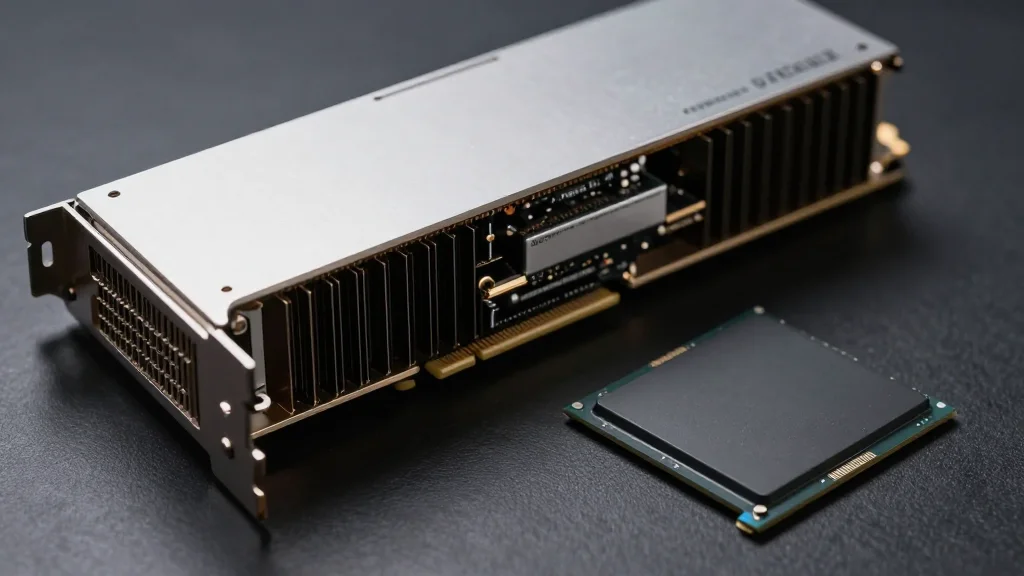
Enterprises Need to Think Beyond GPUs for Agentic AI, Analysts Say
Companies Mentioned
Why It Matters
The shift reduces infrastructure spend and power consumption while enabling faster, edge‑ready AI services. Companies that adopt CPU‑centric or ASIC‑based architectures will gain a competitive edge in cost‑effective inference performance.
Key Takeaways
- •Agentic AI shifts focus from GPU training to CPU/ASIC inference.
- •CPUs become orchestration layer, reducing power and cost for edge AI.
- •ASIC inferencing chips offer higher efficiency and lower total cost of ownership.
- •Cloud hyperscalers are expanding CPU and low-power ASIC fleets.
- •80‑85% of AI workloads expected to move to inference by 2026.
Pulse Analysis
The AI landscape is undergoing a structural pivot from the high‑cost, GPU‑driven training models that powered the early wave of generative AI to a more nuanced, inference‑focused paradigm known as agentic AI. Unlike large language model training, which demands massive parallel processing, agentic applications execute decision‑making workflows that can be handled efficiently by CPUs and purpose‑built ASICs. This transition promises to slash capital expenditures and energy bills, especially for enterprises that previously over‑provisioned GPU clusters for tasks that do not require raw parallelism.
Specialized hardware is now taking center stage. CPUs are being re‑positioned as the control plane of the AI stack, orchestrating data movement, model management, and edge deployments. Meanwhile, ASICs such as Nvidia’s newly licensed Groq‑derived inferencing chip deliver superior performance‑per‑watt, making them attractive for continuous, low‑latency workloads. Cloud giants—Google, Amazon, and Microsoft—have responded by bolstering their CPU fleets and introducing custom low‑power ASICs, giving customers a broader menu of cost‑effective compute options beyond traditional GPUs.
For businesses, the implications are clear: shifting the majority of AI workloads to inference will reshape budgeting, pricing models, and talent requirements. Enterprises that redesign their architectures around inference‑per‑watt metrics can achieve up to 50% lower operating costs while accelerating time‑to‑value for AI‑driven processes. As 80‑85% of AI tasks are projected to migrate to inference in the next two to three years, the winners will be those that adopt flexible, CPU‑centric or ASIC‑enhanced platforms that balance performance with sustainability.
Enterprises need to think beyond GPUs for agentic AI, analysts say
Comments
Want to join the conversation?
Loading comments...