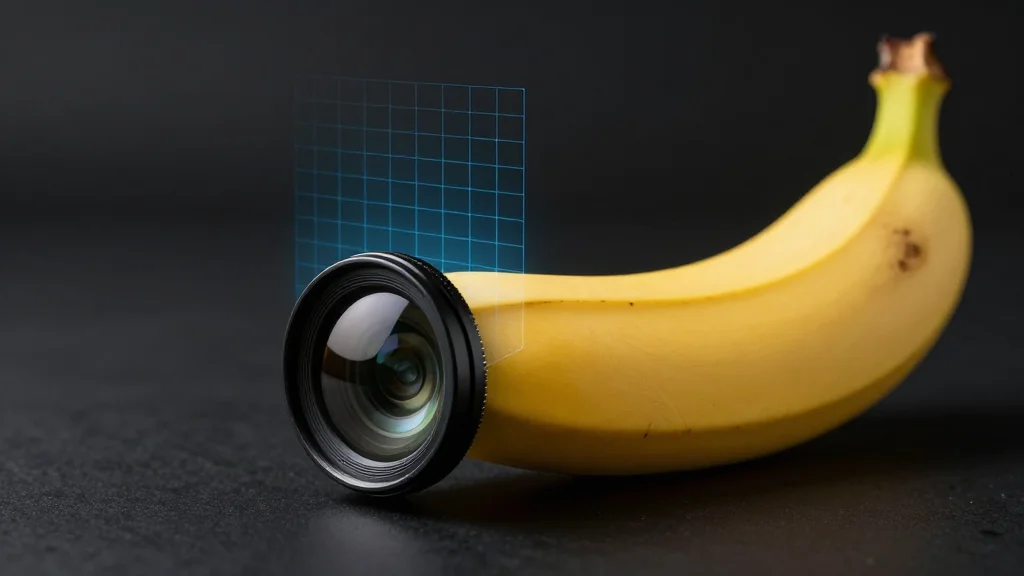
Google DeepMind's Vision Banana Beats SAM‑3 and Depth Anything V3 in Unified Vision Tasks

Companies Mentioned

Why It Matters
Vision Banana challenges the long‑standing division between generative and discriminative vision models, suggesting that a single architecture can master both creation and interpretation. This convergence could streamline AI development pipelines, lower barriers for smaller firms to adopt high‑performance vision, and accelerate innovation in fields that rely on accurate depth and segmentation, such as robotics, augmented reality, and medical imaging. By proving that instruction‑tuning can unlock latent visual understanding in a generative model, DeepMind sets a new research direction. Future work may extend the paradigm to multimodal tasks that combine text, audio, and 3D data, potentially reshaping how AI systems are trained and deployed across the industry.
Key Takeaways
- •Vision Banana outperforms SAM‑3 on semantic segmentation
- •Surpasses Depth Anything V3 on metric depth estimation
- •Built on Nano Banana Pro with lightweight instruction‑tuning
- •Outputs all task results as RGB images, eliminating task‑specific heads
- •Research code and weights slated for release later in 2026
Pulse Analysis
DeepMind’s Vision Banana arrives at a moment when the AI community is grappling with model bloat and the operational costs of maintaining dozens of specialist networks. By demonstrating that a generative backbone can be repurposed for perception tasks with minimal data, the work revives the argument that pre‑training on a broad objective creates a versatile latent space. Historically, vision models have been split: convolutional nets for recognition, diffusion models for synthesis. Vision Banana blurs that line, echoing the trajectory seen in language AI where a single large model now handles translation, summarization, and code generation.
From a competitive standpoint, Vision Banana puts pressure on companies that have invested heavily in task‑specific architectures, such as Meta’s Segment Anything Model series and OpenAI’s upcoming multimodal offerings. If DeepMind can commercialize a unified model that delivers equal or better performance, it could shift procurement decisions toward platforms that promise lower total cost of ownership. However, the approach also raises questions about data efficiency and inference speed; encoding depth or normals as RGB images may introduce overhead compared to direct regression heads. The upcoming release of the model will reveal whether the trade‑off is acceptable at scale.
Looking ahead, the broader AI market may see a wave of similar instruction‑tuned vision models, especially as large‑scale image generation datasets become more accessible. The key will be balancing the flexibility of a generalist with the precision required for safety‑critical applications. Vision Banana’s success could accelerate the convergence of generative and analytical AI, prompting a re‑evaluation of how research budgets are allocated between building new specialist models and refining universal foundations.
Google DeepMind's Vision Banana Beats SAM‑3 and Depth Anything V3 in Unified Vision Tasks
Comments
Want to join the conversation?
Loading comments...