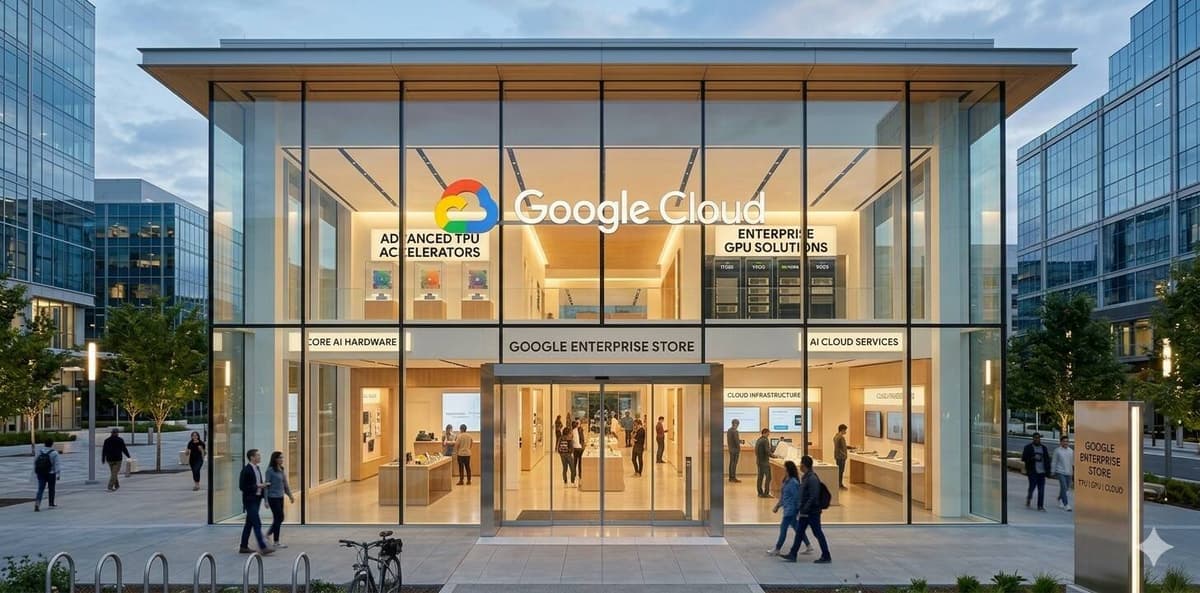
Google to Sell Its TPUs to some Customers, Who Also Fancy Big-G GPUs
Companies Mentioned
Why It Matters
Selling TPUs creates a new revenue stream and helps Google fund next‑gen silicon research, while signaling deeper competition in the AI‑chip market against rivals like AWS. The initiative also leverages Google’s massive cloud backlog to accelerate growth beyond services alone.
Key Takeaways
- •Google will sell TPUs to select customers for on‑premise use
- •TPU sales to add modest 2026 revenue, larger 2027
- •Cloud revenue hit $20 billion, 63% YoY growth
- •$460 billion backlog could push annual revenue past $130 billion
- •Capital spend rose to $35.7 billion, 60% on servers
Pulse Analysis
Google’s decision to market its custom Tensor Processing Units marks a strategic pivot from pure cloud services to hardware sales, echoing a broader industry trend where hyperscale providers monetize their silicon expertise. By offering TPUs to AI labs, financial firms, and HPC customers, Google taps into a market where demand outstrips supply, positioning itself ahead of Amazon Web Services, which has only hinted at a similar model. The move also diversifies Alphabet’s revenue mix, reducing reliance on advertising and cloud subscriptions.
Financially, the TPU rollout is modest in the short term but could become a meaningful contributor by 2027, according to CFO Anat Ashkenazi. The Q1 2026 results already showcase a 63% surge in cloud revenue to $20 billion and a staggering $460 billion backlog, suggesting ample capacity to absorb new hardware orders. Capital expenditures rose to $35.7 billion, with 60% allocated to servers, underscoring the company’s commitment to scaling infrastructure that supports both cloud workloads and on‑premise chip deployments. This spending boost also nudges the five‑year capex outlook to $180‑$190 billion, reflecting aggressive investment in AI‑driven services.
Strategically, selling TPUs serves multiple purposes: it generates cash to fund next‑generation silicon research, creates economies of scale that lower internal costs, and strengthens Google’s bargaining position with enterprise customers seeking integrated AI solutions. As generative AI continues to drive higher query volumes and ad relevance, the ability to offer end‑to‑end hardware and software stacks could become a differentiator in the fiercely competitive cloud market. If Google can convert a portion of its massive backlog into hardware sales, it may edge closer to rival AWS’s $150 billion annual run rate, reinforcing its long‑term growth trajectory.
Google to sell its TPUs to some customers, who also fancy big-G GPUs
Comments
Want to join the conversation?
Loading comments...