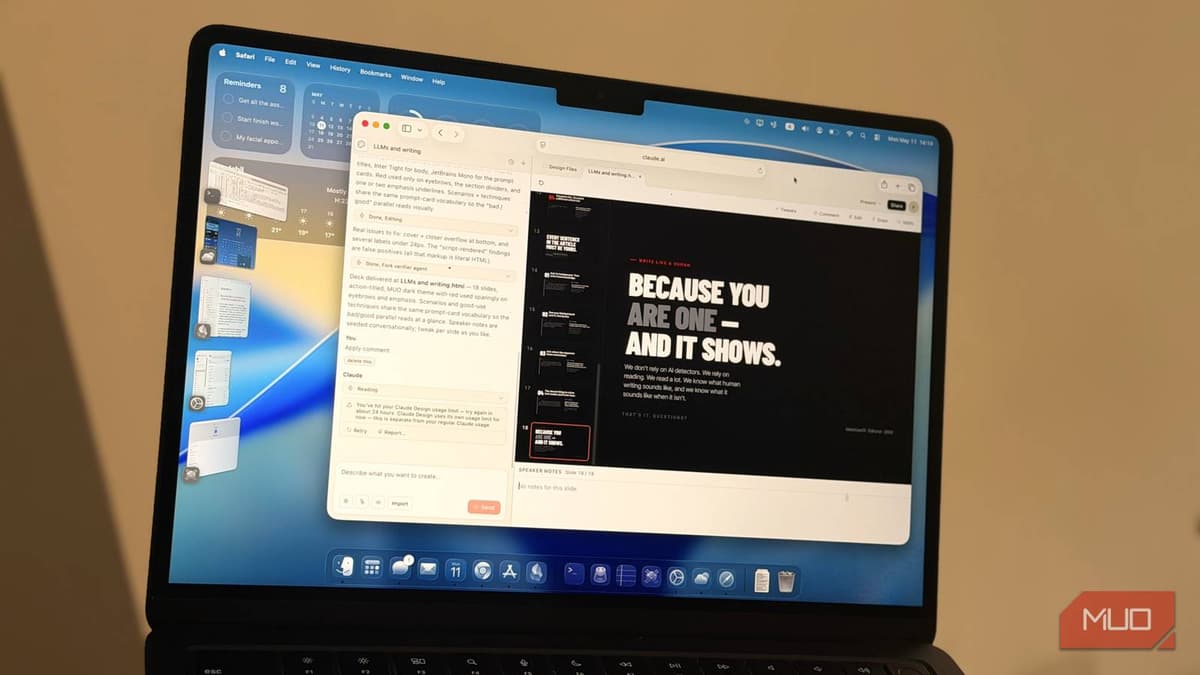
I Let Claude Design Build My Entire Slideshow, and It Beats Every Other Tool I've Used
Companies Mentioned

Why It Matters
Claude Design streamlines presentation creation, cutting hours of design work while preserving brand identity, but its cost structure may restrict widespread adoption.
Key Takeaways
- •Claude Design uses Design Systems for consistent, brand‑aligned slides
- •Setup requires uploading assets; initial effort saves future time
- •Generates full decks in under five minutes without prompt engineering
- •Edit mode propagates changes but consumes credits
- •Weekly token limits restrict trial and iterative design
Pulse Analysis
AI‑driven design platforms are reshaping how professionals produce visual content, and Claude Design is a notable entrant. Unlike traditional tools that rely on manual templates, Claude leverages Anthropic’s Opus 4.7 model to ingest a user‑provided Design System—logos, color palettes, and prior decks—and automatically apply that style across an entire slide deck. This approach eliminates the repetitive task of matching fonts and layouts, delivering a cohesive look that feels custom‑crafted rather than generic AI output. The technology reflects a broader shift toward generative design systems that learn from brand assets, promising faster turnaround for marketing, sales, and internal communications.
In practice, the workflow is strikingly efficient. Users upload their assets, paste an outline or speaker notes, and Claude asks clarifying questions before producing a polished deck in minutes. Export options span PPTX, PDF, HTML, and image files, giving flexibility for downstream editing or direct presentation. Compared with Google Slides’ Gemini, which only refines one slide at a time, Claude’s batch generation offers a clear productivity boost. Yet the service’s credit‑based pricing means each edit—especially those made through the AI‑driven Edit mode—burns tokens, and the weekly allotment can be exhausted after a single comprehensive project. This cost model forces teams to plan carefully and limits the tool’s suitability for exploratory or iterative design cycles.
For businesses, Claude Design presents a trade‑off between speed and expense. Companies with established brand guidelines can reap significant time savings by front‑loading the Design System setup, then generating decks for sales pitches, webinars, or investor updates on demand. However, organizations must weigh the token consumption against the value of reduced design labor, especially if they lack a high‑tier subscription. As AI design tools mature and pricing structures evolve, we can expect broader adoption, but for now, Claude Design is best positioned for enterprises that can afford the premium and have clear, well‑defined presentation needs.
I let Claude Design build my entire slideshow, and it beats every other tool I've used
Comments
Want to join the conversation?
Loading comments...