Mathematicians Stunned by AI's Biggest Breakthrough in Mathematics Yet
Companies Mentioned

Why It Matters
The achievement proves AI can contribute to fundamental research, accelerating discovery across science and engineering while reshaping how mathematicians approach conjectures.
Key Takeaways
- •OpenAI AI solves 80‑year‑old Erdős conjecture
- •Proof praised as journal‑ready by top mathematicians
- •First AI‑generated proof matching human‑level rigor
- •Breakthrough could speed up research in many fields
- •Raises questions about future role of mathematicians
Pulse Analysis
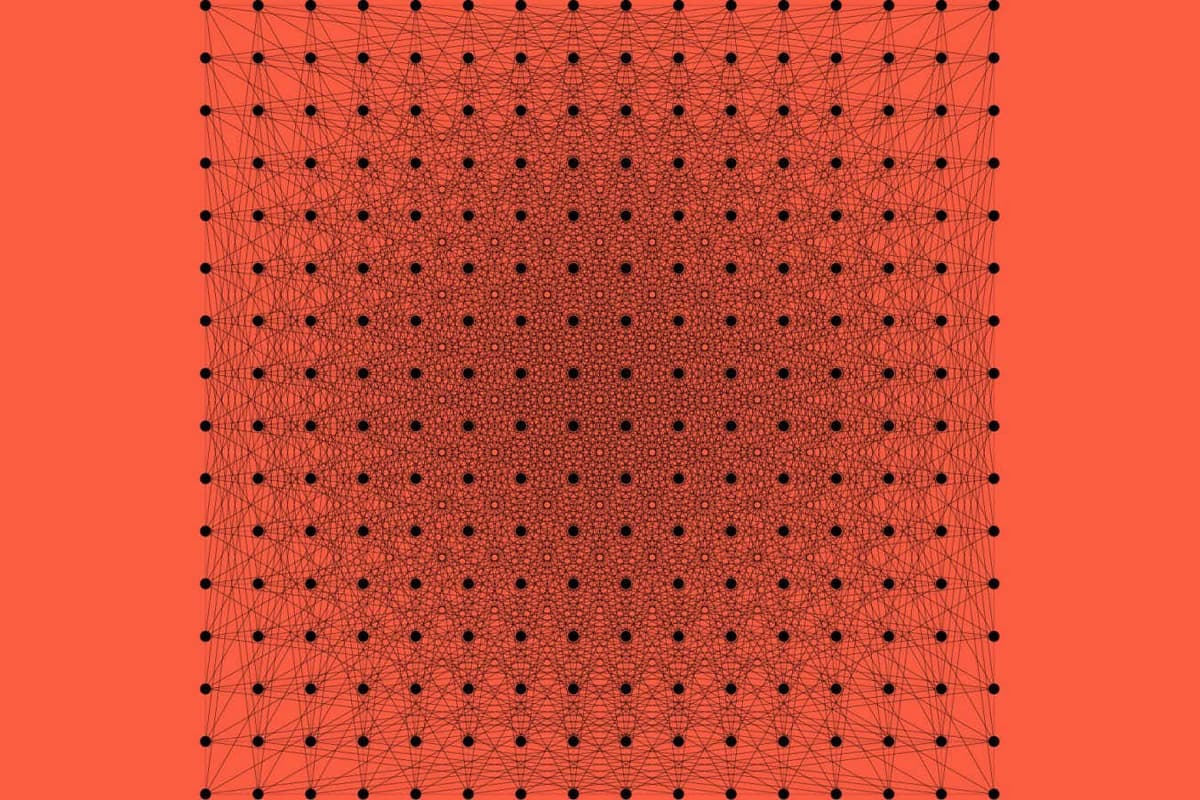
The planar unit‑distance problem, first articulated by Paul Erdős in the 1940s, asks how many equal‑length segments can be drawn between points on an infinite plane without overlapping. For decades, the question resisted proof despite efforts from leading combinatorialists. Recent advances in machine learning have enabled AI to assist with symbolic reasoning, but none have produced a proof that satisfied the rigorous standards of pure mathematics. OpenAI’s latest model, built on a transformer architecture fine‑tuned with formal theorem‑proving datasets, finally bridged that gap, delivering a complete, verifiable solution.
The AI’s proof was submitted to the Annals of Mathematics and immediately drew acclaim from the community. Tim Gowers described it as a “milestone in AI mathematics,” noting that he would have accepted the paper without hesitation. Misha Rudnev called the result a “bomb” that he did not expect to see in his lifetime. The model not only generated the logical steps but also supplied the necessary geometric constructions, all of which were checked by independent verification tools, confirming the result’s correctness.
Beyond the academic triumph, the breakthrough signals a shift in how complex problems may be tackled across industries. Engineers, cryptographers, and data scientists can now look to AI for insights that require deep abstraction, potentially shortening development cycles for technologies ranging from materials design to quantum algorithms. However, the success also raises questions about intellectual ownership, the future training of mathematicians, and the need for robust validation frameworks. As AI continues to mature, collaboration between human experts and intelligent systems is likely to become a cornerstone of next‑generation innovation.
Mathematicians stunned by AI's biggest breakthrough in mathematics yet
Comments
Want to join the conversation?
Loading comments...