On-Device AI Agents Hit a Hard Memory Limit. Apple's New Architecture Routes Around It.
Companies Mentioned

Why It Matters
By eliminating the DRAM ceiling, Apple gives enterprises a high‑capacity on‑device AI option, but the opaque offload logic creates compliance and performance uncertainties.
Key Takeaways
- •AFM 3 Core Advanced stores 20 B parameters in NAND flash, not DRAM
- •Expert routing occurs once per prompt, reducing flash‑to‑DRAM bandwidth demand
- •Active parameters scale from 1 B to 4 B based on task complexity
- •Server‑side AFM 3 Cloud Pro runs on Nvidia GPUs in Google Cloud
- •Apple has not disclosed energy, latency, or offload decision criteria
Pulse Analysis
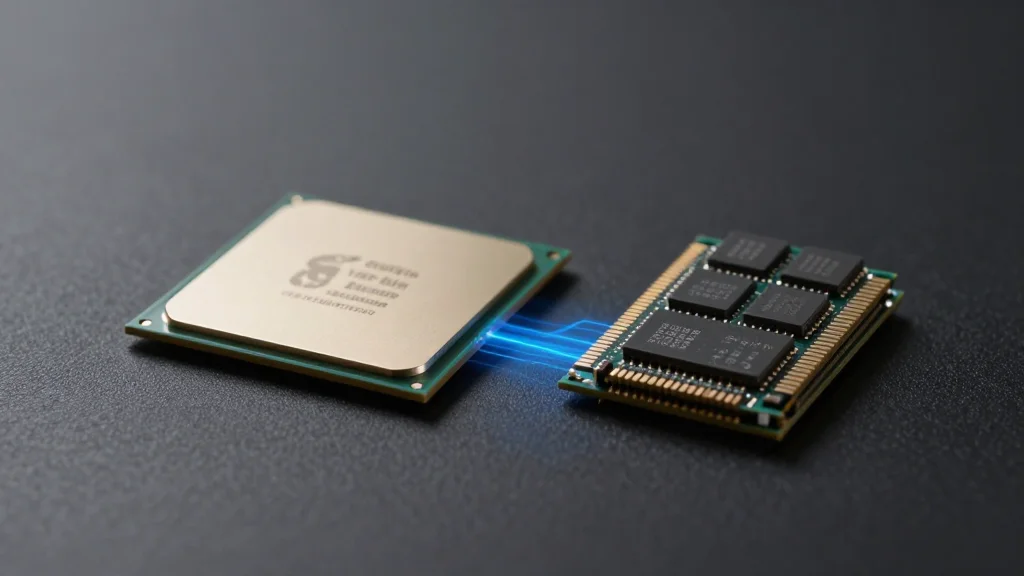
The on‑device AI market has long been constrained by the "DRAM wall" – the practical limit on how many model parameters can fit into a device’s volatile memory. Traditional mobile models stay under a few hundred million parameters, forcing developers to trade capability for locality. Apple’s AFM 3 Core Advanced sidesteps this bottleneck by housing its entire 20‑billion‑parameter weight matrix in NAND flash, a non‑volatile storage medium with far higher capacity. By treating flash as the permanent repository and using DRAM only as a temporary buffer for selected experts, Apple enables far larger models to run locally without the prohibitive power and heat penalties of loading the full model into RAM.
The architecture hinges on Instruction‑Following Pruning (IFP), which predicts the most relevant expert sub‑networks for a given prompt and loads them into DRAM just once. This per‑prompt routing contrasts with conventional Mixture‑of‑Experts (MoE) systems that switch experts token‑by‑token, a pattern infeasible given NAND‑to‑DRAM bandwidth limits. By scaling active parameters between 1 billion for simple tasks and up to 4 billion for complex reasoning, the model balances performance and resource use. While this design promises lower latency and reduced energy consumption compared to cloud round‑trips, Apple has not released concrete figures on power draw, thermal impact, or inference speed, leaving enterprises to speculate on real‑world viability.
For enterprise architects, the breakthrough reshapes the deployment calculus. Regulated industries can now consider a truly on‑device, high‑capacity agent without surrendering data to the cloud, yet the reliance on Apple’s Private Cloud Compute for more demanding workloads introduces a new dependency on Google Cloud’s Nvidia GPUs. The lack of transparency around offload triggers raises compliance challenges, especially where audit trails must show where inference occurs. As Apple prepares a detailed technical report later this summer, the industry will watch for benchmark data that could set a new baseline for on‑device AI, potentially prompting competitors to adopt similar flash‑based architectures and accelerating the shift toward hybrid edge‑cloud AI ecosystems.
On-device AI agents hit a hard memory limit. Apple's new architecture routes around it.
Comments
Want to join the conversation?
Loading comments...