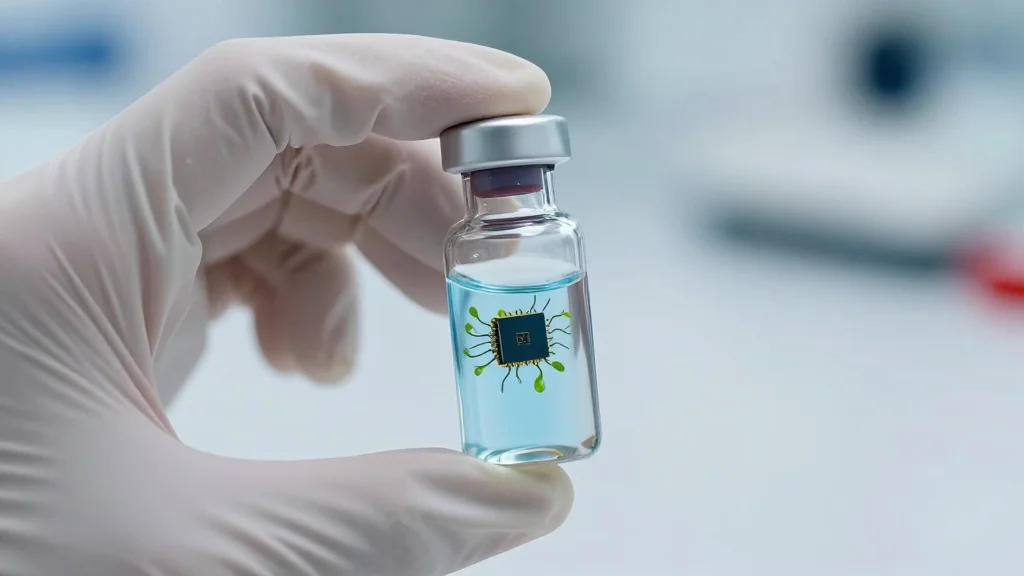
OpenAI Debuts GPT-Rosalind, a New Limited Access Model for Life Sciences, and Broader Codex Plugin on Github
Companies Mentioned


Why It Matters
By providing a specialized AI partner for hypothesis generation and experiment planning, GPT‑Rosalind could dramatically shorten drug‑development timelines and lower R&D expenditures, reshaping the competitive landscape of biotech and pharma.
Key Takeaways
- •GPT‑Rosalind fine‑tuned for genomics, protein engineering, chemistry
- •Outperformed GPT‑5.4 on 6 of 11 LABBench2 tasks
- •Ranked above 95th percentile of human experts in RNA prediction
- •Codex plugin connects to 50+ public multi‑omics databases
- •Access limited to qualified US enterprise customers under Trusted Access
Pulse Analysis
The life‑sciences sector has long wrestled with fragmented workflows that force researchers to juggle disparate databases, design tools, and literature sources. While general‑purpose large language models have offered conversational assistance, they lack the depth required for complex hypothesis synthesis and experimental design. OpenAI’s decision to launch GPT‑Rosalind marks a strategic pivot toward domain‑specific reasoning, positioning AI as a co‑investigator rather than a mere text generator. By embedding biochemical knowledge directly into the model’s architecture, OpenAI aims to bridge the gap between data‑rich discovery and actionable laboratory plans, a move that could compress the typical 10‑ to 15‑year, multi‑billion‑dollar drug‑development cycle.
Technical validation underscores the model’s promise. In BixBench, a benchmark for real‑world bioinformatics tasks, GPT‑Rosalind achieved leading scores, while LABBench2 testing showed it beating the upcoming GPT‑5.4 on six of eleven tasks, notably excelling in CloningQA, which demands end‑to‑end reagent design. A partnership with Dyno Therapeutics further demonstrated the model’s prowess: on unpublished RNA sequences, its predictions landed in the 95th percentile of human experts, and its sequence‑generation performance reached the 84th percentile. The accompanying Codex plugin acts as an orchestration layer, linking the model to more than 50 public multi‑omics databases, thereby automating repetitive queries and enabling seamless, long‑horizon scientific workflows.
From a business perspective, OpenAI’s gated rollout signals both caution and confidence. By restricting access to vetted U.S. enterprises under a Trusted Access framework, the company mitigates misuse while offering a cost‑free preview that encourages early adoption. Industry heavyweights—Amgen, Moderna, NVIDIA—have already voiced enthusiasm, citing potential acceleration of therapeutic pipelines and cost reductions akin to the 40% protein‑production savings reported in prior collaborations with Ginkgo Bioworks. If GPT‑Rosalind delivers on its promise, it could become a standard tool for biotech firms seeking to navigate the vast search space of biology, ultimately reshaping R&D economics and competitive dynamics.
OpenAI debuts GPT-Rosalind, a new limited access model for life sciences, and broader Codex plugin on Github
Comments
Want to join the conversation?
Loading comments...