PhysicsX Secures $300 Million Series C, Valued at $2.4 Billion

Why It Matters
PhysicsX’s $300 million raise underscores the accelerating convergence of artificial intelligence and high‑tech manufacturing, a sector historically dominated by incremental engineering improvements. By injecting AI into the design and production of complex components, the startup promises to cut development cycles, lower material waste and enable more rapid innovation in critical industries such as aerospace and semiconductors. The involvement of sovereign investors like Temasek signals that governments see strategic value in AI‑enabled manufacturing for economic competitiveness and supply‑chain resilience. The funding also highlights a shift in venture capital focus from consumer‑facing AI applications to enterprise‑grade solutions that address deep‑rooted industrial challenges. As AI models become more capable of handling physics‑based simulations, firms like PhysicsX could redefine the cost structure of manufacturing, potentially reshaping global trade patterns and the geographic distribution of high‑value production.
Key Takeaways
- •PhysicsX raised $300 million in a Series C round led by Temasek.
- •The financing lifts the startup’s valuation to roughly $2.4 billion, up from under $1 billion a year earlier.
- •New investors include Intrepid Growth Partners and M&G Catalyst; existing backers are Nvidia and Applied Materials.
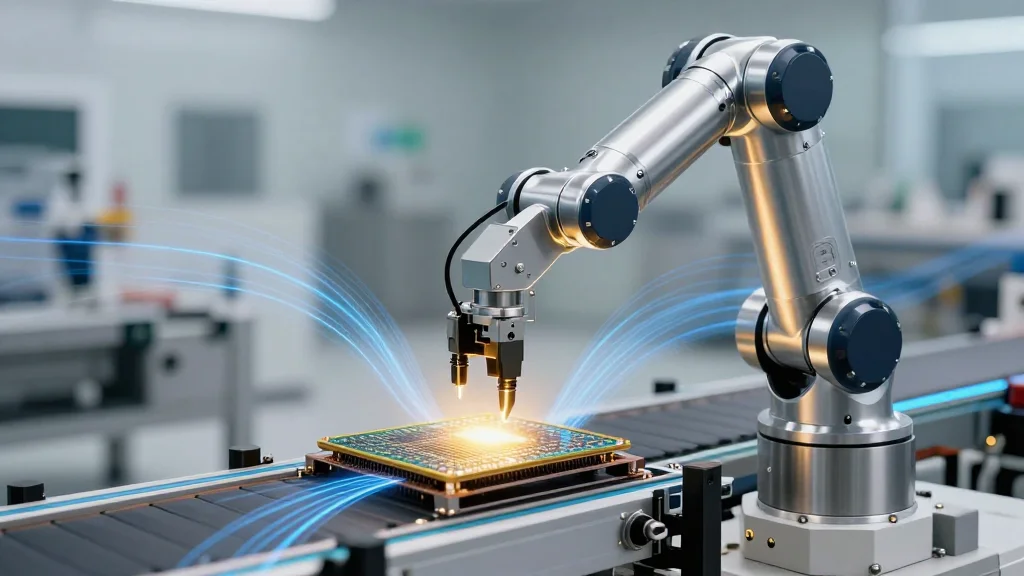
- •AI models target complex components for jet engines, semiconductors and other high‑tech manufacturing.
- •The capital will fund talent expansion, platform scaling and deeper OEM partnerships across Europe and Asia.
Pulse Analysis
PhysicsX’s rapid valuation climb reflects a broader market inflection where AI moves from software‑only use cases into the physical production realm. Historically, manufacturing has been slow to adopt disruptive technologies due to high capital costs and stringent safety standards. However, the generative AI wave—driven by advances in large language and diffusion models—offers a new lever: the ability to simulate material properties and design alternatives at a fraction of the traditional computational expense. PhysicsX’s strategy of pairing its AI stack with Nvidia’s GPU leadership and Applied Materials’ process expertise creates a compelling value proposition that bridges the gap between algorithmic insight and real‑world fabrication.
From an investment perspective, Temasek’s lead role signals sovereign interest in securing a stake in the next generation of industrial value chains. This mirrors similar moves by other sovereign funds that are targeting AI‑driven climate tech and biotech, suggesting a diversification of state‑backed capital toward high‑margin, technology‑intensive sectors. The presence of established chip‑makers as early backers also validates the technical credibility of PhysicsX’s models, which must meet the exacting tolerances of semiconductor manufacturing.
Looking ahead, the key risk for PhysicsX lies in proving commercial ROI at scale. Pilot deployments will need to demonstrate quantifiable reductions in cycle time and cost—metrics that are closely scrutinized by OEMs. If successful, the startup could trigger a wave of consolidation, with larger industrial conglomerates acquiring AI specialists to internalize the technology. Conversely, failure to meet performance expectations could dampen investor enthusiasm for deep‑tech AI in manufacturing, slowing the sector’s momentum. Either outcome will shape how quickly AI becomes a core pillar of global manufacturing strategy.
PhysicsX Secures $300 Million Series C, Valued at $2.4 Billion
Comments
Want to join the conversation?
Loading comments...