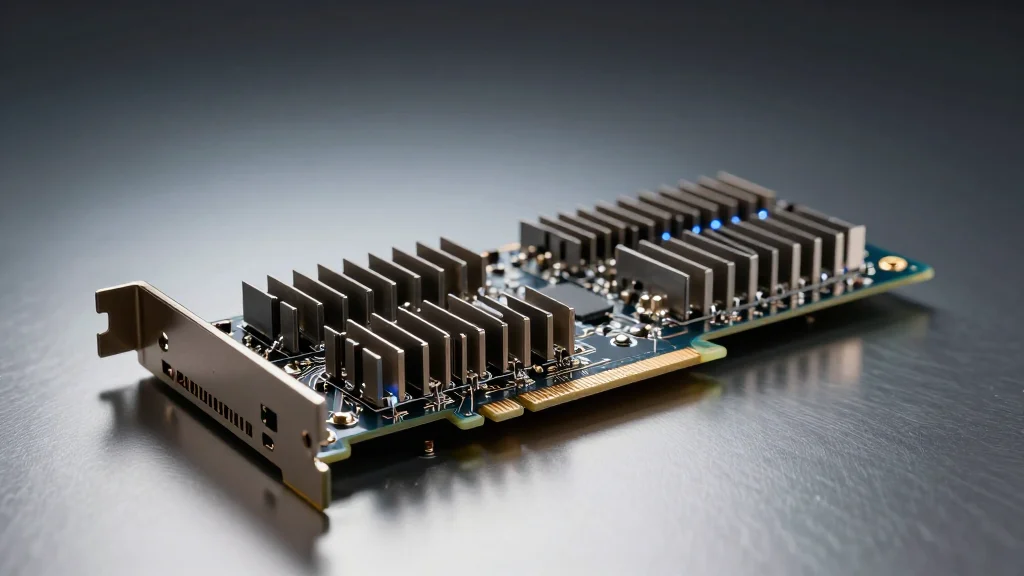
Positron AI Enters Nvidia Turf With Oracle Deal
Companies Mentioned

Why It Matters
The Oracle contract validates Positron’s ability to compete with Nvidia in data‑center inference, opening a revenue pathway in a market projected to double by 2026. Success could diversify the AI silicon ecosystem and reduce reliance on a few dominant players.
Key Takeaways
- •Positron secured its first AI inference chip deployment with Oracle’s cloud
- •Deal involves tens of millions of dollars in air‑cooled rack systems
- •Asimov chip targets 450‑500 W TDP, using LPDDR memory for high bandwidth
- •Positron aims for 0.1% of the $50 billion AI GPU market
- •TSMC Arizona capacity constraints push production to Taiwan through 2027
Pulse Analysis
The AI inference segment is accelerating faster than training, with analysts like Deloitte forecasting it will represent two‑thirds of AI compute by 2026, a market worth roughly $50 billion. Enterprises are seeking cost‑efficient, high‑throughput solutions that can handle massive models without the power and cooling demands of traditional GPUs. In this environment, startups that can deliver air‑cooled, power‑dense chips are gaining attention, and Positron’s recent Oracle win signals that hyperscalers are willing to experiment beyond Nvidia’s dominant offerings.
Positron differentiates itself through the Asimov processor, which forgoes expensive HBM in favor of commodity LPDDR attached via an organic substrate. This architecture delivers up to 11 TB/s of raw memory bandwidth while achieving a usable bandwidth utilization of over 90%, a stark contrast to the 20‑50% typical of HBM‑based GPUs. The chip’s 450‑500 W thermal design power enables deployment in standard air‑cooled racks, addressing a niche of data centers that lack liquid‑cooling infrastructure but still possess idle power capacity. By targeting mixture‑of‑experts inference workloads, Positron aims to carve out a specialized use case where latency and cost are paramount.
From a business perspective, the Oracle contract, valued in the tens of millions, is a foothold that could translate into larger deals with other cloud and enterprise customers such as Jump Trading, Cloudflare, and Crusoe. While Positron acknowledges that capturing even 0.1% of the GPU market would generate significant revenue, its growth hinges on securing TSMC production slots—currently limited to Taiwan due to high demand from Apple and Nvidia. If the company can navigate these supply‑chain challenges, it may help diversify the AI silicon supply chain and offer a viable, lower‑cost alternative for inference‑heavy workloads.
Positron AI Enters Nvidia Turf With Oracle Deal
Comments
Want to join the conversation?
Loading comments...