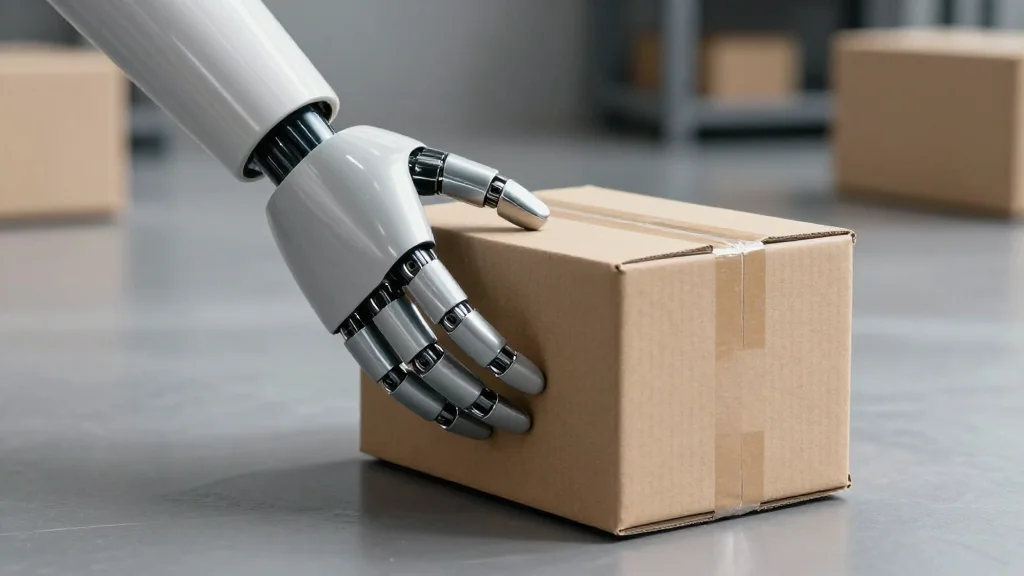
Silicon Valley's New Slogan: Let's Get Physical
Companies Mentioned





Why It Matters
The convergence of AI and robotics promises to automate core labor‑intensive tasks, opening a multitrillion‑dollar market and reshaping manufacturing, logistics, and consumer services. Companies that secure the hardware‑software stack first will capture strategic advantage in the emerging physical‑AI economy.
Key Takeaways
- •Nvidia releases humanoid robot blueprint for researchers, due 2026.
- •Robotics funding surged to $23 billion this year, $26 billion 2025 total.
- •Figure AI valued at $39 billion signs logistics deal with Catalyst Brands.
- •OpenAI re‑enters robotics, hiring engineers for household‑task arm.
- •Tesla aims to sell Optimus to public by end‑2027.
Pulse Analysis
The latest wave of "physical AI" reflects a strategic pivot from purely digital assistants to machines that can manipulate the real world. Nvidia's open‑source humanoid design, built on Unitree hardware and powered by its AI chips, lowers the barrier for academic and corporate labs to prototype robots without stitching together disparate components. By standardizing the chassis, power system, and sensor suite, Nvidia aims to accelerate research cycles and create a shared ecosystem that could drive rapid innovation across the sector.
Capital flows illustrate the magnitude of the opportunity. PitchBook data shows global robotics investment climbing from roughly $4 billion in 2019 to $26 billion in 2025, with $23 billion raised so far this year alone. Industry leaders tout a "multitrillion‑dollar" economic impact, citing potential gains in manufacturing, warehousing, and consumer services. Startups like Figure AI are already translating demos into commercial contracts, while legacy firms such as Hyundai‑owned Boston Dynamics and Agility Robotics are scaling deployments for major retailers and logistics providers.
Talent competition is intensifying as firms scramble to build the software brains and mechanical expertise required for autonomous humanoids. OpenAI's renewed robotics hiring, Meta's acquisition of Assured Robot Intelligence, and Tesla's ambitious Optimus timeline signal a race to secure the next generation of engineers and data scientists. The convergence of massive funding, standardized hardware, and a deepening talent pool suggests that within the next five years, physical AI could transition from laboratory curiosities to ubiquitous workplace collaborators, fundamentally altering how goods are produced, moved, and serviced.
Silicon Valley's new slogan: Let's get physical
Comments
Want to join the conversation?
Loading comments...