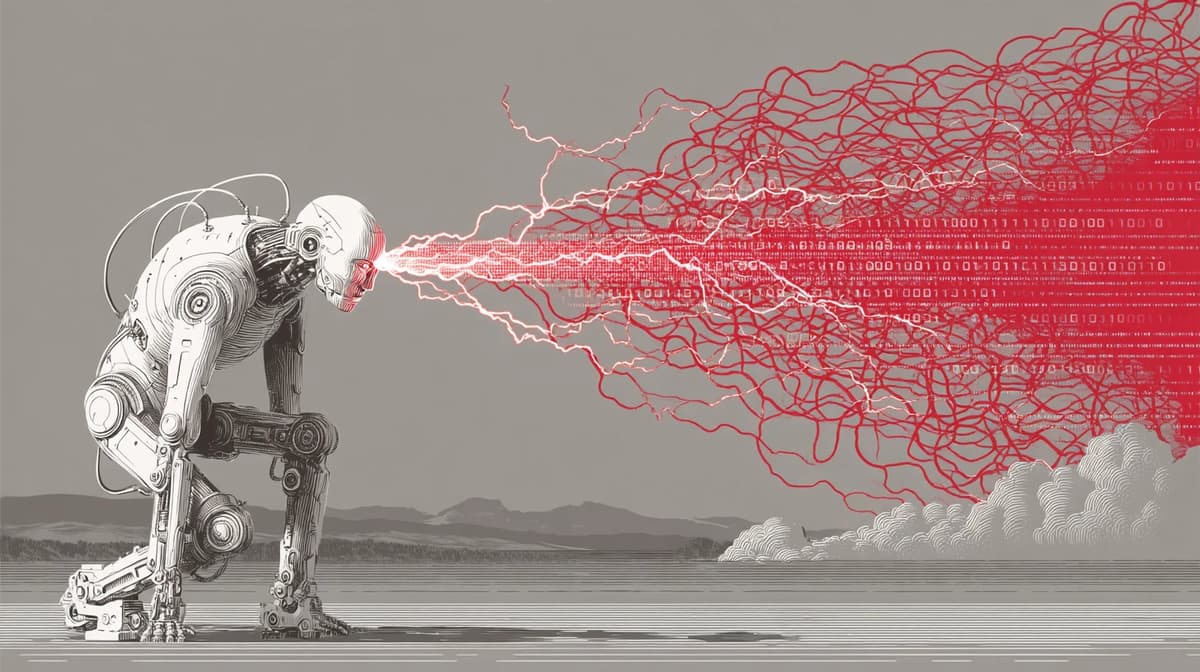
Sophos Uncovers AI-Powered Malware Lab Built for EDR Evasion
Companies Mentioned


Why It Matters
The platform shows how generative AI can accelerate the development of sophisticated evasion tactics, forcing security vendors and enterprises to rethink detection strategies and reinforce fundamental controls.
Key Takeaways
- •AI agents automate EDR evasion testing across multiple security products
- •Framework uses Claude Opus 4.5, Model Context Protocol, Ludus for VM deployment
- •80 modules test over 70 MITRE ATT&CK evasion techniques
- •Threat actor borrows tactics from Kaspersky, Palo Alto, and open‑source forums
- •Sophos stresses patching, MFA, passkeys, and endpoint protection remain vital
Pulse Analysis
The cybersecurity landscape is witnessing a new tier of threat actors that harness generative AI to streamline malware development and evasion. Sophos recently uncovered a sophisticated lab where AI‑driven scripts automatically generate, test, and refine payloads against leading endpoint detection and response (EDR) solutions such as Sophos, CrowdStrike, and Microsoft Defender. By feeding security research into large language models, the group can quickly prototype techniques that bypass traditional signatures, turning what once required weeks of manual reverse‑engineering into a matter of hours. This shift signals that AI is no longer a peripheral aid but a core component of offensive cyber operations.
The framework relies on Claude Opus 4.5 as a coordinating agent, using the Model Context Protocol to link AI assistants with Git repositories, virtual machines, and tooling like Ludus and the Cursor IDE. A suite of roughly 80 modules maps directly to more than 70 MITRE ATT&CK evasion techniques, from encrypted payload delivery to process injection and proxy stress testing. The lab’s architecture—dedicated Windows Server 2022 instances for each EDR product and a control Ubuntu host—allows the AI to run systematic experiments, capture results, and iteratively improve success rates, challenging vendors to harden their detection heuristics.
For defenders, the emergence of AI‑augmented testing platforms underscores the urgency of reinforcing basic cyber hygiene. While the framework can accelerate novel bypasses, Sophos reminds organizations that patch management, multi‑factor authentication, passkeys, and layered endpoint protection remain the most reliable safeguards. Security teams should also adopt AI‑assisted threat hunting to keep pace with automated adversary research, and consider threat‑intel sharing that highlights AI‑generated techniques. As generative models become more accessible, the arms race will increasingly revolve around who can better leverage artificial intelligence to anticipate and neutralize the next wave of evasion tactics.
Sophos uncovers AI-powered malware lab built for EDR evasion
Comments
Want to join the conversation?
Loading comments...