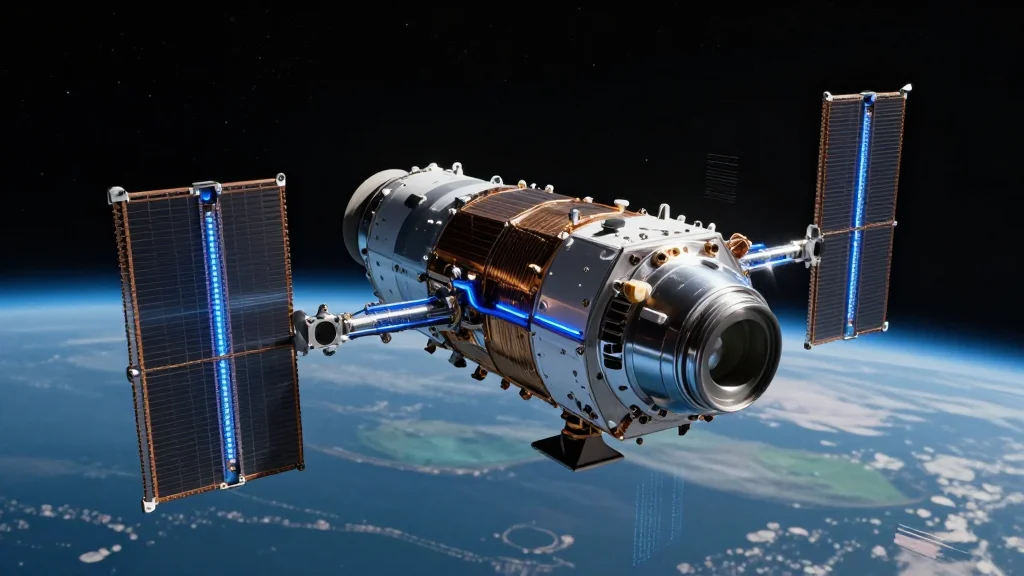
SpaceX Wants to Put AI Data Centers in Orbit. It Just Showed Investors What the First One Looks Like.
Companies Mentioned

Why It Matters
Orbital compute could slash latency for AI workloads and open a multi‑billion‑dollar market, positioning SpaceX as a pioneer in space‑based cloud services.
Key Takeaways
- •AI1 satellite delivers 120 kW average compute, 150 kW peak.
- •Uses liquid‑radiator cooling, mitigating orbital thermal challenges.
- •Nvidia chips will power first AI satellites, per CFO.
- •Gigasat facility in Texas provides up to 11 M sq ft manufacturing capacity.
- •SpaceX targets 2027 demo, filing for up to 1 million satellites.
Pulse Analysis
SpaceX’s AI1 satellite marks a strategic shift from traditional ground‑based data centers to a truly orbital compute platform. By situating high‑performance processors in low‑Earth orbit, the company aims to reduce data‑transfer latency for AI models that require rapid inference, a critical advantage for sectors like autonomous vehicles, finance, and real‑time analytics. The move also diversifies the cloud market, offering customers a new tier of service that blends the scalability of satellite constellations with the raw horsepower of modern GPUs.
The engineering hurdles of running a data center in space are formidable, yet SpaceX appears to have addressed the two biggest: power and thermal management. AI1’s 150‑kilowatt solar array supplies sufficient energy for sustained workloads, while a redundant liquid‑radiator system dissipates heat—an issue that has long plagued orbital electronics. Leveraging Nvidia’s latest AI chips, the satellite can execute complex inference tasks without the need for the massive phased‑array antennas used in Starlink, simplifying the design and lowering launch costs. The Gigasat plant in Texas, slated to reach 11 million square feet, will mass‑produce these units, ensuring economies of scale.
Financially, the orbital compute venture is the centerpiece of SpaceX’s upcoming IPO, targeting a $75 billion capital raise at a $1.75 trillion valuation. Partnerships with Google and Anthropic signal early commercial traction, while the filing for up to one million satellites suggests a long‑term vision of a global, on‑demand compute network. If the late‑2027 demonstration succeeds, SpaceX could redefine cloud economics, prompting incumbents like AWS and Azure to explore similar space‑based offerings, and potentially reshaping the competitive landscape of AI infrastructure.
SpaceX wants to put AI data centers in orbit. It just showed investors what the first one looks like.
Comments
Want to join the conversation?
Loading comments...