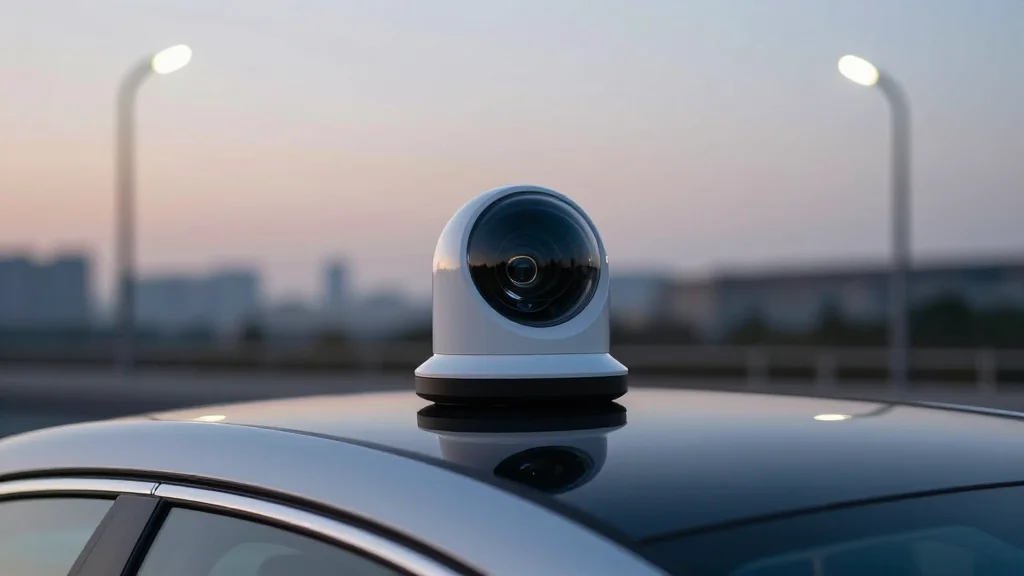
The Concerning, Unchecked Rise of E2E AI in Physical Applications
Companies Mentioned

Why It Matters
Without a proven safety layer, probabilistic AI threatens public safety and stalls regulatory approval, jeopardizing the commercial rollout of autonomous transport and robotics.
Key Takeaways
- •End‑to‑end AI replaces modular perception‑planning pipelines with direct sensor‑to‑control mapping
- •Tesla’s Full Self‑Driving still depends on remote human operators for safety
- •Probabilistic cores can output catastrophic commands when encountering distribution edges
- •Deterministic shells filter or override unsafe AI commands before actuation
- •Regulators lack clear standards, leaving public roads as uncontrolled AI experiments
Pulse Analysis
The shift from deterministic, rule‑based engineering to end‑to‑end artificial intelligence marks a watershed in autonomous system design. Pioneered by Nvidia’s 2016 "End‑to‑End Learning for Self‑Driving Cars" paper, the concept eliminates the traditional perception‑prediction‑planning stack, feeding raw camera and lidar data straight into a neural network that outputs steering, throttle, and braking commands. Companies like Tesla have scaled this model with millions of miles of real‑world driving data, betting that sheer volume will iron out edge cases that handcrafted rules can never anticipate.
However, real‑world deployments reveal a stark safety gap. Tesla’s Full Self‑Driving (FSD) fleet still relies on remote human operators to intervene when the neural network falters, and incident reports—from failing to yield to school buses to driving into flooded streets—underscore the peril of letting a probabilistic core control actuators unchecked. Regulators are scrambling to keep pace, as existing vehicle safety standards were written for deterministic systems and lack clear metrics for worst‑case AI behavior. The result is an uncontrolled experiment on public roads, where rare but catastrophic errors can cost lives.
A pragmatic remedy lies in a deterministic safety shell that wraps the AI core. Such a shell can filter out commands that violate formal safety specifications, run parallel monitoring systems on independent sensor suites, and execute graceful degradation maneuvers when anomalies are detected. The engineering principles already exist—digital logic tolerates quantum noise, and Shannon’s coding theorem shows how redundancy tames probabilistic channels. What the industry needs now are enforceable standards and incentives that make these guardrails a non‑negotiable part of any physical AI deployment, ensuring that innovation does not outpace safety.
The Concerning, Unchecked Rise of E2E AI in Physical Applications
Comments
Want to join the conversation?
Loading comments...