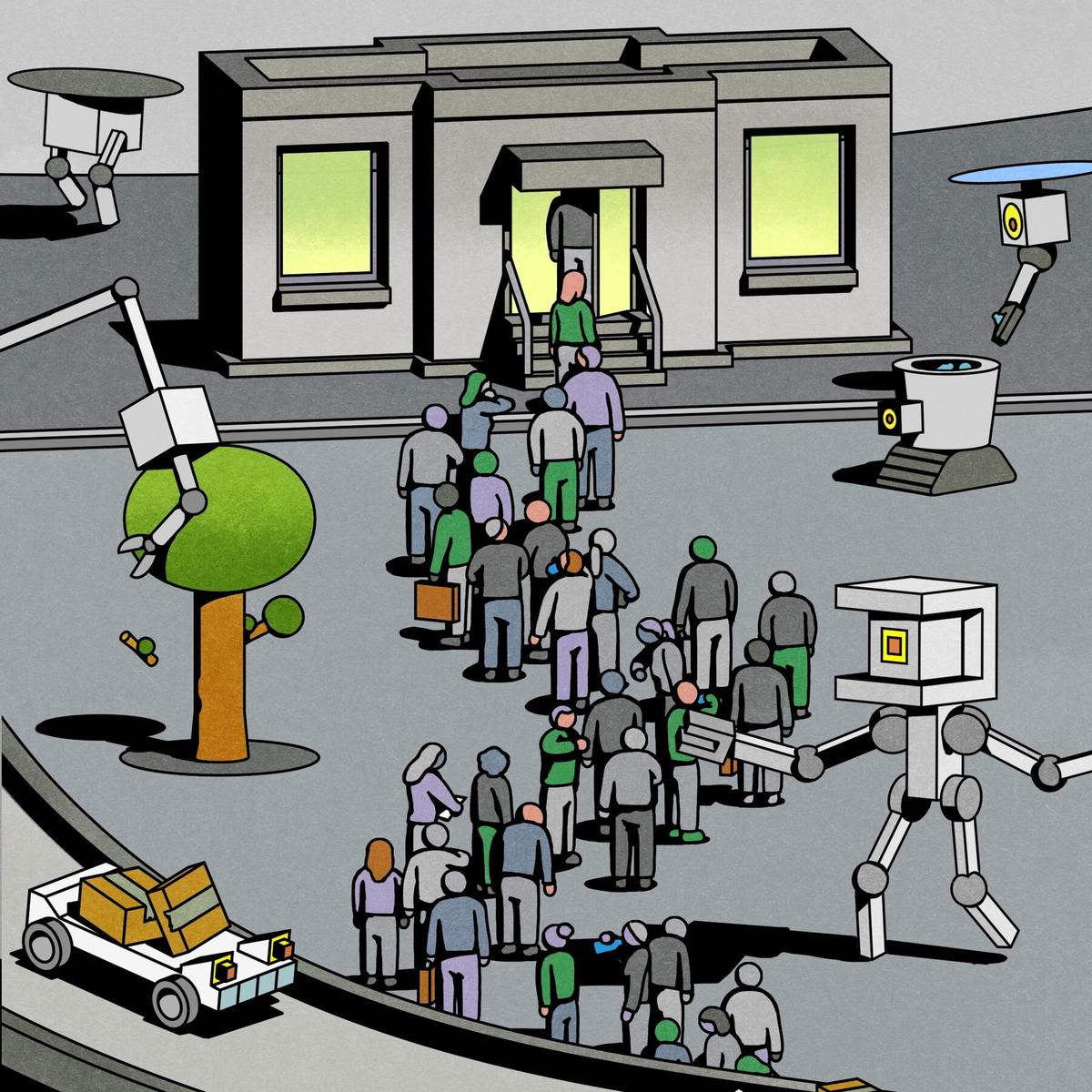
The Federal Safety Net Isn’t Ready for Artificial Intelligence
Why It Matters
A misaligned safety net could leave millions without income support, amplifying economic inequality and slowing growth. Modernizing benefits and training is essential to mitigate AI‑related labor market shocks.
Key Takeaways
- •Unemployment insurance caps at 26 weeks, insufficient for long AI‑driven displacements
- •Job‑retraining programs are outdated, many have expired or lack AI focus
- •Recent GOP changes tightened eligibility for food and health assistance
- •AI adoption spikes in information sector, where layoffs rose in March
- •Workers’ anxiety rises despite low overall unemployment rates
Pulse Analysis
The United States’ unemployment insurance system was built in the 1930s to smooth short‑term job loss during industrial cycles. Today it still offers a maximum of 26 weeks of cash assistance in most states, a ceiling that assumes workers will quickly re‑enter the labor market. Artificial‑intelligence‑driven automation, however, threatens to displace workers in occupations that require routine cognitive tasks, potentially extending unemployment periods well beyond the program’s limits. Without a redesign, a wave of AI‑related layoffs could leave millions without adequate income support, straining both households and the broader economy.
Congress has taken only modest steps to address this looming gap. In 2024, Republican‑led legislation tightened eligibility for Supplemental Nutrition Assistance Program benefits and Medicaid, making it harder for newly unemployed individuals to access food and health coverage. At the same time, many federal job‑training initiatives, such as the Trade Adjustment Assistance program, remain focused on manufacturing and have not been updated to teach AI‑centric skills. State‑level pilots that integrate coding bootcamps or data‑science certificates exist, but funding is fragmented and often expires after a single grant cycle, leaving a patchwork of support.
The mismatch between policy and technology could amplify existing inequality, as lower‑skill workers are most vulnerable to automation. Economists warn that even a modest increase in AI‑related unemployment could raise poverty rates and depress consumer spending, slowing GDP growth. Policymakers therefore face a choice: overhaul the safety net to include longer benefit durations and AI‑ready retraining, or risk a wave of hardship that could erode public confidence in government. Proposals under discussion include expanding the duration of unemployment benefits, creating a portable “AI transition” stipend, and incentivizing private‑sector partnerships to deliver rapid upskilling. The next congressional session will be pivotal.
The Federal Safety Net Isn’t Ready for Artificial Intelligence
Comments
Want to join the conversation?
Loading comments...