The Future of Physical AI Isn’t Smarter Robots, It’s Smarter Interfaces

Companies Mentioned


Why It Matters
Treating the human body as a low‑latency computing node expands Physical AI beyond robot capability, unlocking productivity gains for field workers and generating real‑world interaction data that will accelerate future embodied‑AI research.
Key Takeaways
- •Wetour's Orchestra hub fuses vision, spatial, and sEMG data in <100 ms.
- •Spatial Intent Fusion treats the human body as a low‑latency computing node.
- •Edge inference on Jetson Orin Nano removes cloud dependence for safety loops.
- •sEMG pre‑motion sensing provides intent up to 80 ms before visible movement.
- •Body‑as‑interface could generate training data for next‑gen embodied AI.
Pulse Analysis
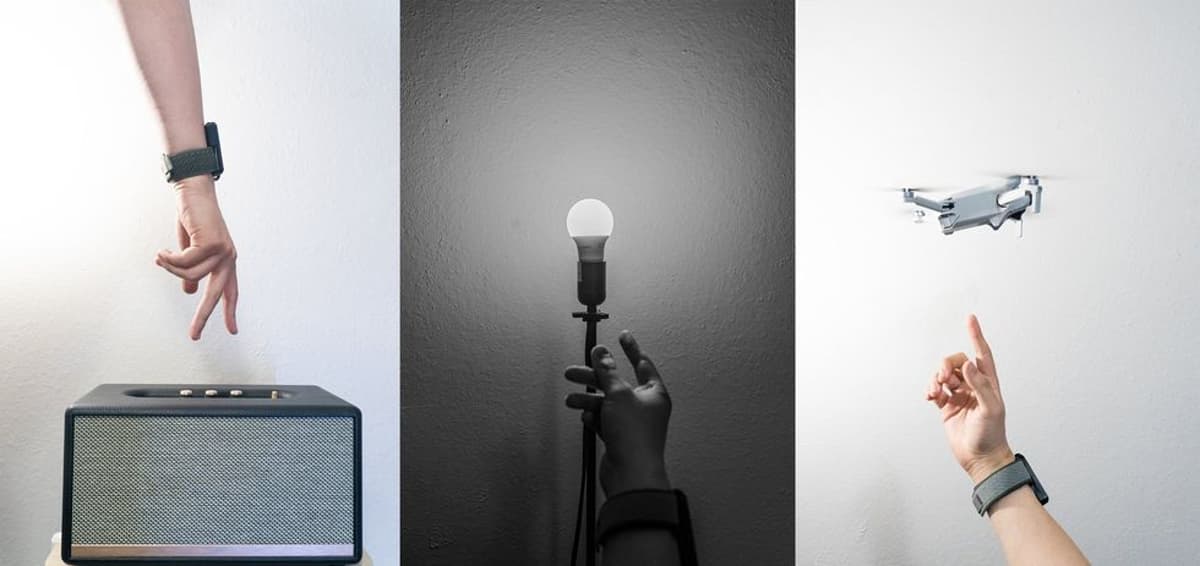
The evolution of computing interfaces—from command lines to touch and voice—has repeatedly lowered the barrier for human interaction. In high‑intensity settings such as wind‑turbine maintenance or warehouse logistics, traditional screens, buttons, and microphones falter because users cannot look away, free their hands, or speak loudly. Wetour Robotics frames this gap as a missing link in Physical AI, proposing that the human body itself become the primary input device, delivering intent with the same speed and fidelity as any connected sensor.
At the heart of Wetour’s solution is Spatial Intent Fusion, a real‑time engine that merges three streams: spatial position, visual context, and surface electromyographic (sEMG) signals. The Orchestra hub, powered by an NVIDIA Jetson Orin Nano, runs the entire perception‑to‑actuation loop on the edge, keeping latency under 100 ms and eliminating reliance on cloud services for safety‑critical decisions. By exploiting sEMG’s pre‑motion signatures—detectable 50‑80 ms before a gesture becomes visible—the system anticipates user intent rather than merely reacting, enabling seamless control of diverse actuators through a unified coordination stack.
Beyond immediate productivity gains, this body‑as‑interface paradigm promises a new data source for the broader AI community. Every fused interaction captures rich, contextualized human‑machine behavior that can train next‑generation embodied models, from dexterous robots to autonomous drones. While challenges remain—motion artifacts in sEMG, edge‑compute form‑factor constraints, and fragmented device protocols—Wetour’s transparent trade‑offs signal a pragmatic path forward. As more workers become first‑class nodes in the computing network, the industry can expect faster adoption of Physical AI solutions and a surge in real‑world training data that will propel the next wave of intelligent robotics.
The Future of Physical AI Isn’t Smarter Robots, It’s Smarter Interfaces
Comments
Want to join the conversation?
Loading comments...