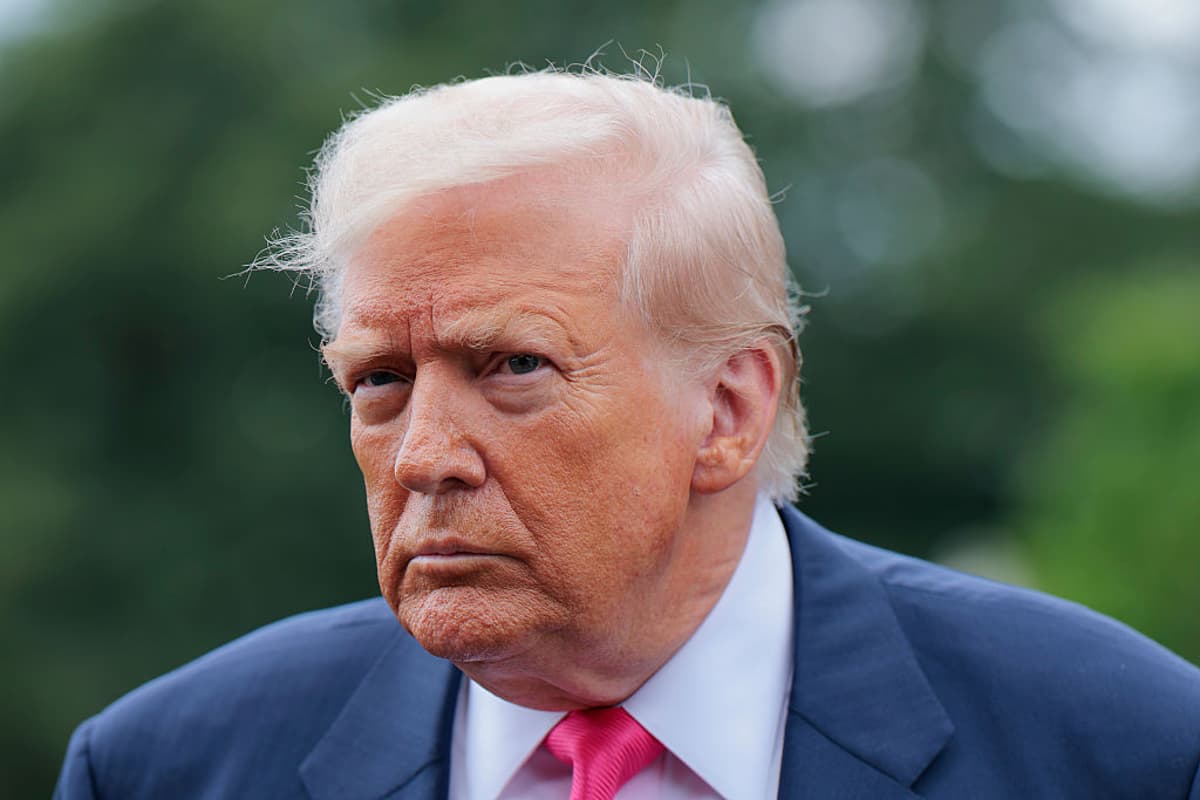
Trump Delays AI Security Executive Order: ‘I Don’t Want to Get in the Way of that Leading’



Why It Matters
The hold‑up highlights the clash between rapid AI innovation and national‑security safeguards, affecting how quickly new models reach the market. It also signals potential friction for U.S. tech firms navigating regulatory demands while competing globally.
Key Takeaways
- •Trump delays AI security EO over language concerns.
- •EO would require companies to pre‑share models 14‑90 days before launch.
- •Delay signals tension between AI innovation and national security.
- •Industry fears competitive disadvantage versus China.
- •National Cyber Director office to lead model evaluation process.
Pulse Analysis
The United States is at a crossroads as policymakers grapple with the dual imperatives of fostering AI breakthroughs and protecting critical infrastructure. President Trump’s decision to stall an executive order that would have tasked the Office of the National Cyber Director with vetting advanced models underscores the difficulty of drafting language that satisfies both security experts and industry leaders. By requiring AI firms to submit models weeks before public release, the order aimed to preempt threats like those demonstrated by Anthropic’s Mythos and OpenAI’s GPT‑5.5 Cyber, which can autonomously locate and exploit software flaws.
Beyond the technical concerns, the postponement reflects a broader geopolitical calculus. Washington is keen to maintain its edge over China, which is rapidly scaling its own AI capabilities. Tech CEOs worry that mandatory pre‑share provisions could hand strategic insights to rivals or slow product rollouts, eroding the United States’ competitive advantage. The executive order’s language, therefore, became a flashpoint where national‑security ambitions collided with the desire to keep American innovation agile and market‑driven.
Looking ahead, the administration is likely to revisit the order with revised wording that balances oversight with flexibility. Stakeholders anticipate a more collaborative framework, perhaps involving voluntary disclosures or tiered review processes based on model risk. For investors and companies, the delay introduces short‑term uncertainty but also an opportunity to shape forthcoming regulations. Ultimately, the episode illustrates how AI governance will evolve through negotiation between government, industry, and security agencies, setting precedents that could influence global standards.
Trump delays AI security executive order: ‘I don’t want to get in the way of that leading’
Comments
Want to join the conversation?
Loading comments...