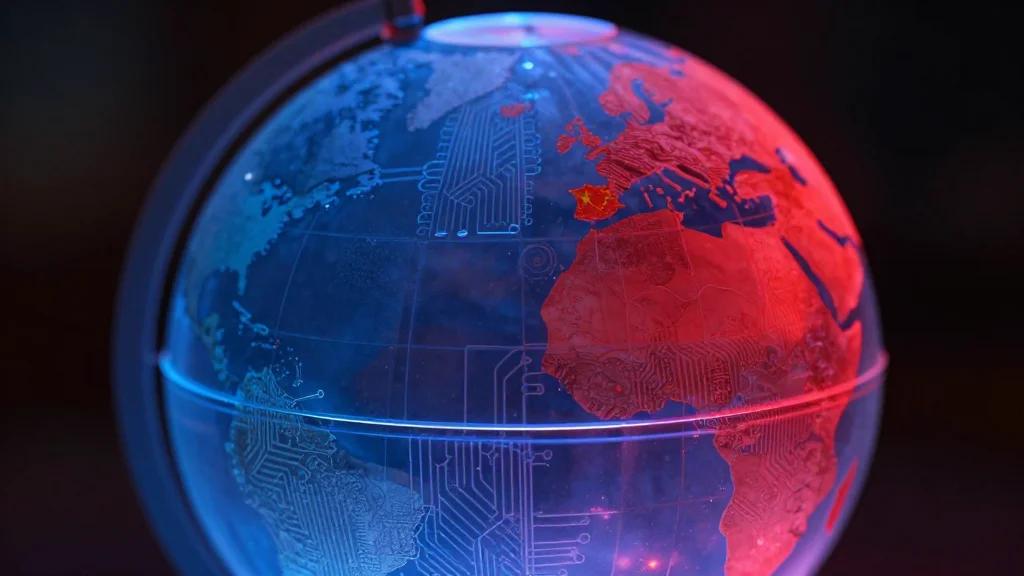
U.S. Administration Launches Crackdown on Chinese Firms Exploiting American AI Models



Why It Matters
The U.S. crackdown marks the first explicit government effort to police AI model extraction, a technique that blurs the line between legitimate knowledge transfer and intellectual‑property theft. By targeting Chinese firms, the administration is drawing a clear boundary around what it deems strategic AI assets, potentially reshaping global supply chains for compute, data, and talent. The policy also raises questions about how open‑source AI research can coexist with national security concerns, a tension that will influence future regulatory frameworks worldwide. If enforced, the measures could force Chinese AI developers to rebuild capabilities without relying on U.S. model outputs, slowing their progress and altering competitive dynamics. At the same time, the diplomatic backlash underscores the risk of a fragmented AI ecosystem, where geopolitical rivalries impede collaborative breakthroughs that benefit the entire industry.
Key Takeaways
- •White House memo by Michael Kratsios calls Chinese firms’ model‑extraction campaigns “industrial‑scale” and urges sanctions.
- •Representative Bill Huizenga introduced bipartisan legislation to sanction foreign actors that siphon AI model features.
- •Chinese embassy spokesperson Liu Pengyu and Foreign Ministry spokesman Guo Jiakun condemned the U.S. move as unjustified suppression.
- •Anthropic and OpenAI have previously accused Chinese labs of illicitly extracting capabilities from their models.
- •The policy could restrict Chinese access to U.S. cloud services, chips, and talent, reshaping global AI competition.
Pulse Analysis
The U.S. decision to weaponize IP enforcement against AI model extraction reflects a broader shift from passive regulation to active protection of strategic technologies. Historically, the tech sector has thrived on open collaboration, but the rapid monetization of large‑language models has turned them into high‑value assets akin to semiconductors. By framing model distillation as economic coercion, Washington is extending the export‑control playbook into the software realm, a move that could set precedents for future AI governance.
From a market perspective, the crackdown may accelerate the decoupling of AI supply chains. Chinese firms, already investing heavily in domestic chip and cloud infrastructure, might double down on self‑sufficiency, potentially birthing a parallel AI ecosystem that competes on different standards. U.S. firms, meanwhile, could see short‑term compliance costs rise as they implement monitoring tools, but they may also benefit from a clearer legal environment that protects their innovations from unauthorized replication.
Strategically, the policy underscores the United States’ intent to retain leadership not just in AI research but in the economic value chain that follows. By targeting the extraction of model capabilities—a low‑cost, high‑impact method for rivals to leapfrog—Washington aims to preserve its advantage in both civilian and defense applications. The coming months will reveal whether the legislative effort gains bipartisan traction and how Chinese firms adapt, either by hardening their own models or by seeking alternative pathways to compete on the global stage.
U.S. Administration Launches Crackdown on Chinese Firms Exploiting American AI Models
Comments
Want to join the conversation?
Loading comments...