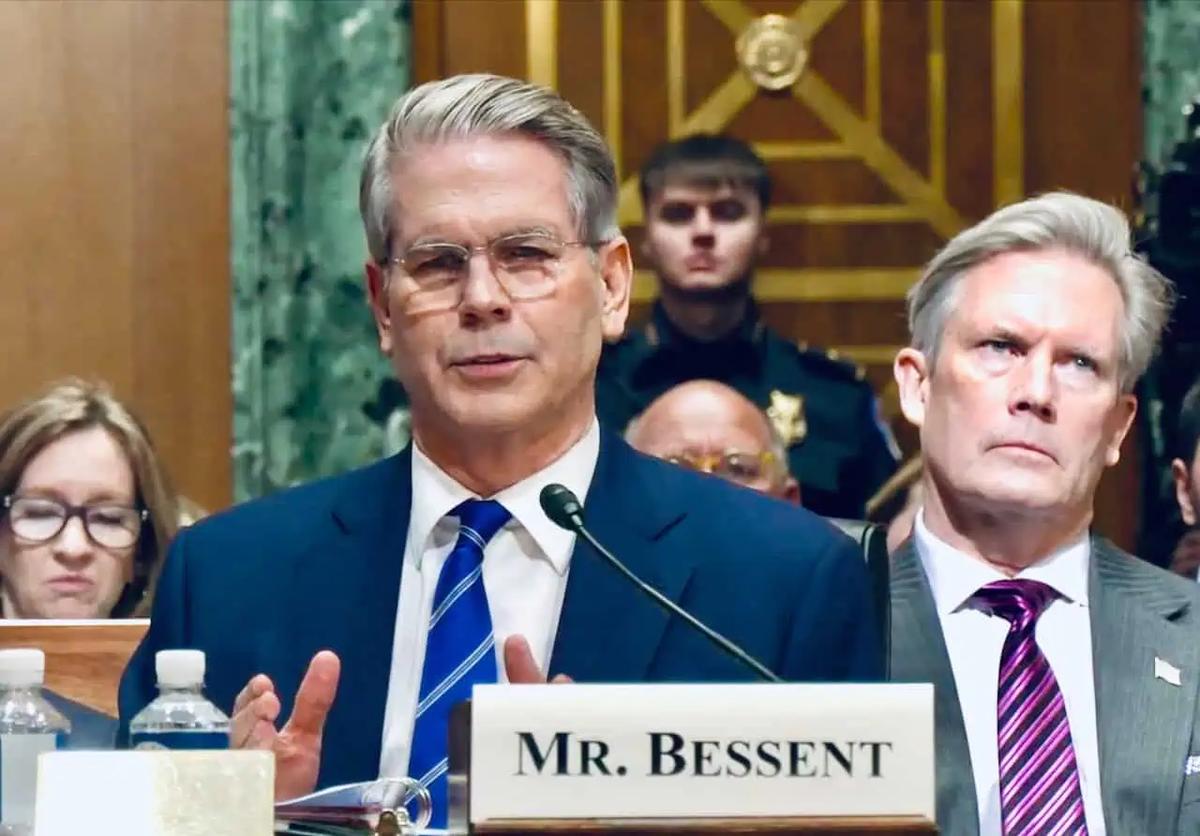
US Treasury Chief Urges Bank Execs to Approach Anthropic’s Latest AI Release with Caution
Companies Mentioned

Why It Matters
The AI could dramatically improve fraud detection, but unchecked deployment may create auditability gaps and systemic stability concerns for the banking sector.
Key Takeaways
- •Treasury warns banks to vet Anthropic's Claude Mythos AI.
- •Claude Mythos targets cyber‑threat detection with advanced pattern recognition.
- •Managed Agents enable autonomous compliance checks within secure environments.
- •Over‑reliance on AI may obscure decision‑making for auditors.
- •Mid‑size banks could adopt AI faster, raising oversight challenges.
Pulse Analysis
The rollout of Anthropic’s Claude Mythos Preview arrives at a moment when banks are scrambling to harden their digital perimeters against ransomware, business‑email compromise and algorithmic fraud. By embedding a large‑language model tuned for cyber‑threat detection, the company promises faster pattern recognition and real‑time alerts that could shave hours off incident response. However, U.S. Treasury Secretary Scott Bessent’s recent admonition to chief executives underscores a growing regulatory unease: unchecked AI adoption may introduce hidden vulnerabilities, bias in risk scoring, and challenges to auditability that could ripple through the financial system.
The platform’s companion feature, Claude Managed Agents, lets institutions spin up autonomous assistants that monitor transaction flows, run compliance scripts and simulate breach scenarios—all within a sandboxed environment controlled by the bank’s own policies. For midsize lenders lacking deep‑tech teams, this lowers the barrier to sophisticated AI‑driven security, potentially democratizing advanced threat hunting. Yet the same autonomy raises questions about model drift, data leakage, and the opacity of algorithmic decisions, especially when agents act without human oversight in high‑stakes environments.
Regulators are responding by urging rigorous testing, transparent model documentation, and alignment with existing AML, CFT and data‑privacy frameworks before any production rollout. The Treasury’s cautionary note signals that future supervisory guidance may require banks to maintain audit trails, conduct periodic bias assessments, and demonstrate that AI outputs can be explained to auditors. As the industry weighs efficiency gains against systemic risk, the balance between innovation and oversight will likely shape the next wave of AI integration across the banking sector.
US Treasury Chief Urges Bank Execs to Approach Anthropic’s Latest AI Release with Caution
Comments
Want to join the conversation?
Loading comments...