US’s Anthropic Order Exposes EU’s AI Dependency
Companies Mentioned

Why It Matters
The move exposes a strategic vulnerability: without sovereign AI capabilities, Europe risks being throttled by foreign policy decisions, jeopardizing its digital competitiveness and data sovereignty.
Key Takeaways
- •U.S. ordered Anthropic to block non‑U.S. users from newest models
- •EU sees the move as proof AI sovereignty is urgent
- •France’s Mistral seeks $3.3bn funding at $21.8bn valuation
- •Politicians call for EU compute gigafactories and partnerships with middle powers
- •Energy‑rich France positioned as hub for future AI data centers
Pulse Analysis
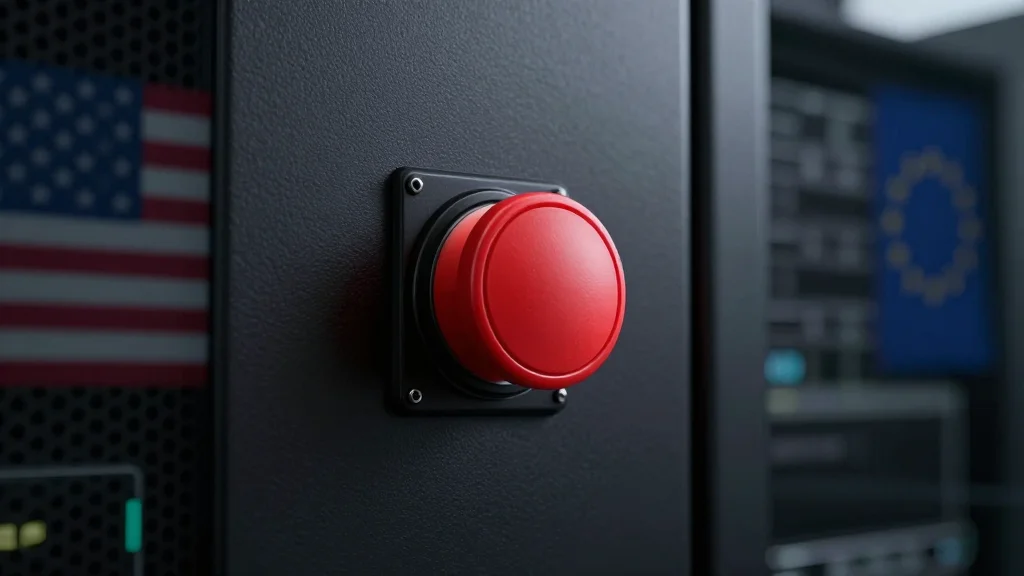
The United States’ recent export‑control order against Anthropic serves as a stark reminder that Europe’s AI landscape is still tethered to American cloud and model providers. By invoking a "kill switch," Washington demonstrated that geopolitical considerations can instantly disrupt access to cutting‑edge generative tools, leaving European firms scrambling for alternatives. This development arrives at a critical juncture, as the EU’s tech‑sovereignty roadmap—outlined in the European Commission’s recent strategy—has yet to deliver a domestically trained large‑language model capable of competing with OpenAI or Anthropic.
European policymakers are now translating urgency into concrete proposals. France’s Mistral, the continent’s most advanced AI startup, is courting $3.3 billion in capital at a $21.8 billion valuation, signaling investor confidence in a home‑grown alternative. Simultaneously, French and German leaders are championing a "Buy European Tech" act, incentives for decarbonized electricity, and the construction of AI compute gigafactories. By pooling resources with like‑minded middle powers—Canada, Australia, Singapore, and the United Kingdom—the EU hopes to amass the petaflop‑scale hardware needed to train next‑generation models without relying on U.S. infrastructure.
The broader implication for the global AI market is a potential bifurcation of ecosystems. If Europe can marshal sufficient funding, regulatory clarity, and compute capacity, it may nurture a parallel stack of models that respect EU data‑privacy norms and energy standards. Conversely, prolonged dependence on American providers could force European firms into a strategic dilemma: adapt to external licensing constraints or risk falling behind in AI innovation. The Anthropic episode thus accelerates a pivotal debate about digital sovereignty, competitive advantage, and the future architecture of the AI industry.
US’s Anthropic order exposes EU’s AI dependency
Comments
Want to join the conversation?
Loading comments...