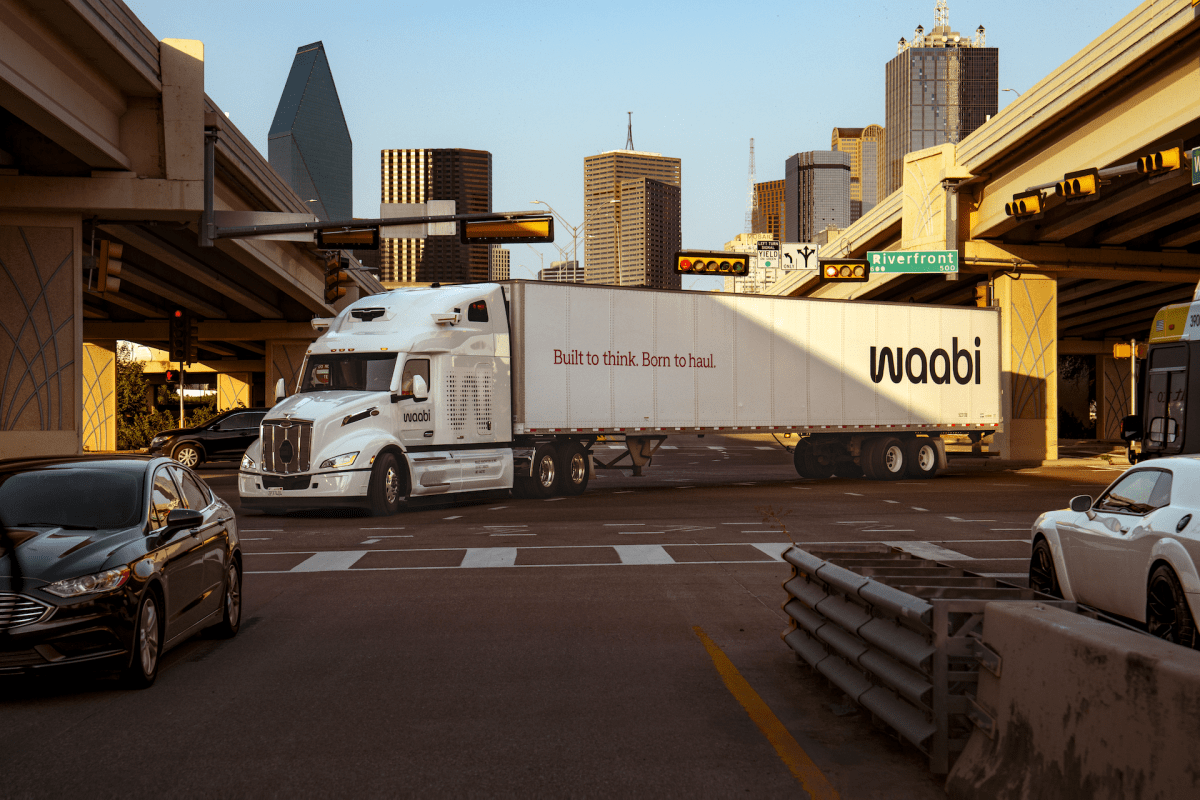
Waabi Raises $1B and Expands Into Robotaxis with Uber
•January 28, 2026
0

Companies Mentioned


Why It Matters
The infusion of a billion dollars and a large‑scale Uber rollout validates Waabi’s multi‑vertical AI strategy, potentially reshaping both the robotaxi and autonomous‑trucking markets. It also pressures competitors to consolidate technology stacks or risk falling behind in cost efficiency.
Key Takeaways
- •$1 billion raised, $750 M Series C, $250 M Uber capital.
- •Uber to launch 25,000+ Waabi robotaxis.
- •Waabi’s single AI stack targets trucking and passenger rides.
- •Simulator‑driven training reduces data and hardware needs.
- •Competition: Waymo, Aurora, Kodiak lag in multi‑vertical scaling.
Pulse Analysis
The $1 billion raise underscores the accelerating capital flow into autonomous‑vehicle (AV) ecosystems, with investors betting on firms that can address multiple use cases. Waabi’s investor roster—spanning Khosla, G2, Nvidia’s VC arm, Volvo, Porsche and BlackRock—reflects a broad confidence that a unified AI architecture can deliver economies of scale. Compared with Waymo’s siloed robotaxi and freight programs, Waabi’s approach promises lower operational overhead, a critical factor as AV economics remain marginal.
At the heart of Waabi’s claim is its closed‑loop simulator, Waabi World, which generates digital twins and stress‑tests scenarios without massive data collection. By teaching the driver to learn from simulated mistakes, the company reduces reliance on fleets of sensor‑laden test vehicles and the associated energy and compute costs. This capital‑efficient model aligns with industry pressure to cut the billions spent on data centers and hardware, positioning Waabi as a potentially leaner alternative to traditional AV developers.
The partnership with Uber amplifies the strategic relevance of Waabi’s technology. Deploying 25,000+ robotaxis through Uber’s platform could provide a real‑world proving ground, accelerating data feedback loops for the Waabi Driver while giving Uber a differentiated offering amid fierce competition from Waymo, Nuro and others. If the rollout succeeds, it may set a new benchmark for multi‑vertical AV scalability, prompting rivals to either consolidate their stacks or risk obsolescence as the market coalesces around integrated, cost‑effective solutions.
Waabi raises $1B and expands into robotaxis with Uber
0
Comments
Want to join the conversation?
Loading comments...