An Animated Look at Noguchi’s Experimental Playgrounds That Were Never Built
•March 10, 2026
0
Key Takeaways
- •Noguchi proposed “Play Mountain” for NYC block
- •Robert Moses rejected the playground plan
- •Animations visualize never-built playground concepts
- •Exhibition runs at Noguchi Museum until September
- •New monograph accompanies High Museum retrospective
Summary
Isamu Noguchi, famed for his stone sculptures and Akari lamps, envisioned a series of experimental playgrounds in the 1930s, most famously the “Play Mountain” that would transform a New York City block into an open‑ended, seasonal play environment. The plan was rejected by Parks Commissioner Robert Moses, leaving the designs unbuilt. A new animation series by Eastend Western recreates these concepts using hand‑painted celluloid and a rostrum camera, offering a visual glimpse of Noguchi’s unconventional play structures. The films accompany the Noguchi Museum exhibition and a forthcoming monograph tied to a High Museum retrospective.
Pulse Analysis
Isamu Noguchi’s approach to playground design was rooted in the belief that public spaces should act as educational laboratories for children. In the early 1930s he drafted “Play Mountain,” a topographical playground that blended earthen steps, a bandshell, and a sledding hill, challenging the era’s standard metal slides and swings. By rejecting prescriptive equipment, Noguchi aimed to spark imagination across seasons, a philosophy that resonates with today’s push for flexible, nature‑based play environments in dense urban settings.
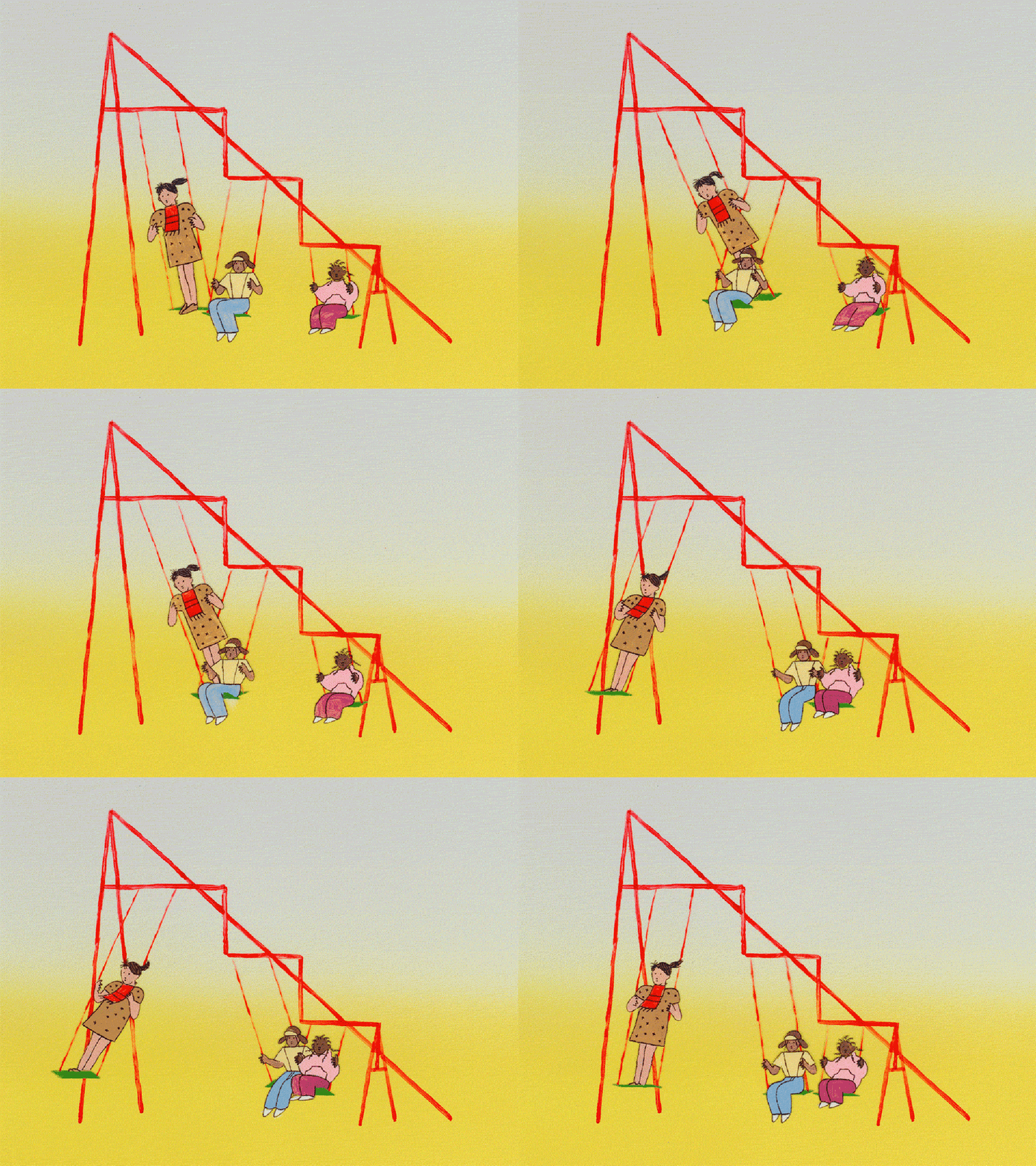
The recent animation series produced by Eastend Western brings these lost designs to life. Using hand‑painted celluloid frames captured with a rostrum camera, the short films reconstruct concrete mounds, labyrinthine sand gardens, and asymmetrical structures that teach physics concepts like pendulum swing rates. This visual storytelling not only preserves Noguchi’s experimental legacy but also offers designers a tangible reference for integrating sculptural forms into modern playgrounds, bridging art, education, and community engagement.
Reexamining Noguchi’s unbuilt projects arrives at a pivotal moment for city planners and architects seeking sustainable, inclusive play spaces. The accompanying exhibition at the Noguchi Museum and the forthcoming monograph underscore a growing scholarly interest in how historical design experiments can inform contemporary public‑space policy. By revisiting these visionary concepts, municipalities can explore alternatives to conventional equipment, fostering environments that nurture creativity, physical activity, and social interaction for children year‑round.
Comments
Want to join the conversation?