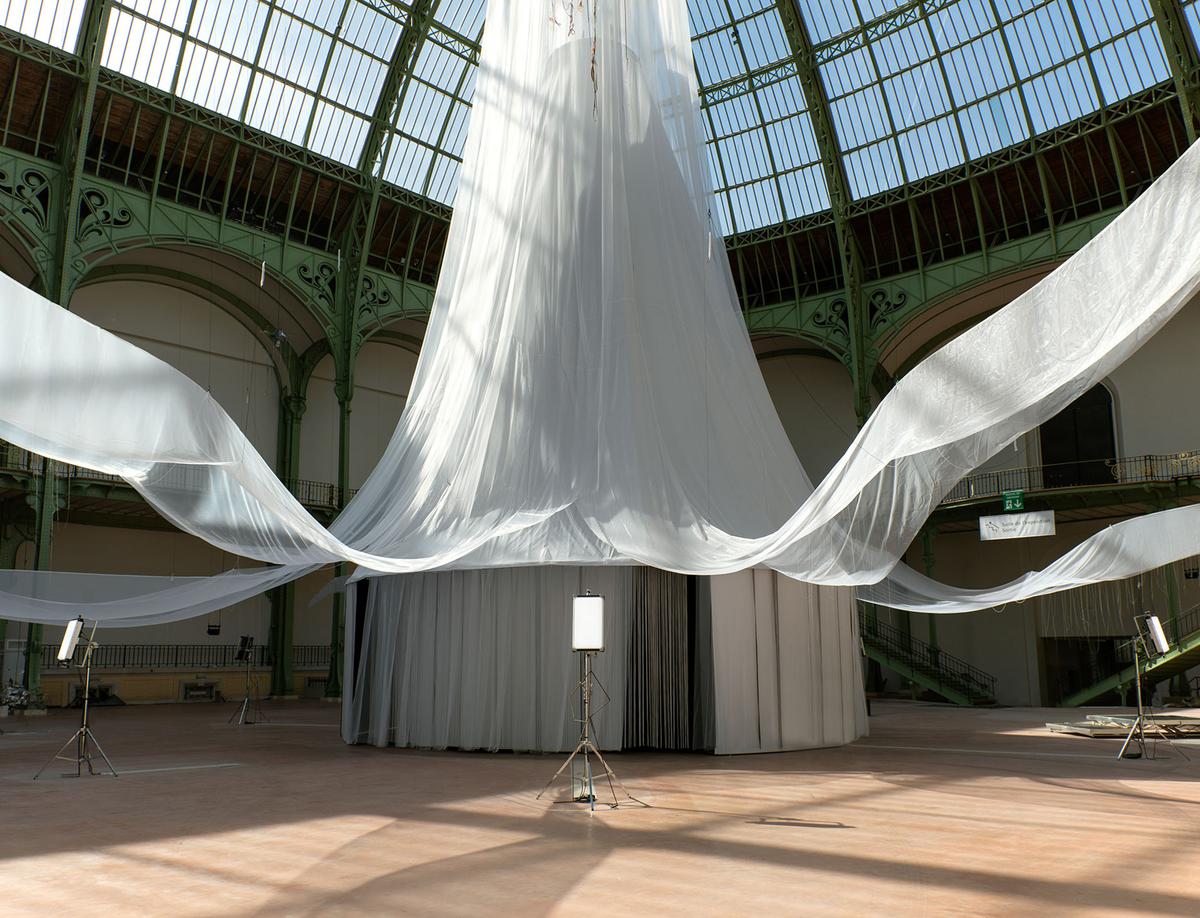
Laure Prouvost Explores Quantum Reality in New Multisensory Installation
Key Takeaways
- •Prouvost's installation uses quantum computer research for multisensory art
- •Collaboration includes Google Quantum AI scientists and philosopher Tobias Rees
- •Part of LAS Art Foundation's Sensing Quantum program, EU S+T+ARTS winner
- •Installation opens July 18, 2026 at Grand Palais, Paris
- •Reflects growing public fascination with quantum tech after UN Quantum Year
Pulse Analysis
Laure Prouvost’s new work, *Nous, frissons d’étoiles*, translates two years of quantum‑computer research into an immersive environment that engages sight, sound, scent and touch. By partnering with Google’s Quantum AI team, the artist accessed a proprietary AI model that simulates particle behavior, allowing her to render entanglement and superposition as kinetic sculpture and shifting light patterns. The result is not a didactic lecture but a poetic embodiment of uncertainty, inviting visitors to feel the same indeterminacy that physicists observe at the sub‑atomic level. This approach signals a shift from abstract explanation to embodied experience in science communication.
The exhibition is a flagship of the LAS Art Foundation’s Sensing Quantum programme, which earned the European Commission’s S+T+ARTS Grand Prize for Innovation Collaboration. By convening artists, philosophers and leading quantum researchers, the initiative creates a laboratory where emerging technologies are tested as cultural material. Earlier this year Pierre Huyghe’s *Liminals* explored similar themes in Berlin, demonstrating that the programme can generate multiple high‑profile projects across Europe. Such institutional support accelerates the translation of cutting‑edge science into public‑facing art, expanding both audiences and funding pathways.
Beyond aesthetics, the project offers a template for how cultural institutions can demystify complex quantum concepts. By engaging the body as well as the mind, multisensory installations lower the barrier to understanding phenomena such as entanglement, making them relatable to non‑specialist audiences. This experiential model is likely to inspire museums, galleries and tech firms to co‑create similar works, fostering a new market for quantum‑informed art. As public curiosity about quantum computing grows, such collaborations could shape consumer perception and even influence policy discussions around emerging technologies.
Laure Prouvost Explores Quantum Reality in New Multisensory Installation
Comments
Want to join the conversation?