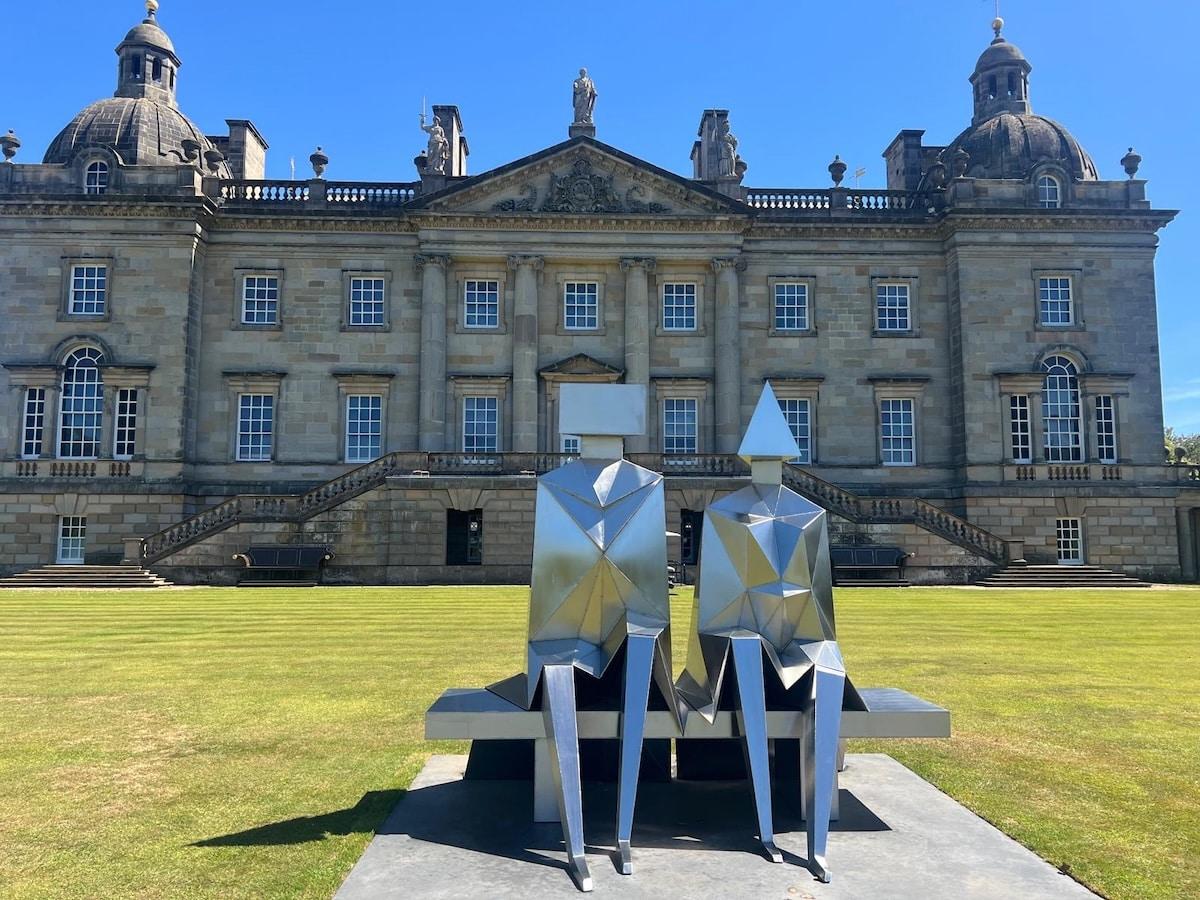
Lynn Chadwick Post War Sculpture Celebrated At Houghton Hall – Miranda Carroll
Key Takeaways
- •Houghton Hall’s visitor numbers have doubled since launching contemporary art program
- •First public display of Chadwick’s 1975 Large Barley Fork bronze
- •Exhibition features over 20 Chadwick pieces across indoor and outdoor spaces
- •Estate’s arts strategy mirrors trend of historic houses hosting temporary shows
- •Kinetic “Ace of Diamonds III” spins in wind, highlighting Chadwick’s late career
Pulse Analysis
Lynn Chadwick remains a cornerstone of post‑war British sculpture, celebrated for his innovative use of armature frameworks that he would fill, carve and scrape to reveal skeletal forms. Winning the International Prize for Sculpture at the 1956 Venice Biennale—beating Giacometti and becoming the youngest recipient—cemented his reputation, yet many of his later works have lingered in private collections. By bringing together early mobiles, bronze figurines, and stainless‑steel beasts, the Houghton Hall exhibition offers a rare, chronological narrative of Chadwick’s evolving material language and his dialogue with contemporaries such as Henry Moore and Barbara Hepworth.
Historic estates like Houghton Hall are increasingly turning to contemporary art to attract broader audiences, a strategy that has paid off: visitor traffic has doubled since the Houghton Arts Foundation introduced rotating exhibitions in 2015. The Chadwick showcase leverages the estate’s expansive park, grand interiors, and architectural backdrops to create immersive encounters—whether it’s the reflective Square (1968) mirroring passersby or the kinetic Ace of Diamonds III turning with the wind. This integration of modern sculpture into heritage settings not only revitalizes footfall but also repositions the venue as a cultural hub where art history and landscape design intersect.
The economic ripple extends beyond ticket sales. Local hospitality and tourism sectors benefit from longer stays, while the exhibition raises Chadwick’s market profile, potentially spurring renewed interest from collectors and museums. Moreover, the public’s exposure to Chadwick’s technique—metal frames cloaked in bronze or stainless steel—offers educational value, inspiring emerging artists and reinforcing the relevance of mid‑century sculptural innovation. As more estates adopt similar programming, the model promises sustainable cultural tourism that honors historic preservation while embracing contemporary artistic expression.
Lynn Chadwick Post War Sculpture Celebrated At Houghton Hall – Miranda Carroll
Comments
Want to join the conversation?