Key Takeaways
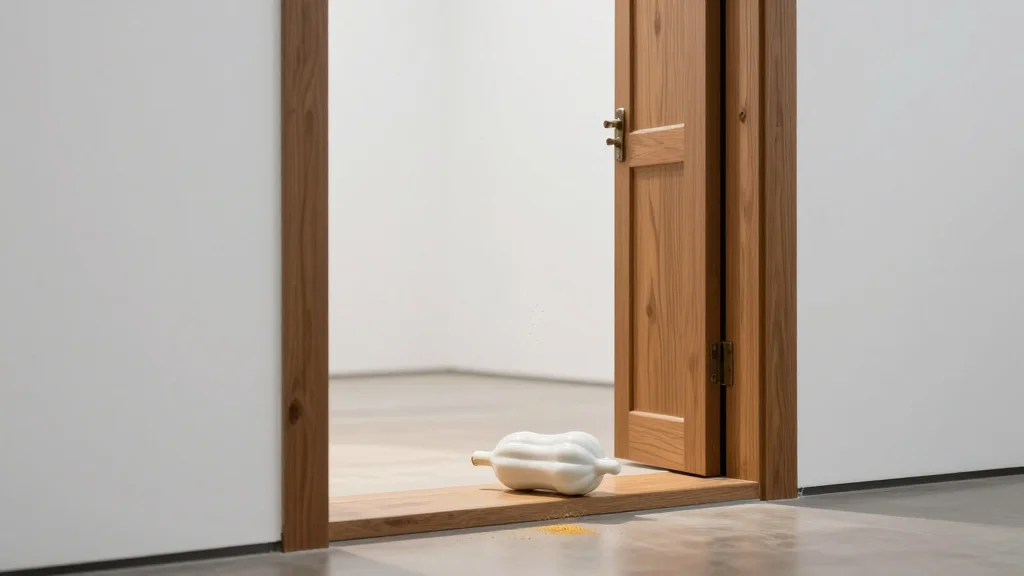
- •Monumental doorframe visualizes conditional migration access
- •Porcelain okra sculptures link family lineage to diaspora
- •Video testimonies embed SWANA immigrant culinary memories
- •Bamieh’s work merges culinary preservation with political critique
- •NIKA’s program highlights research‑driven, socially engaged art
Pulse Analysis
Mirna Bamieh’s Sour Things: The Door arrives at a moment when European galleries are increasingly interrogating migration through sensory experiences. By centering a partially obstructed doorframe, the installation transforms a simple architectural element into a metaphor for the gatekeeping mechanisms that shape who can cross borders. The work’s physical choreography—porcelain fragments underfoot and suspended sculptures—forces visitors to negotiate uncertainty, echoing the lived reality of refugees and long‑term residents awaiting residency permits. This tactile approach distinguishes Bamieh’s practice from more conventional documentary displays, positioning the gallery as an active participant in the narrative of displacement.
Food operates as the connective tissue of Bamieh’s project, linking personal memory to collective identity. Video interviews with SWANA immigrants reveal the spices and recipes they carry across continents, turning culinary items into portable archives of culture. By foregrounding ingredients such as za’atar, sumac, and okra, the exhibition underscores how gastronomy preserves heritage even when political borders shift. The artist’s founding of the Palestine Hosting Society further amplifies the urgency of safeguarding intangible cultural assets threatened by conflict and diaspora.
Beyond its artistic merits, the exhibition signals a broader institutional shift toward interdisciplinary, research‑driven programming. Curator Anne Davidian frames the door as a “philosophical object,” inviting audiences to contemplate the ethics of inclusion and exclusion. NIKA Project Space’s simultaneous showcase of Nazilya Nagimova’s Follow the Snail reinforces a thematic focus on resilience through slowness and care. Together, these shows illustrate how contemporary art can serve as a catalyst for public discourse on migration, heritage preservation, and the mutable nature of belonging in a globalized world.
Mirna Bamieh: Sour Things: The Door
Comments
Want to join the conversation?