Key Takeaways
- •Barlow’s sculptures use everyday materials to challenge historic architecture.
- •Exhibition curated by former Yorkshire Sculpture Park director Clare Lilley.
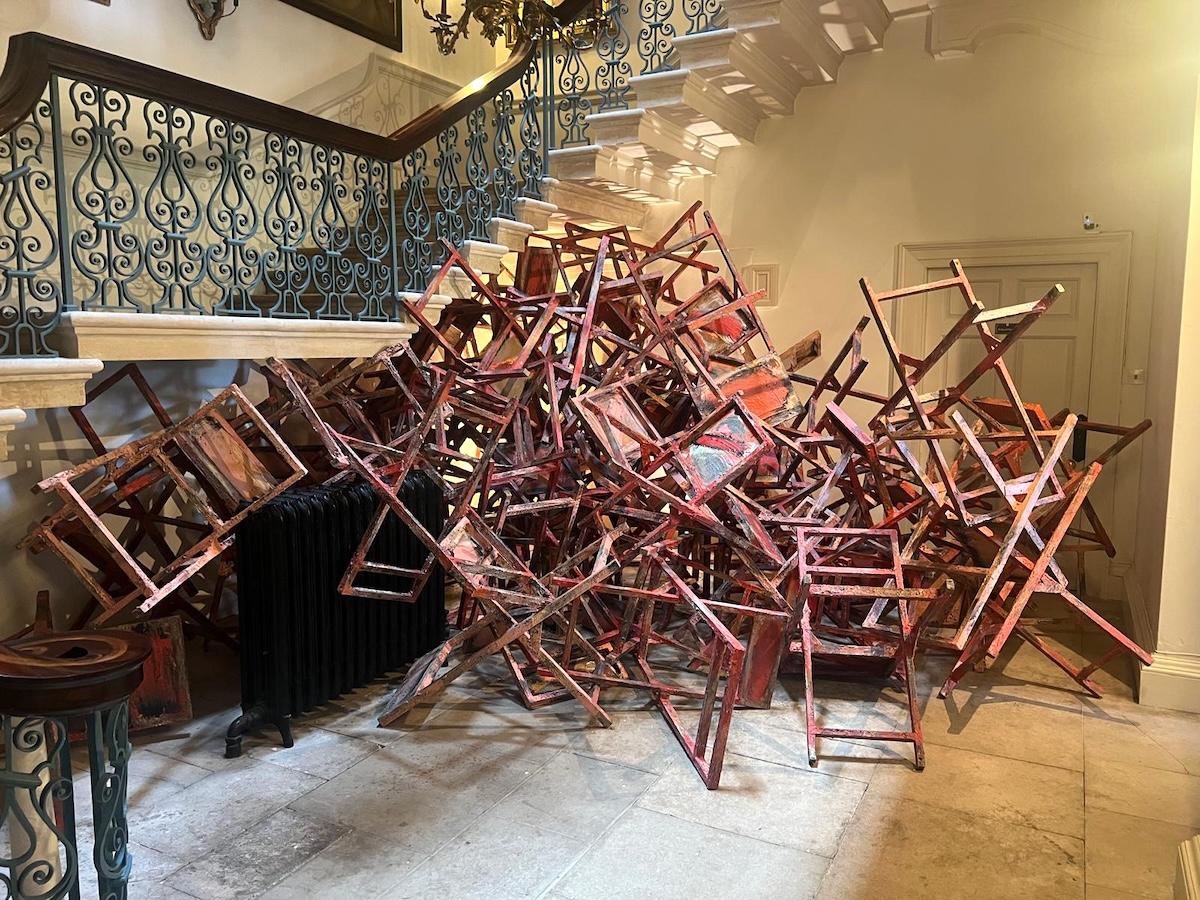
- •Works like “stacked chairs” occupy staircases, emphasizing precariousness.
- •Drawings reveal Barlow’s design process from 1970s sketches to 2020s studies.
- •Wolterton’s second-year program highlights dynamic contemporary art in heritage sites.
Pulse Analysis
Phyllida Barlow, a late‑bloomer in the British art world, spent decades teaching at the Slade before her work gained international acclaim in her sixties. Known for monumental installations that employ wood, cement, and steel, she pursued sculpture as an act of making rather than market‑driven production. Recent milestones—her 2014 Tate Britain commission, representing Britain at the 2017 Venice Biennale, and a 2019 Royal Academy exhibition—cemented her reputation as a disruptor of conventional form and material.
Wolterton House, a 1724 Palladian estate in North Norfolk, launched its contemporary‑art programme in 2024, and this year’s Barlow show pushes the dialogue between old and new to its limits. Curated by Clare Lilley, the exhibition places works like the "stacked chairs"—a mass of painted wooden‑cement chairs jammed under the house’s historic staircase—directly against the building’s status‑symbolic architecture. The outdoor piece PRANK: jinx, a precarious steel arrangement of upturned studio tables, further destabilizes the formal garden, turning the estate’s symmetry into a stage for impermanence. Lilley’s curatorial intent is to create a “forest of sculpture,” clustering installations to blur boundaries between plinth and artwork.
The Barlow‑Wolterton collaboration signals a broader shift: heritage venues are increasingly embracing contemporary, site‑specific art to revitalize visitor experiences and diversify revenue streams. By juxtaposing temporary, labor‑intensive sculptures with centuries‑old architecture, the exhibition challenges traditional hierarchies of value and invites audiences to reconsider notions of permanence in art. This model not only expands the cultural relevance of historic houses but also offers artists a dramatic backdrop for experimental practice, suggesting a fertile future for cross‑generational artistic dialogues.
Phyllida Barlow Disrupts Wolterton – Miranda Carroll
Comments
Want to join the conversation?