Key Takeaways
- •El Nido presents "Photography Into Sculpture" by eight international artists.
- •Works merge photographs with objects like glass, ceramic, antique furniture.
- •Curator L. Mikelle Standbridge ties Victorian memory to modern materiality.
- •Exhibition highlights artist‑run spaces as incubators for experimental media.
- •Running through May 16, 2026, view by appointment only.
Pulse Analysis
The Los Angeles exhibition "Photography Into Sculpture: An Homage and an Update" revives a pivotal moment in art history when the medium’s boundaries were first questioned. Originating at MoMA in the 1970s and later revisited during Getty’s Pacific Standard Time program, the show now travels to El Nido, an intimate artist‑run space housed in a 1922 Western Avenue Collective building. This lineage underscores a persistent dialogue about photography’s autonomy, while the current iteration expands the conversation to include three‑dimensional interventions that reflect contemporary concerns about materiality and memory.
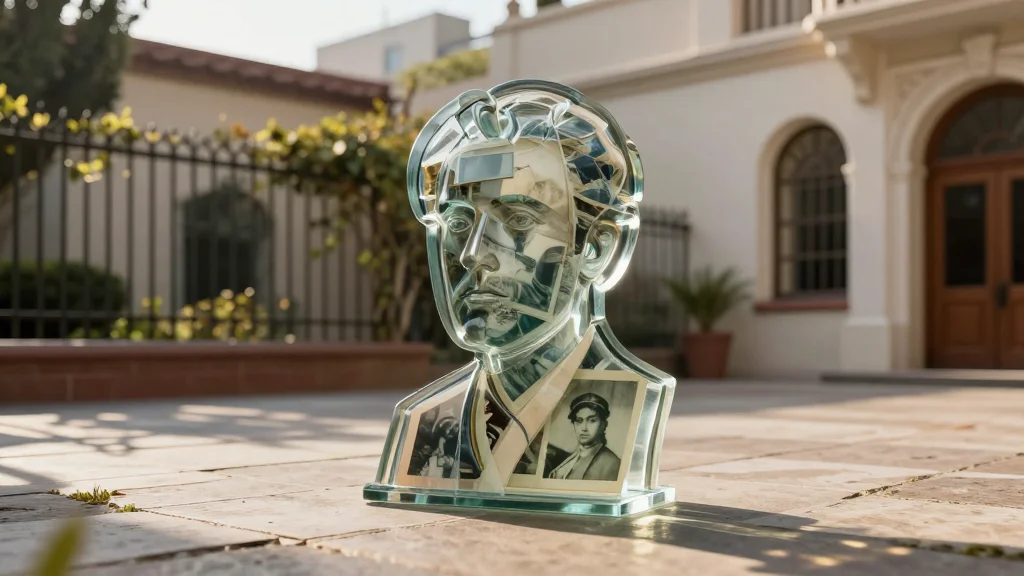
Curator L. Mikelle Standbridge assembles eight artists whose practices fuse photographic imagery with sculptural forms. Fabiola Ubani layers glass transfers to create ghostly bed scenes; Standbridge’s Photo‑Scroll(ing) employs East‑Asian scroll aesthetics; Oona Hyland’s cyanotype‑covered ceramic jug references Victorian trauma. By situating these works on antique tables, mirrors and aged trunks, the exhibition physically embeds the images within the space, turning the gallery itself into a narrative device. The juxtaposition of historic Victorian motifs with modern technological symbols—such as QR codes—highlights a tension between past and present, inviting viewers to reconsider how memory is recorded and displayed.
Beyond its formal experimentation, the show illustrates the vital role of artist‑run venues in the cultural ecosystem. El Nido’s flexible, appointment‑only model allows for immersive, site‑specific installations that larger institutions might struggle to accommodate. This agility fosters risk‑taking and interdisciplinary collaboration, positioning Los Angeles as a laboratory for evolving media practices. As photography continues to intersect with sculpture, design and digital code, exhibitions like this signal a future where the medium is defined less by its flat surface and more by its capacity to occupy physical space and engage audiences on multiple sensory levels.
Spatial Memories: "Photography Into Sculpture" at El Nido
Comments
Want to join the conversation?