Why It Matters
The project shows that ultra‑fine physical encoding can be transformed into a manipulable digital interface, expanding possibilities for data visualization and interactive experiences. It also challenges the prevailing container metaphor in technology, suggesting that designing relational boundaries will shape future computational paradigms.
Key Takeaways
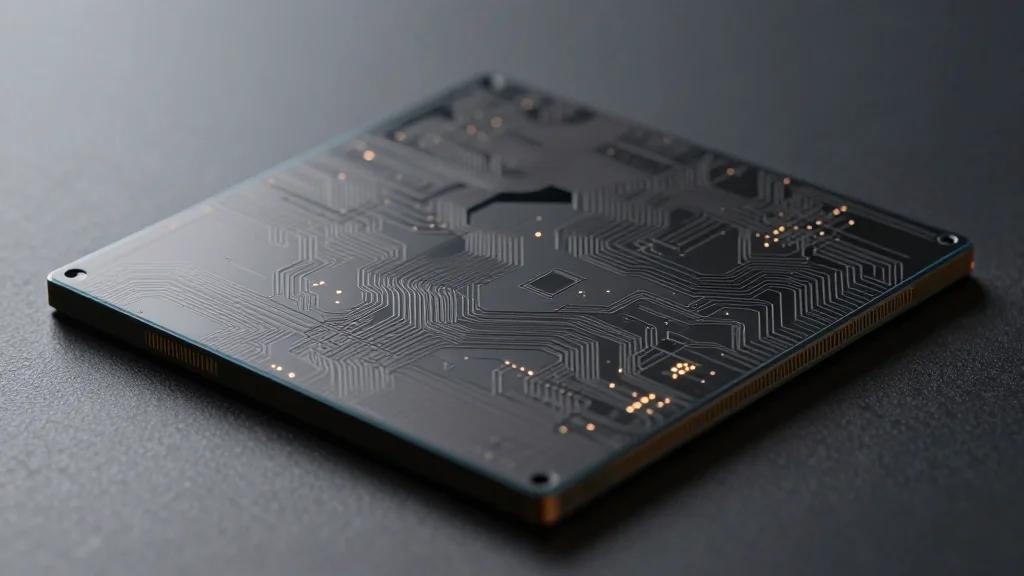
- •Laser‑etched silicon wafer encodes Game of Life patterns at 830 nm scale
- •Intrinsic silicon wafer lacks conductivity, making it unreadable to machines
- •Digital interface translates microscopic etches into manipulable data for viewers
- •Project reframes “container” concept, positioning interface as relational boundary
- •Artwork illustrates extreme Moore’s‑law scaling beyond conventional microchip use
Pulse Analysis
The collaboration between Disintegrator and BianJie sits at the intersection of art, nanofabrication, and computational theory. By employing a precision laser to carve billions of sub‑micron cuts into a black silicon wafer, the artists recreated cellular‑automaton patterns from Conway’s Game of Life at a scale that pushes the limits of Moore’s law. This physical encoding mirrors the relentless miniaturization that has driven the semiconductor industry for decades, yet it subverts the usual purpose of such density by creating a visual, rather than electronic, artifact.
Technically, the wafer is made of intrinsic silicon—pure material without dopants—so it lacks electrical conductivity and cannot be read by standard chip‑testing equipment. To bridge the gap between the invisible nanostructure and human perception, BianJie digitized the etched landscape, translating the microscopic geometry into a software interface that lets users explore, rotate, and modify the pattern in real time. This workflow demonstrates a novel pipeline: ultra‑fine physical data → high‑resolution scanning → algorithmic reconstruction → interactive digital medium. The result is a tactile‑visual experience that makes the invisible architecture of computation accessible to a broader audience.
Beyond the technical feat, the work reexamines the metaphor of the “container” that dominates much of contemporary tech discourse. By framing the wafer as an interface—a boundary that both separates and connects—it highlights how relational design can render complex systems legible. This shift has implications for user‑experience design, data governance, and even hardware architecture, where the focus may move from merely storing information to shaping the ways we engage with it. As industries explore ever‑smaller scales, the concept of an interface that translates raw physical patterns into meaningful interaction could become a cornerstone of next‑generation computing and immersive media.
#2: A container is not a vessel, but an interface.
Comments
Want to join the conversation?
Loading comments...