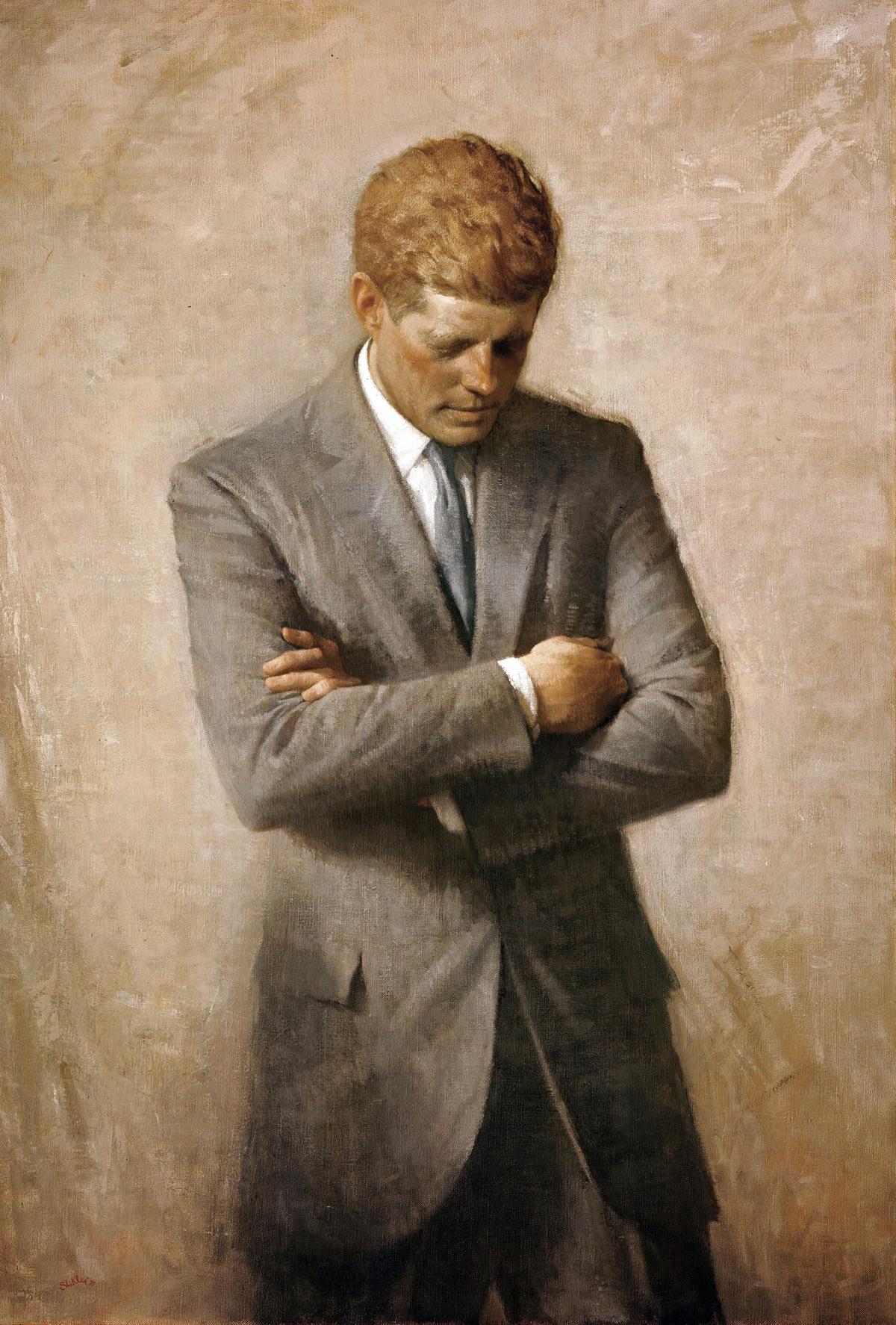
A Closer Look at the Posthumous JFK Portrait Seen in ‘Love Story’
Why It Matters
The portrait reshapes Kennedy’s visual legacy, influencing how generations perceive his presidency and demonstrating the power of personal narrative in state iconography. Its revival in popular media underscores the enduring cultural fascination with the Kennedy family.
Key Takeaways
- •Shikler painted JFK portrait posthumously, completed 1970
- •Jackie Kennedy selected somber, head‑bowed composition
- •FX’s “Love Story” features the portrait in a hallucinatory scene
- •Jackie’s only post‑Kennedy White House visit was private, 1971
- •Shikler later painted Reagan, Nancy, and Queen Noor portraits
Pulse Analysis
Aaron Shikler’s 1970 portrait of John F. Kennedy stands out for its introspective tone, a direct result of Jacqueline Kennedy’s insistence on moving away from the typical heroic imagery. By directing Shikler to depict a president with his eyes lowered and arms crossed, she crafted a visual narrative that emphasized thoughtfulness over martyrdom, a choice that continues to influence how historians and the public interpret Kennedy’s legacy. The portrait’s subdued palette and modest scale contrast sharply with the more formal, triumphant depictions that dominate the White House collection, highlighting the unique collaboration between a former first lady and a portraitist.
The portrait’s recent cameo in FX’s “Love Story” illustrates how historical art can be repurposed to deepen storytelling in contemporary television. In the series, Naomi Watts’ portrayal of Jacqueline Kennedy Onassis cradles the painting while dancing, a symbolic gesture that merges personal grief with cultural memory. This dramatized moment not only introduces the artwork to a new audience but also reinforces the Kennedy mythos that continues to captivate viewers, proving that visual artifacts remain potent narrative tools across media platforms.
Beyond the Kennedys, Shikler’s career expanded to include official portraits of Ronald and Nancy Reagan, as well as Queen Noor of Jordan, cementing his status as a premier chronicler of political figures. His ability to balance formality with intimate nuance set a benchmark for modern presidential portraiture, influencing subsequent commissions and the aesthetic expectations of state art. The JFK portrait, therefore, serves as both a historical document and a template for how leaders are visually memorialized in the public sphere.
A Closer Look at the Posthumous JFK Portrait Seen in ‘Love Story’
Comments
Want to join the conversation?
Loading comments...