Why It Matters
Denes’s intervention turned prime real‑estate into a visible critique of urban excess, highlighting food security and environmental stewardship amid relentless development. It demonstrates how art can provoke public dialogue on sustainability and economic inequality.
Key Takeaways
- •Wheatfield occupied Manhattan’s Battery Park landfill, adjacent to World Trade Center
- •Project harvested ~450 kg wheat, distributed to 28 cities for hunger exhibition
- •Public Art Fund grant of $10,000 enabled the eco‑art installation
- •Site later became Battery Park City, erasing the temporary agricultural space
Pulse Analysis
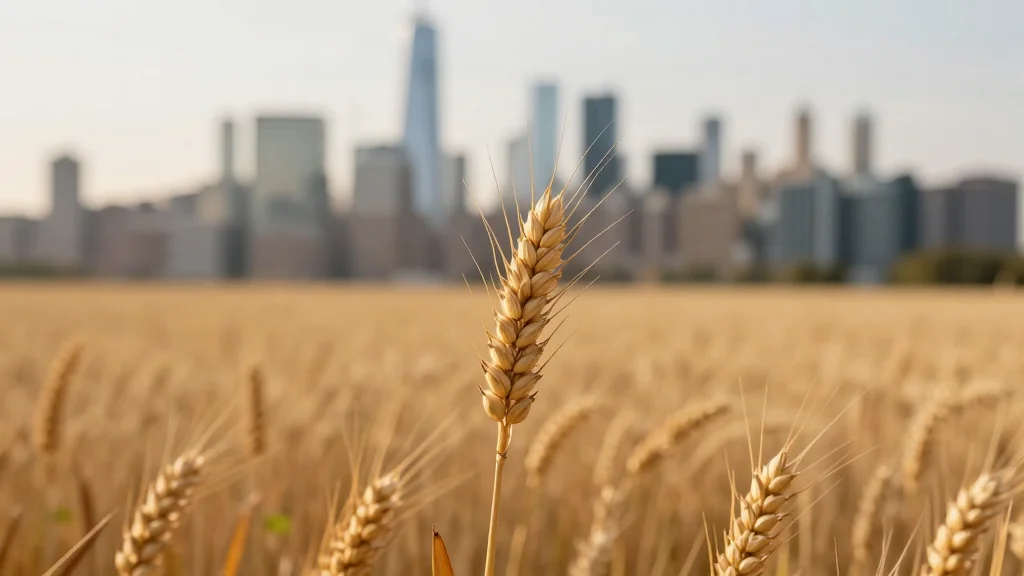
Agnes Denes’s *Wheatfield: A Confrontation* emerged at a moment when Manhattan’s skyline was synonymous with financial power and sky‑high real‑estate values—estimated at $4.5 billion in 1982. By planting a golden field of wheat on the Battery Park landfill, Denes forced a visual and conceptual clash between the natural world and the symbols of capitalism, the World Trade Center and Wall Street. The work belongs to the eco‑art branch of Land Art, where the medium is the environment itself and the message interrogates humanity’s impact on ecosystems.
The execution was as ambitious as the idea. With a modest $10,000 grant from the Public Art Fund, Denes coordinated the delivery of 200 trucks of fertile soil, cleared debris, and oversaw daily irrigation. Office workers stopped for lunch to watch the wheat sway, turning a corporate landscape into a communal garden. When the harvest arrived in August, the roughly 450 kg of grain was shipped to 28 international cities for the "International Art Show for the End of World Hunger," while the residual hay fed the NYPD mounted unit, extending the project’s social utility beyond visual spectacle.
Although the field was short‑lived—Battery Park City’s upscale development soon replaced it—the piece’s legacy endures. In an era of climate anxiety and rising food insecurity, Denes’s confrontation of land misuse resonates more than ever. The work illustrates how temporary, site‑specific art can embed lasting questions about resource allocation, urban planning, and the role of creative practice in shaping public policy, making it a touchstone for both cultural and environmental discourse.
Agnes Denes's Wheatfield: An Impossible Confrontation
Comments
Want to join the conversation?
Loading comments...