
Companies Mentioned
Why It Matters
The performance spotlights the enduring relevance of activist art in a climate of heightened geopolitical tension. By recreating his own detention, Ai Weiwei forces viewers to confront the mechanics of surveillance, raising questions about how museums and cultural institutions can host politically charged work without diluting its message. Moreover, the integration of live streaming expands the work’s audience, illustrating how digital platforms can amplify—or potentially sanitize—political art. For the broader art market, the event signals that high‑profile, time‑based installations remain a draw for major venues seeking to blend cultural relevance with ticket revenue. The willingness of Factory International to allocate a dedicated 24‑hour slot demonstrates confidence in the commercial viability of politically engaged art, a trend that could influence programming decisions at other institutions worldwide.
Key Takeaways
- •Ai Weiwei will perform a 24‑hour reenactment of his 81‑day Chinese detention at Manchester’s Factory International.
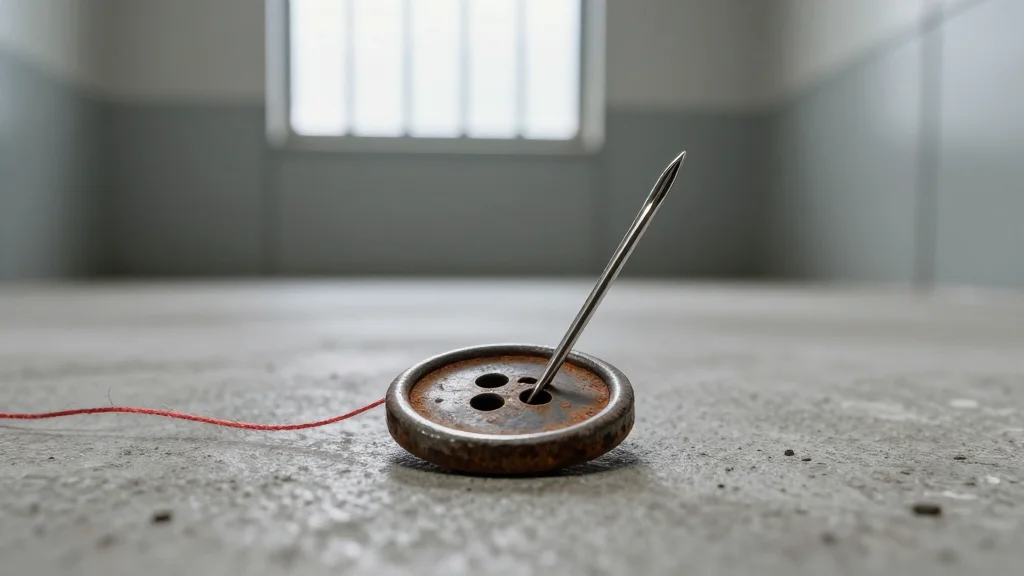
- •The performance, “Sewing a Button,” runs from July 3, 5 p.m. to July 4, 5 p.m., with both in‑person and online viewing options.
- •The reconstructed cell measures 7.2 m × 3.6 m and includes three CCTV cameras to broadcast the artist’s daily routine.
- •Quotes from Ai Weiwei: the 2013 work S.A.C.R.E.D. was “a kind of self‑therapy” and “not really about me,” but about state power.
- •The exhibition “Button Up!” links the performance to a broader exploration of 200 years of Britain‑China relations.
Pulse Analysis
Ai Weiwei’s Manchester performance illustrates a maturation of activist art from protest signage to immersive, endurance‑based experiences. By situating the work within a replica cell and employing CCTV surveillance, the artist transforms the audience into both witnesses and participants in a power dynamic that mirrors the original oppression. This meta‑commentary elevates the piece beyond a biographical reenactment, positioning it as a critique of contemporary surveillance technologies that pervade public and private spaces.
Historically, Ai’s practice has oscillated between overt political statements—such as the 2011 “Sunflower Seeds” installation that referenced mass production and conformity—and more intimate, body‑centric works like “S.A.C.R.E.D.” The Manchester show consolidates these strands, using the body as a site of resistance while embedding the work in a geopolitical context that implicates the host nation. The decision to stage the piece in the UK, amid ongoing debates over trade and human rights with China, suggests that institutions are increasingly willing to host art that directly engages with current diplomatic frictions.
From a market perspective, the event underscores a growing appetite among major venues for high‑stakes, time‑based programming that can generate sustained media attention and ticket sales. The hybrid model of on‑site tickets and a streamed component expands revenue streams while democratizing access. However, the reliance on a single, high‑profile artist also raises questions about sustainability: can other practitioners replicate this model without the same global cachet? As curators grapple with balancing artistic risk and financial viability, Ai Weiwei’s 24‑hour performance may become a benchmark for future activist commissions, prompting institutions to consider how best to support politically resonant work without reducing it to a consumable spectacle.
Ai Weiwei to Stage 24‑Hour Detention Reenactment in Manchester
Comments
Want to join the conversation?
Loading comments...