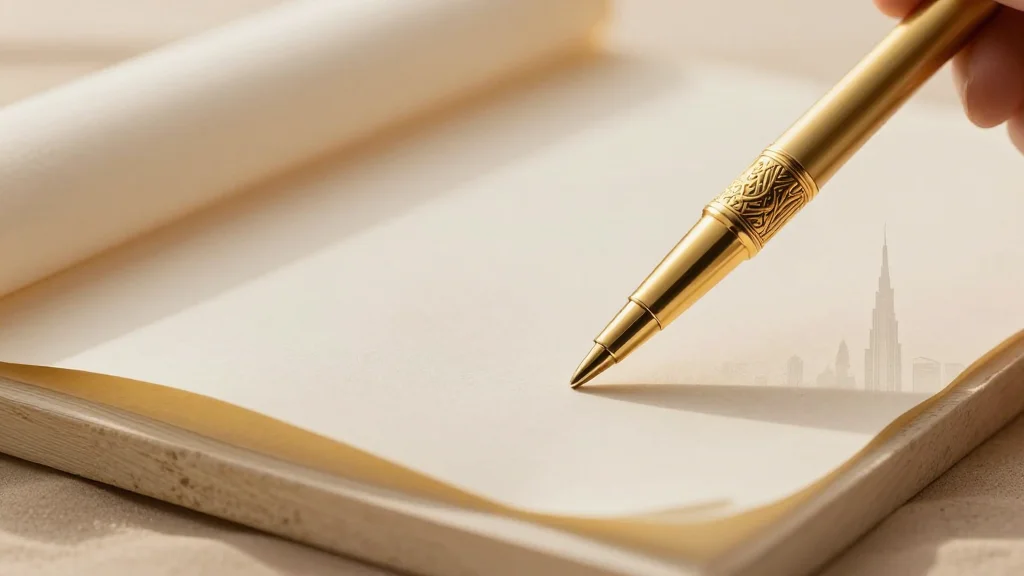
Al Burda Award Adds Modern Calligraphy and Free‑Verse to UAE Competition

Why It Matters
The Al Burda Award’s expansion underscores a strategic shift by Gulf cultural institutions toward supporting interdisciplinary and youth‑driven art forms. By legitimising modern calligraphy and free‑verse poetry, the Ministry of Culture is creating pathways for artists who blend tradition with contemporary media, potentially reshaping the region’s artistic identity and market dynamics. The move also enhances the UAE’s soft power, positioning it as a cultural nexus that attracts international talent and investment, while fostering dialogue between Islamic heritage and global contemporary practice. For emerging artists, the award offers a high‑visibility platform that can translate into gallery representation, commissions and academic opportunities. For collectors and institutions, the broadened categories signal a new pool of works that may redefine what is considered valuable Islamic art, prompting reassessments of acquisition strategies and exhibition programming across the Middle East and beyond.
Key Takeaways
- •Al Burda Award adds modern calligraphy and free‑verse poetry categories for 2025.
- •More than 1,300 submissions received, a 23% increase from the previous year.
- •Entries came from about 50 countries, reflecting growing international interest.
- •Award founded in 2004 by Sheikh Abdullah bin Zayed, now honors over 420 creatives.
- •Organisers describe the program as a "festival, not just an award" with exhibitions and workshops.
Pulse Analysis
The Al Burda Award’s pivot toward contemporary visual‑literary practices mirrors a broader regional trend where governments are leveraging cultural initiatives to diversify economies and project soft power. Historically, Gulf art institutions have emphasized preservation of classical forms—calligraphy, ornamentation, and poetry—as markers of identity. By formally integrating modern calligraphy, which often incorporates digital tools and experimental typography, the Ministry signals an acceptance of hybrid aesthetics that can appeal to both local audiences and global collectors.
This strategic inclusion also addresses a talent pipeline issue. Young creators in the UAE and across the Gulf have increasingly turned to interdisciplinary media, yet they have faced limited institutional recognition. The award’s new categories provide a sanctioned venue for these artists, potentially accelerating their entry into commercial markets and academic circles. As a result, we may see a surge in gallery shows and auction listings that feature works straddling the line between fine art and design, reshaping valuation models for Islamic art.
Looking ahead, the success of the expanded Al Burda framework could inspire similar reforms in other regional festivals and state‑backed prizes. If the 2026 submission cycle maintains or exceeds the current growth rate, it will validate the Ministry’s approach and could prompt private sponsors to invest in related ventures—such as dedicated calligraphy labs, digital publishing platforms, and cross‑cultural residencies. Ultimately, the award’s evolution may become a bellwether for how Gulf societies negotiate heritage and innovation in the cultural sphere.
Al Burda Award Adds Modern Calligraphy and Free‑Verse to UAE Competition
Comments
Want to join the conversation?
Loading comments...