Why It Matters
Heilbron’s glitch paintings critique the illusion of flawless digital experiences, highlighting the physical and labor-intensive foundations of our tech‑driven lives. This perspective resonates across art, tech design and consumer awareness, underscoring the cultural relevance of digital fragility.
Key Takeaways
- •Hand‑glitches digital images onto large canvases
- •Exhibition explores friction between digital order and physical decay
- •Stencil process merges vector files with tactile painting
- •Works visualize entropy and data degradation visually
- •Highlights invisible labor behind seamless digital tools
Pulse Analysis
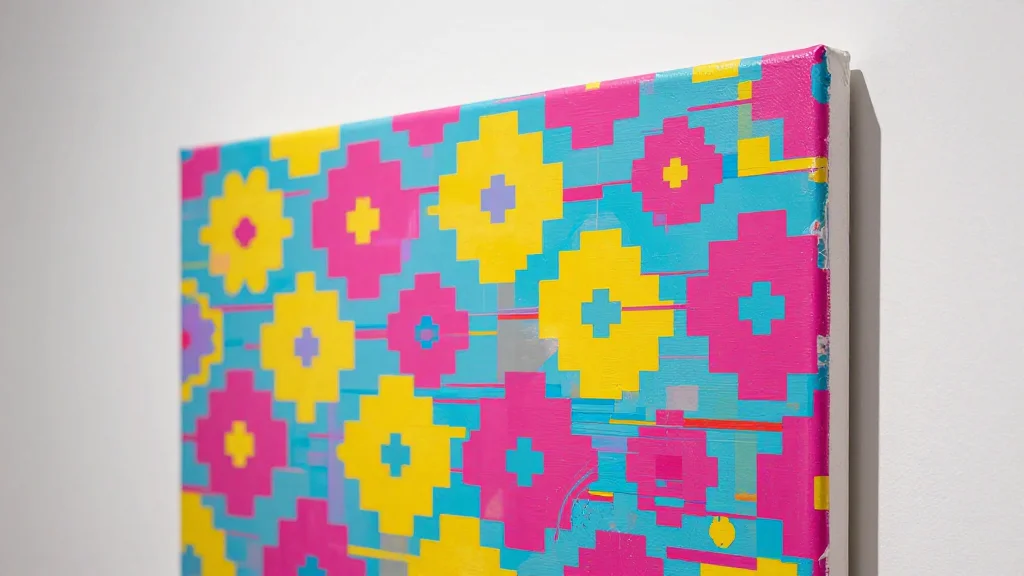
Alex Heilbron’s solo show *All Systems Fail* at Los Angeles’ as‑is gallery translates the fleeting glitches of screens into monumental paintings. The artist begins with vector files sourced from the internet, cuts them into vinyl stencils, and then layers paint on five‑by‑seven‑foot canvases before peeling the stencils away. This “hand‑glitch” technique fuses the precision of digital design with the tactile unpredictability of brushwork, producing distorted grids, pixelated flowers and smeared code that retain the texture of canvas while echoing corrupted pixels. The result is a physical manifestation of the errors that usually disappear behind a glossy interface.
Beyond formal experimentation, Heilbron’s work interrogates the physics of information. By repeatedly copying and re‑rendering the same four‑petalled flower icon, the paintings illustrate generation loss, a visual analogue of data compression and entropy. The overlapping grids and punched‑card motifs recall early computing hardware, while the cracked‑screen aesthetic evokes the second law of thermodynamics—disorder inevitably rising in closed systems. In this sense the canvases act as a critique of the seamless user experiences tech companies promise, reminding viewers that every digital service rests on invisible human labor and inevitable degradation.
The exhibition arrives at a moment when glitch aesthetics are gaining traction in both the art market and digital design circles, signaling a broader cultural appetite for visualizing the imperfections behind polished interfaces. Collectors are increasingly valuing works that comment on technology’s fragility, and galleries are showcasing artists who translate code into pigment. For tech firms, the show serves as a reminder that user‑centric design must also acknowledge system failure and the human effort required to maintain it. Heilbron’s paintings thus function as both a warning and a blueprint for integrating material honesty into an increasingly virtual world.
Alex Heilbron at as-is
Comments
Want to join the conversation?
Loading comments...