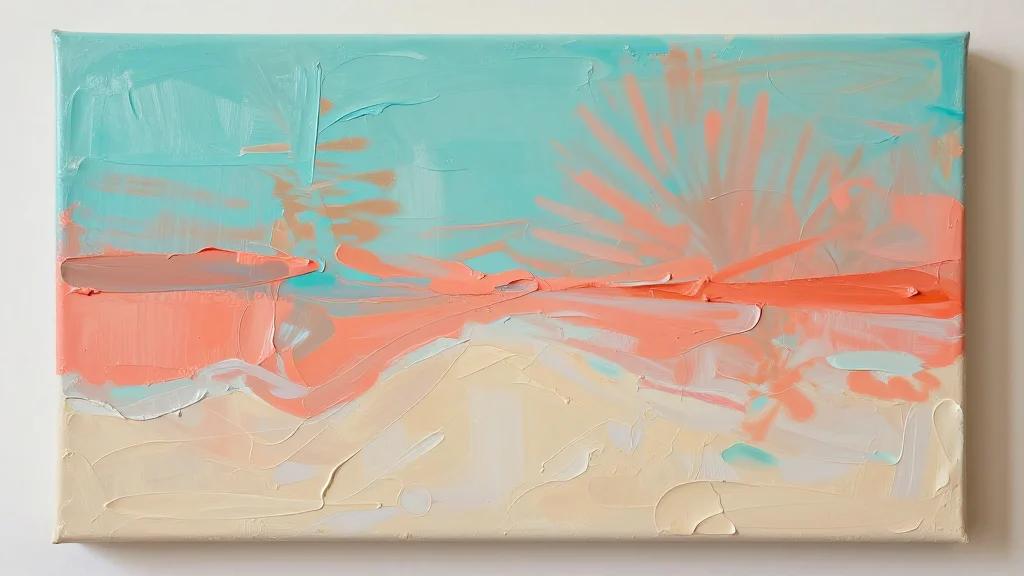
Angel Otero's 'Agua Salada' Opens at Hauser & Wirth, Boosting U.S. Profile

Companies Mentioned

Why It Matters
Angel Otero’s "Agua Salada" signals a shift in how U.S. audiences engage with abstraction that is explicitly rooted in Caribbean identity. By foregrounding a process that physically records time and memory, the show expands the vocabulary of post‑minimalist painting and offers a model for artists who wish to embed personal and collective histories within non‑representational forms. The exhibition also underscores the growing market appetite for diasporic voices that can bridge technical innovation with cultural relevance. As major galleries and institutions prioritize diversity, Otero’s heightened profile may open doors for other under‑represented artists, reshaping collecting patterns and curatorial agendas across the United States.
Key Takeaways
- •Angel Otero opens "Agua Salada" at Hauser & Wirth New York in early 2026
- •Show features large‑scale canvases, wall assemblages, and new paint‑skin techniques
- •Title references Caribbean sea, linking abstraction to migration and memory
- •Exhibition expected to boost U.S. market demand and secondary‑market prices
- •Runs through June 2026 with public talks and a scholarly catalogue
Pulse Analysis
Otero’s ascent reflects a broader recalibration of the contemporary art market, where provenance is increasingly measured not just by institutional endorsements but by the ability to articulate a distinct cultural narrative. His paint‑skin method, honed at the School of the Art Institute of Chicago, offers a tactile counterpoint to the digital saturation of the art world, appealing to collectors seeking material authenticity. By embedding family photographs within the layers, Otero creates a literal palimpsest that resonates with a generation attuned to archival practices and identity politics.
Historically, abstraction in the United States has been dominated by a Euro‑American canon that prized formal purity over content. Otero’s work repositions abstraction as a vessel for lived experience, aligning him with a lineage that includes artists like Mark Bradford and Wangechi Mutu, who fuse material experimentation with sociopolitical commentary. The timing of "Agua Salada"—amid heightened attention to Caribbean migration issues—amplifies its relevance, allowing the gallery to leverage both critical acclaim and market momentum.
Looking ahead, Otero’s next phase, hinted at in the exhibition’s closing remarks, may push the translucency of his skins further, perhaps incorporating light‑responsive materials or immersive installations. Such developments could attract museum commissions that seek experiential environments, cementing his role not just as a painter but as a multidisciplinary storyteller. For the market, each technical evolution offers a fresh point of entry for collectors, suggesting that Otero’s valuation trajectory will remain upward as his practice continues to intersect process, place, and narrative.
Angel Otero's 'Agua Salada' Opens at Hauser & Wirth, Boosting U.S. Profile
Comments
Want to join the conversation?
Loading comments...