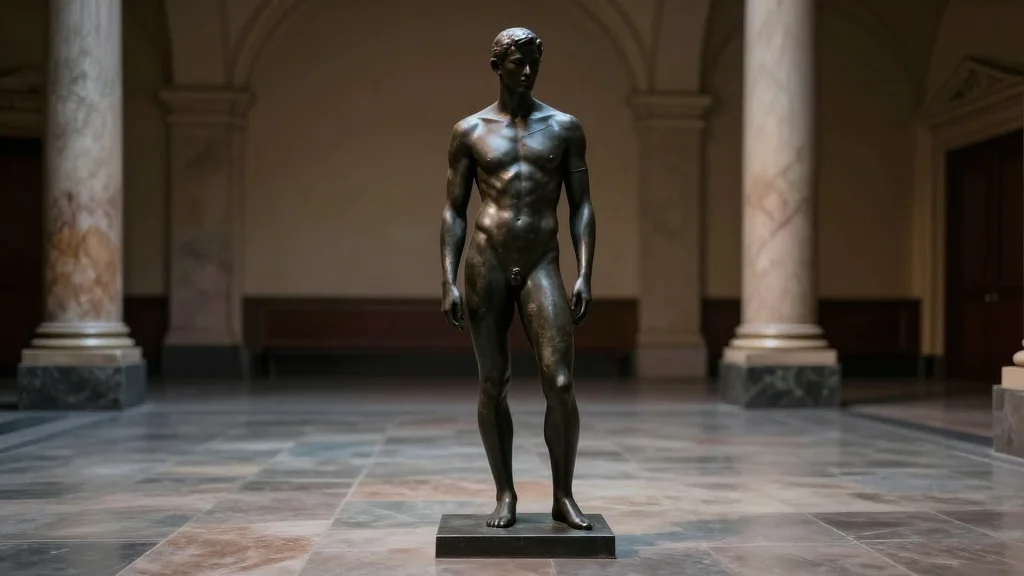
Antony Gormley’s Labyrinthine ‘What Holds Us’ Transforms Galleria Continua

Why It Matters
Antony Gormley’s “What Holds Us” redefines the role of the museum from a neutral container to an active participant in the artwork. By embedding sculpture within the very fabric of Galleria Continua, the project challenges curatorial conventions and invites a re‑examination of how space, materiality and the human body intersect in contemporary art. The installation’s popularity also demonstrates growing public appetite for immersive experiences, a trend that could reshape funding models and programming strategies for cultural institutions worldwide. Moreover, the use of diverse, often low‑cost materials highlights a tension between artistic ambition and environmental responsibility. As museums grapple with sustainability mandates, Gormley’s experiment offers a case study in balancing material experimentation with long‑term stewardship of cultural spaces.
Key Takeaways
- •Antony Gormley opens “What Holds Us” at Galleria Continua, San Gimignano (May 9‑Sept 13, 2026).
- •Installation fills historic cinema‑theatre with labyrinthine sculptures made of stone, clay, concrete, iron and cardboard.
- •Visitors navigate a maze of sculptural bodies, prompting questions about support, containment and identity.
- •Local tourism reports a 30 % rise in museum attendance since the exhibition opened.
- •Project sparks debate on sustainability and the evolving role of museums as immersive environments.
Pulse Analysis
Gormley’s latest venture arrives at a moment when museums worldwide are racing to offer experiences that go beyond static display. The installation’s success underscores a market shift: audiences now expect to be physically engaged, not merely observed. This aligns with the rise of ‘experience‑driven’ programming seen in institutions from the Tate Modern’s immersive installations to the Guggenheim’s virtual reality projects. Gormley’s choice to embed his work within the architecture itself pushes the envelope further, suggesting that future exhibitions may be conceived as architectural interventions rather than add‑on objects.
From a strategic perspective, Galleria Continua’s partnership with a globally recognized artist serves as a branding catalyst, positioning the venue as a destination for high‑profile, site‑specific work. The surge in visitor numbers validates the commercial upside of such collaborations, offering a template for other mid‑size institutions seeking to compete with major metropolitan museums. However, the reliance on mixed, sometimes disposable materials raises sustainability concerns that could become a liability as cultural institutions adopt greener policies.
Looking ahead, the dismantling and repurposing of the installation’s components could set a precedent for circular practices in the art world. If Gormley and Galleria Continua document and share the lifecycle of the materials, they may inspire a new model where large‑scale installations are designed with post‑exhibition reuse in mind, marrying artistic ambition with ecological responsibility.
Antony Gormley’s Labyrinthine ‘What Holds Us’ Transforms Galleria Continua
Comments
Want to join the conversation?
Loading comments...