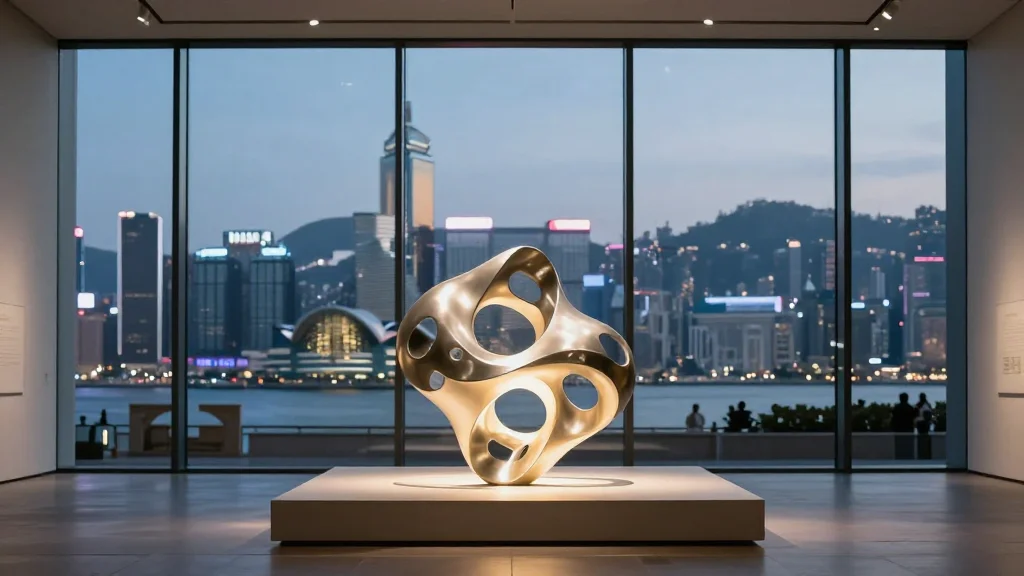
Art Basel Hong Kong 2026 Launches Expanded Program and M+ Partnerships

Why It Matters
Art Basel Hong Kong’s expanded programming underscores the city’s strategic pivot toward integrating institutional partnerships with grassroots cultural initiatives. By aligning with M+, a museum renowned for its contemporary Asian collection, the fair gains curatorial depth and legitimizes its role as a conduit between global markets and local artistic production. The emergence of satellite fairs that embed art within heritage buildings and everyday neighborhoods also reflects a shift toward experiential consumption, catering to collectors who prioritize narrative and context over sheer scale. The fair’s model could set a precedent for other Asian art hubs, encouraging them to blend high‑profile institutional collaborations with community‑focused events. If successful, this hybrid approach may attract a broader spectrum of buyers, from traditional collectors to younger, experience‑seeking patrons, thereby diversifying revenue streams and reinforcing Hong Kong’s resilience in the competitive global art market.
Key Takeaways
- •Art Basel Hong Kong 2026 opens with new collaborations with museum M+ and heritage site Tai Kwun.
- •Three new satellite fairs—Art House Tai Hang, Checkin Sidespace, Pavilion—focus on intimate, site‑specific venues.
- •Curator Tobias Berger emphasizes a flexible, culture‑first curatorial stance for the fair.
- •Jeff Li highlights Wong Chuk Hang’s role as a communal hub for collectors and artists.
- •The fair’s programming aims to revitalize Hong Kong’s position on the global art calendar post‑pandemic.
Pulse Analysis
Art Basel Hong Kong’s 2026 edition illustrates a strategic recalibration that blends the gravitas of a marquee fair with the agility of micro‑fairs. Historically, the fair has relied on a top‑down model—large pavilions, high‑profile dealers, and a focus on sales volume. This year’s pivot toward interdisciplinary shows, museum partnerships, and hyper‑local venues signals an acknowledgment that collectors now seek narrative richness and cultural relevance alongside investment potential. By co‑hosting events with M+, the fair taps into the museum’s scholarly cachet, attracting curators and institutions that might otherwise bypass a commercial fair.
The satellite fairs serve a dual purpose: they democratize access to contemporary art and create a testing ground for experimental formats that could later be scaled up. Their emphasis on portable artworks and site‑specific installations aligns with a broader trend in the art market toward ‘collectible experiences’—objects that tell a story about place and moment. This could reshape dealer strategies, prompting them to curate more adaptable, travel‑friendly works that appeal to a mobile, globally dispersed collector base.
Looking forward, the success of this hybrid model will hinge on measurable outcomes such as sales figures, visitor engagement metrics, and critical reception. If the expanded programming drives higher foot traffic and media attention, other Asian fairs—like Shanghai Art Fair and Seoul Art Fair—may emulate the blend of institutional partnership and grassroots activation. Conversely, if the new formats dilute the fair’s brand or fail to generate sufficient commercial upside, organizers may revert to a more traditional, dealer‑centric approach. The next few months will be a litmus test for whether Hong Kong can sustain its ambition to be both a market powerhouse and a cultural incubator.
Art Basel Hong Kong 2026 Launches Expanded Program and M+ Partnerships
Comments
Want to join the conversation?
Loading comments...