Art Basel Hong Kong 2026 Unveils 'Encounters' With 12 Monumental Installations

Why It Matters
The Encounters overhaul positions Art Basel Hong Kong as a laboratory for integrating curatorial rigor into a commercial fair, a model that could ripple across the global art market. By foregrounding large‑scale, concept‑driven works, the fair offers collectors a narrative context that may elevate the perceived value of monumental art and encourage deeper engagement beyond pure investment. Moreover, the inclusion of the first Malaysian artist in Encounters highlights a growing openness to diverse Asian voices, potentially expanding market interest in Southeast Asian creators. The elemental framework also underscores a broader trend of using cultural philosophies to structure exhibition experiences, signaling a shift toward more immersive, story‑driven presentations in the art world.
Key Takeaways
- •Art Basel Hong Kong 2026 attracted 91,500 visitors and 240 galleries from 41 countries.
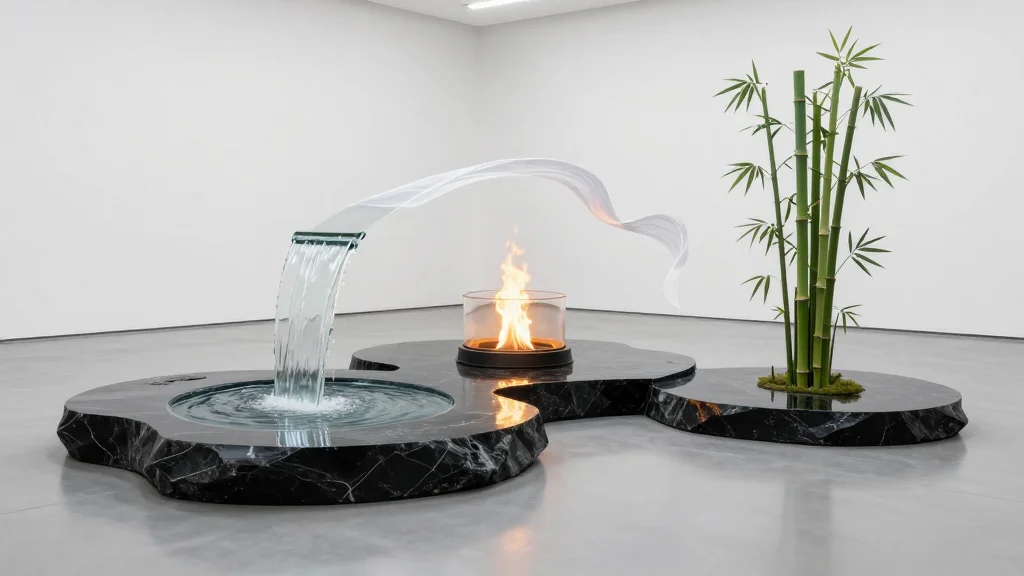
- •The Encounters sector featured 12 large‑scale works organized around the Five Elements.
- •Malaysian artist Yeoh Choo Kuan became the first from his country selected for Encounters.
- •Curatorial team includes Mami Kataoka (Mori Art Museum), Isabella Tam (M+), Alia Swastika, and Hirokazu Tokuyama.
- •Installations such as Kongkee’s LED piece and Christine Sun Kim’s work explored art‑money dynamics and sound.
Pulse Analysis
Art Basel Hong Kong’s Encounters redesign reflects a strategic pivot from pure market transactions to a hybrid model that blends exhibition‑like curation with fair‑scale commerce. Historically, art fairs have been critiqued for reducing artworks to commodities; by framing installations within a philosophical schema, the fair creates a narrative scaffolding that can justify higher price points and attract collectors seeking intellectual depth. This mirrors a broader industry movement where institutions and fairs experiment with thematic zoning—seen recently at Frieze London’s ‘Future Worlds’ and Miami Art Week’s ‘Eco‑Art’ clusters.
The pan‑Asian curatorial team is also significant. By distributing curatorial authority across Japan, Hong Kong, Indonesia and beyond, the fair signals a decentralization of curatorial power that could democratize representation at major market events. This may encourage other fairs to adopt multi‑regional curatorial panels, fostering cross‑border collaborations and diversifying the artistic canon presented to global buyers.
Finally, the emphasis on large‑scale installations challenges logistical norms. Traditionally, monumental works are reserved for museums due to space and cost constraints. By allocating prime floor space to such pieces, Art Basel Hong Kong tests the market’s appetite for high‑impact, site‑specific art in a commercial setting. If successful, we could see a surge in artists proposing ambitious, immersive projects for fairs, reshaping the economics of production, shipping, and insurance in the art market. The Encounters experiment thus serves as a bellwether for how future fairs might balance spectacle, scholarship, and sales.
Art Basel Hong Kong 2026 Unveils 'Encounters' with 12 Monumental Installations
Comments
Want to join the conversation?
Loading comments...